
Basement Waterproofing Case Studies
DMV Waterproofing has been engineer-founded since 2005, and these basement waterproofing case studies are six real jobs from that record: real addresses across Washington DC, Maryland, and Northern Virginia, each diagnosed by the engineers who designed the fix.
Every basement fails for a specific, findable reason. The diagnosis came first in each case below, and the system installed followed from what that diagnosis found, not the other way around. Want the same process on your home? Call 1-833-888-2533 for a free inspection. A trained technician walks the property, not a salesperson.
How to Read These Case Studies
Every job below follows the same sequence our engineers use on every basement waterproofing job. First: a wet carpet, a musty smell, a crack that kept reopening, whatever the homeowner actually noticed. Second: the real water source once we opened the wall or slab, often not what the homeowner assumed (see how water actually gets into a DMV basement). Third: why that foundation type and water source called for the system installed, sealing the wall outside or draining it inside. Fourth: what made the job hard, if anything did.
These six span different foundation types and failure modes, chosen for that range, not because they were the easiest jobs on the schedule.
Basement Waterproofing Case Studies by Foundation Type and Water Source
The first three cases share one fix: the wall itself was letting water through, so we sealed it from the outside. The second three share another: water arrived faster than a coating could stop it, from a high table or a downspout aimed at the foundation, so we drained it from the inside instead.
Ashburn, VA: Freeze-Thaw Cracks in a CMU Wall
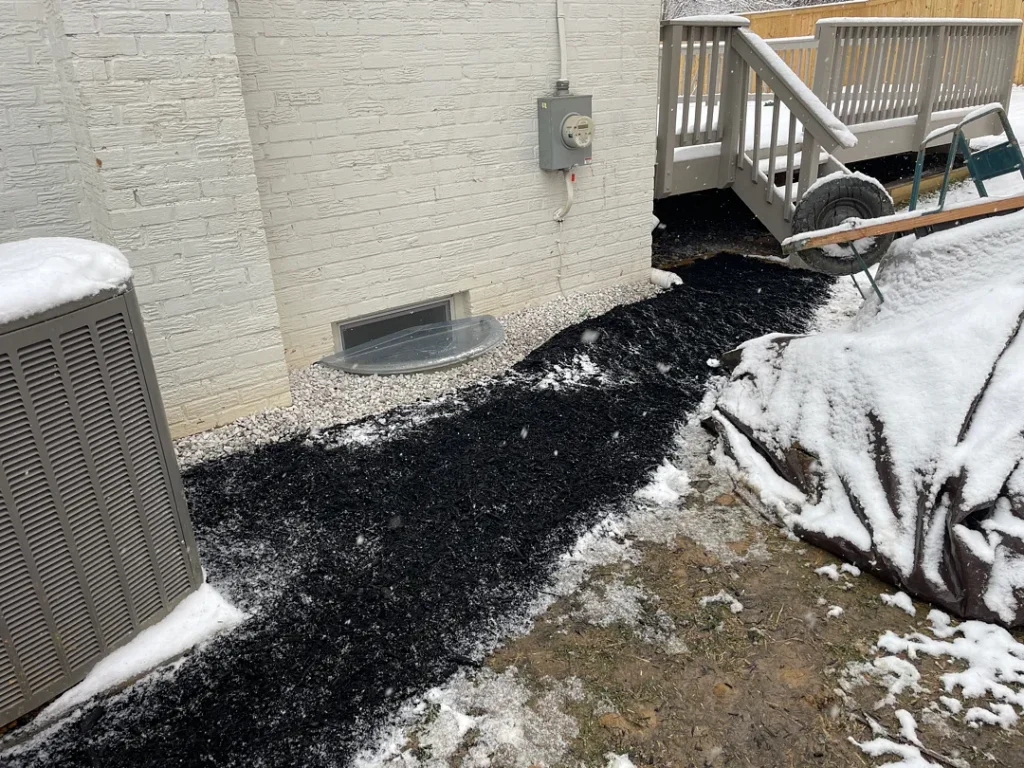
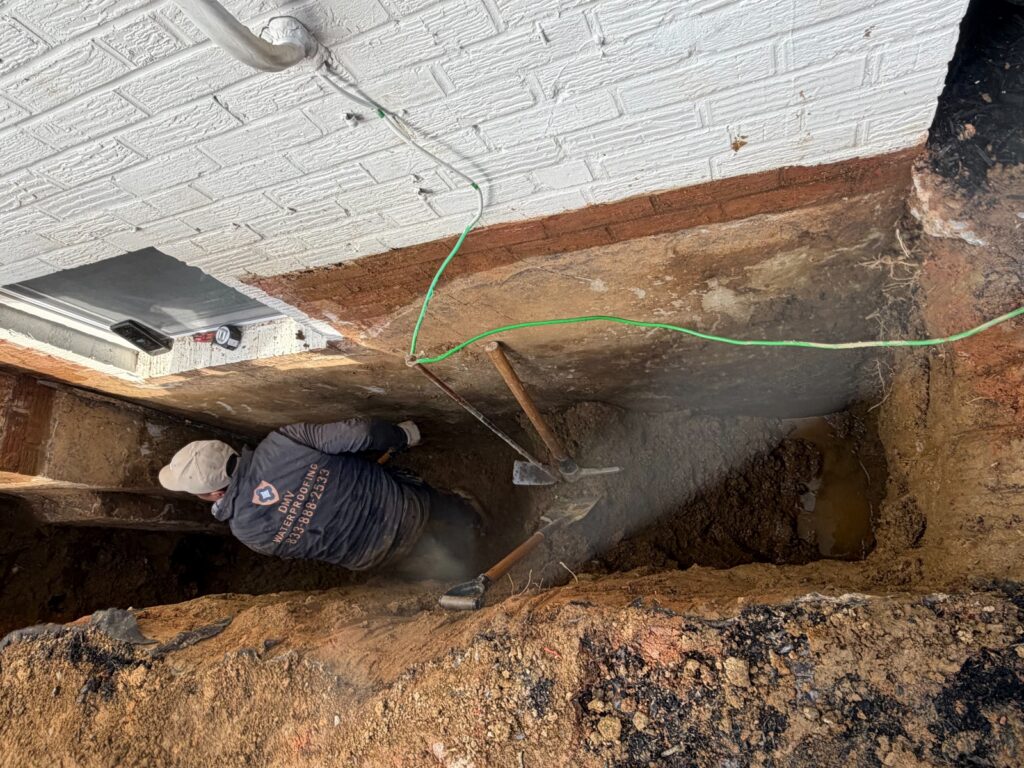
An Ashburn family in Loudoun County kept finding the carpet wet in a finished basement bedroom, with a new baby in the home. The water table was ruled out. Excavating to the footer showed the cause: cracks and a cold joint in the CMU wall, widened over successive winters by freeze-thaw. We sealed the cold joint and cracks, then built a full exterior system: parge coat, primer, bituminous membrane, protection board, and a dimple drain board, backfilled in lifts and graded away from the house. No water has reached that bedroom since. Read the full Ashburn case study.
Northwest DC: A 90-Year-Old Brick Foundation With Failing Mortar
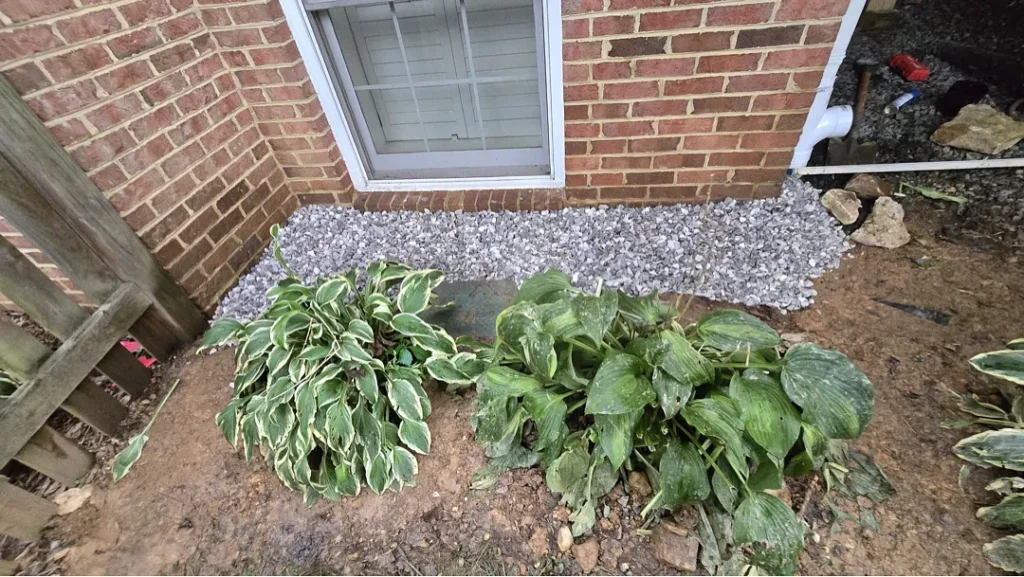
A 1930s brick foundation on Connecticut Avenue NW had water on the floor and mold along the wall. The slab showed no cracks, so the water was not rising from below: it came through ninety years of deteriorated mortar joints, on a wall taking heavy surface water. We excavated to the footer, cleaned the brick, and applied a cementitious coat, a liquid layer, and a bituminous sheet membrane, protected by drain board and drain tile. The wall that had been wicking water for years now stays dry, under a written 25-year exterior warranty. Read the full Connecticut Avenue case study.
Bethesda, MD: Three Wall Sections, Two Different Water Sources
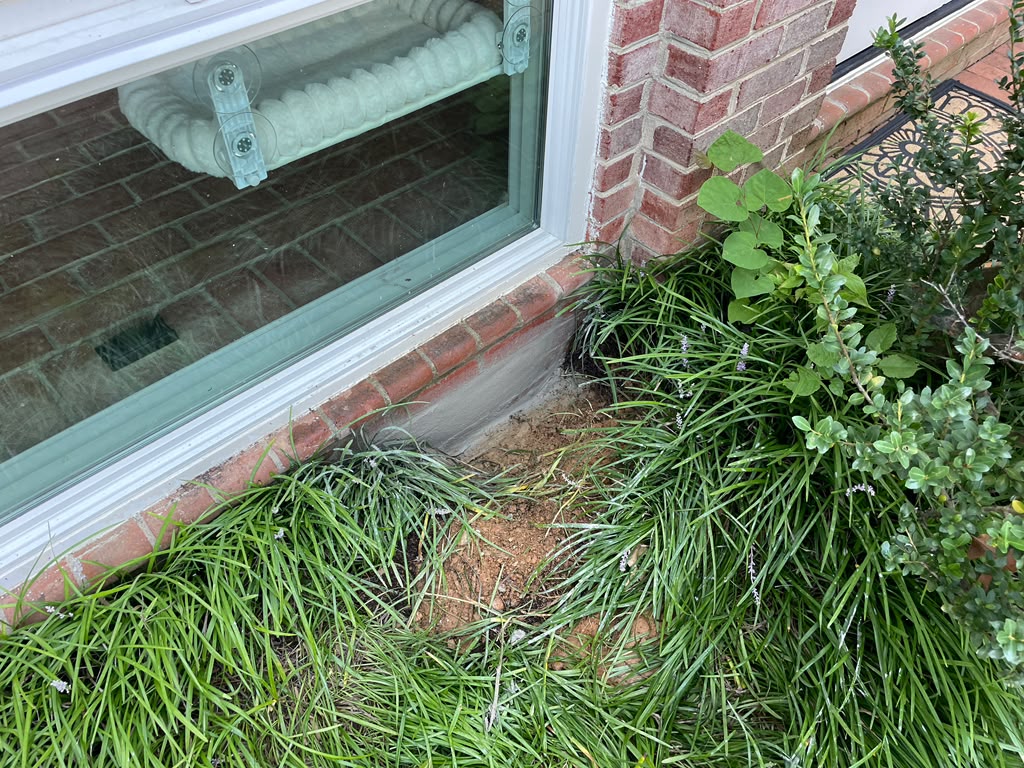
A 1940s CMU home on Massachusetts Avenue was taking on water through three wall sections. High ground ruled out a water table. Two sides were below-grade seepage through the block, sealed with the same exterior system, drain tile raised near grade since the excavation had nowhere lower to fall. The third side was not the foundation at all: a gutter with no downspout was sheeting roof water down the block, so that side got a downspout, not a membrane. Three sides, three causes, three matched fixes. Read the full Bethesda case study.
The next three cases could not be solved from the outside, either because the water table itself was the source or because the property gave us no way to excavate. Each one was drained from the inside instead.
Manassas, VA: A High Water Table Under a Large CMU Basement
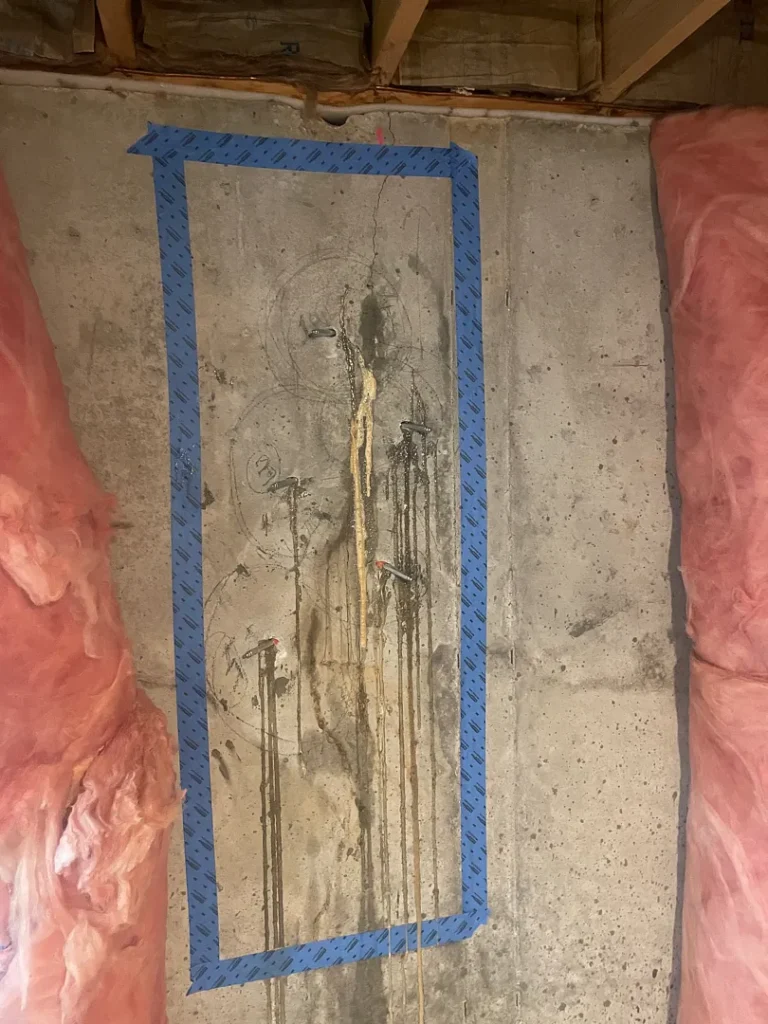
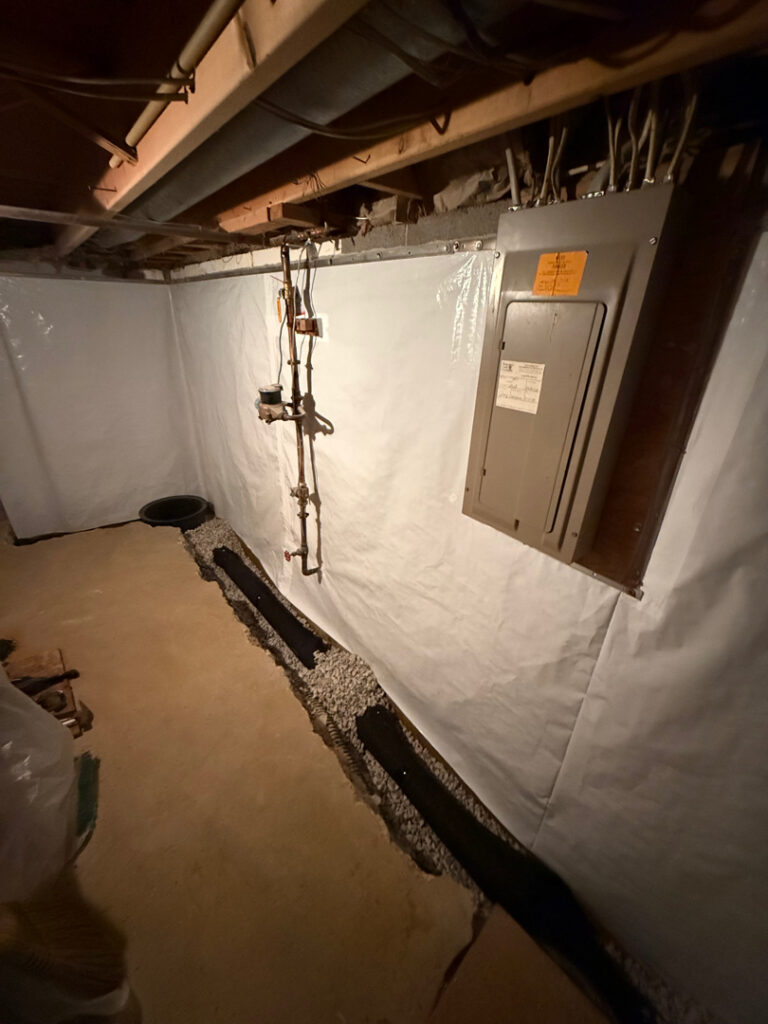
A very large CMU basement near Manassas was taking on water and mold across three corners, with a step crack in one. The cause was a high water table pushing against the block from the side and up through the footing at once, not a single leak. We installed an interior French drain with dual sump pumps and a wall vapor barrier, replacing mold-damaged framing along the way. The slab could not open all at once: crews left two feet uncut every six feet so it would not settle while trenching, then doweled rebar into it with epoxy before pouring new concrete. Read the full Manassas case study.
Silver Spring, MD: Mold and Groundwater With No Exterior Access
A Silver Spring townhouse basement had a heavy, musty mold odor, water on the floor, and cracks in a corner wall. Exterior excavation was not an option here, so an outside fix was never on the table. The cause was a high water table pushing groundwater against both walls and slab under hydrostatic pressure. We remediated the mold first, four days before any waterproofing began, then opened the slab at footing depth, set drain tile in clean stone, installed a sump pump at the entry point, and restored the slab. Nine days start to finish, and the basement went from mold-heavy air to dry. Read the full Silver Spring case study.
Olney, MD: When New Downspouts Point Water at the Foundation
An Olney homeowner kept finding mold in the same three spots along the basement walls, no matter how often it was cleaned. The CMU block itself was the reservoir: hollow and porous, holding water like a sponge where oversized downspouts discharged roof water at the foundation corners. Stepped cracks through the mortar joints and a cracked slab at the corners showed the pressure that had built up. We buried and extended the downspouts, removed the mold, installed a vapor barrier, and ran 124 feet of interior French drain to a dual-pump sump with battery backup. Eight days later it was dry, and stayed dry through the storms that followed. Read the full Olney case study.
What These Jobs Have in Common
A few patterns hold across all six. What homeowners called a leak was rarely a hole through the wall: it was groundwater pressure, a misrouted downspout, or decades of mortar wear, an exterior source more often than a simple crack. Older DMV housing stock shows up in every case, CMU in five of the six and 1930s brick in DC, and no two failed the same way. A high water table drove three of the six jobs, consistent with the clay soils and shallow groundwater our engineers see across this region, though Bethesda and Ashburn both ruled out the water table and still had real intrusion, from a gutter and from freeze-thaw cracking. Mold appeared wherever water sat long enough. As the EPA puts it in its guide to mold and moisture in the home, the key to mold control is moisture control: clean up the mold and fix the water problem, or it returns.
The Systems Behind These Repairs
Two systems carried most of the work above. Exterior waterproofing seals the wall itself, used where the water source hits the wall from outside, as in Ashburn, DC, and Bethesda. Interior French drain systems belong where water arrives from below or excavation is not possible, as in Manassas, Silver Spring, and Olney. Manassas also called on foundation repair to reinforce the slab, and mold turned up in three of the six, which is why we treat mold removal as part of a waterproofing scope, not a separate service. Where downspouts or grading were the actual source, correcting them mattered as much as anything installed below grade.
Where We Work
These six cases span our service area, from Northwest DC through Montgomery County to Northern Virginia. We work from four branches: Rockville, MD (our main office, also serving North Bethesda), Kensington, MD, Ashburn, VA, and Manassas, VA.
Schedule a Free Inspection
If any of these case studies sound like your basement, the next step is what every homeowner above started with: a free inspection and a written diagnostic report, photos included, before anything is recommended. A trained technician walks the property, not a salesperson. Call 1-833-888-2533 or email info@dmvwp.com to schedule. Qualified projects can use 0% APR financing through Wisetack, and every system carries our warranty, lifetime and transferable on interior systems, 25 years on exterior.