

Two separate Silver Spring job records: One documents a 15-foot exterior French drain and a buried downspout with a separate 15-foot solid conveyance run. Another is labeled polyurethane crack injection. These records belong to the same property, but they do not establish that the drain length was chosen because of the crack, that the crack was unusually long, or that either scope alone solved a basement leak.
What is verified for the 15-foot drain?
The completed exterior-drain scope lists approximately 15 feet of perforated 4-inch drain in geotextile and gravel, plus a buried downspout and approximately 15 feet of solid 4-inch pipe with a pop-up outlet. Same-job work and finish photographs support the separate, photo-documented Silver Spring drain case. Those photos show a near-grade trench and associated surface-water routing—not a deep footing drain or full exterior wall waterproofing.
What do the crack-repair photos actually show?
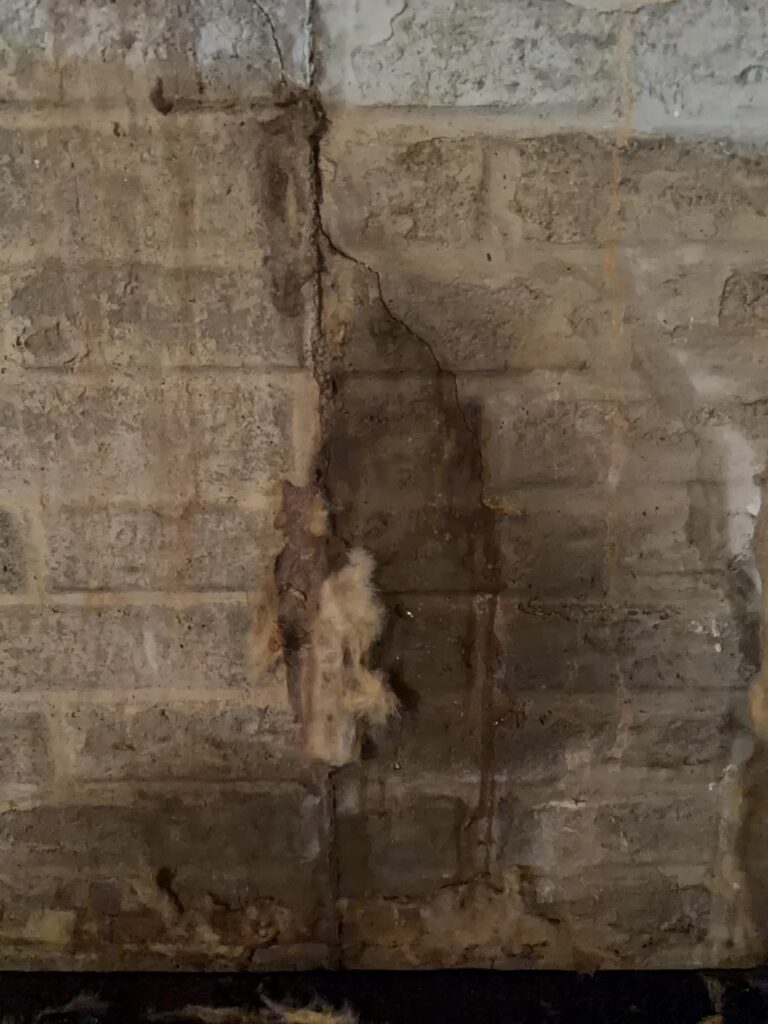
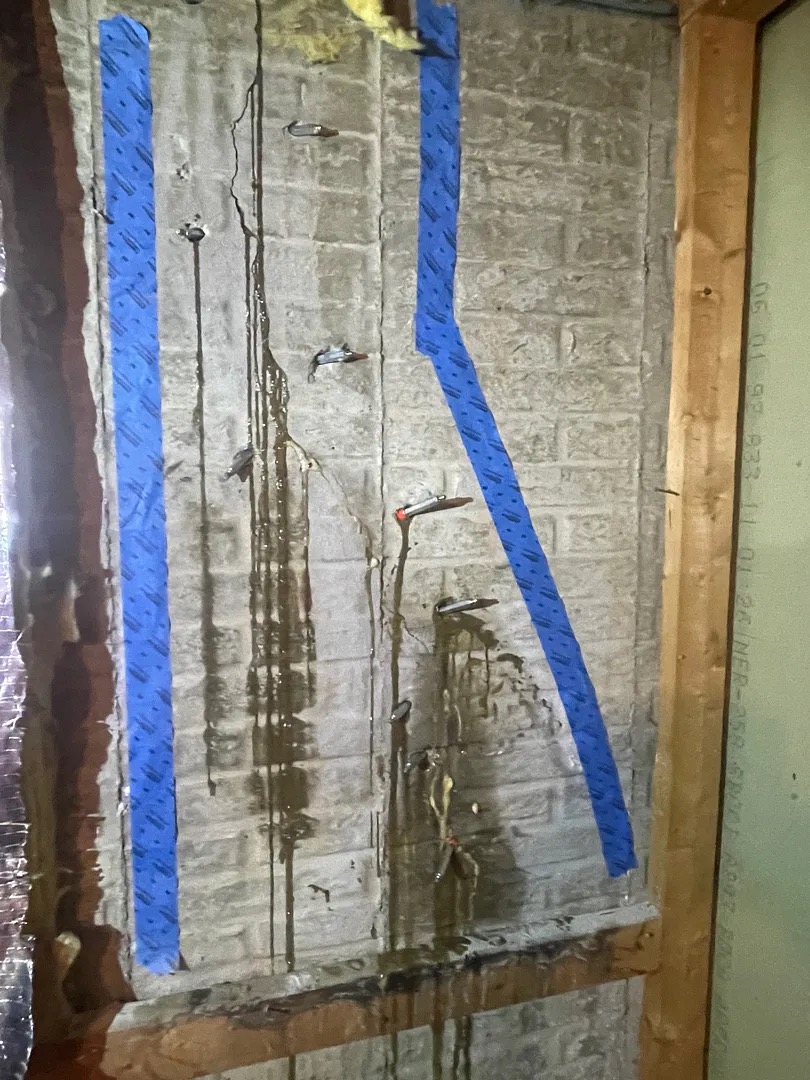
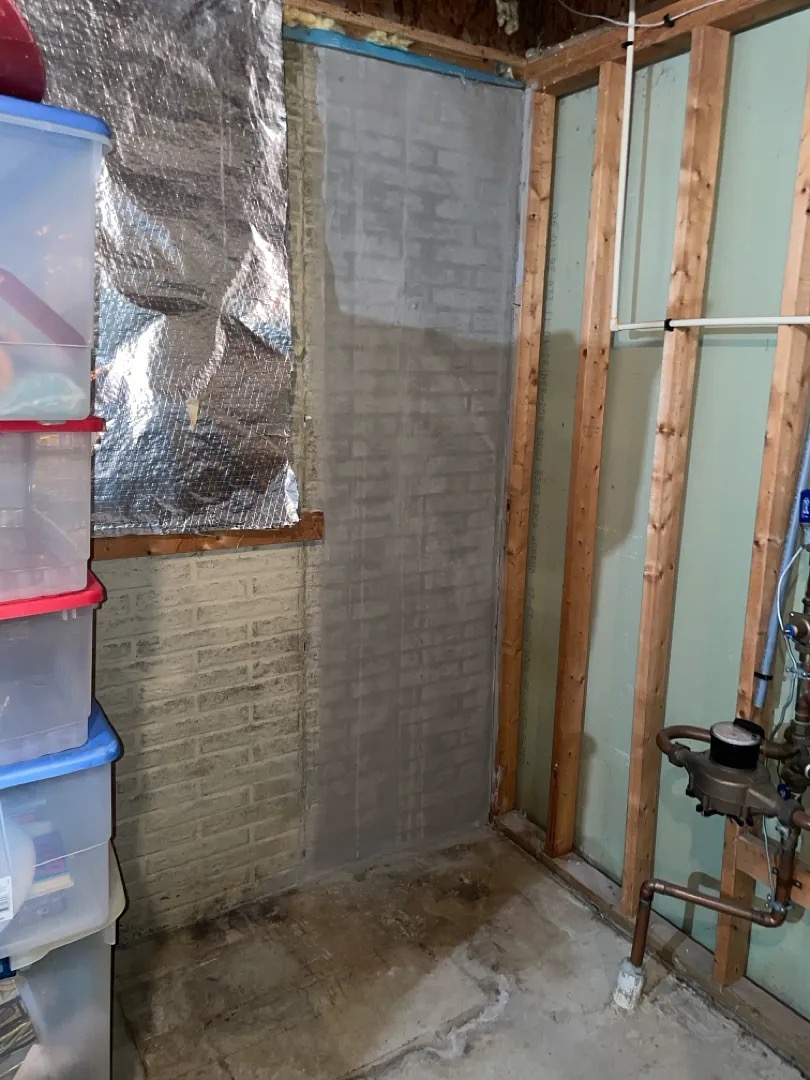
The separate job record lists polyurethane-grout injection and surface patching. Its same-job photo gallery shows the exposed crack and staining, injection packers in the wall with visible grout runs, and a later view of the treated area covered by a gray surface patch. Those are distinct visual stages, even though the gallery note date alone does not establish when each photo was taken. The patterned facing does not by itself prove the underlying wall substrate, so this should not be described as a standard poured-concrete crack repair. The photos also do not document a rain test or long-term dryness.
Why not combine the two into one success story?
The available records do not document the homeowner’s initial complaint, the diagnostic reason for combining the scopes, or a dated post-rain result. Each job should be evaluated on its own evidence. Each scope has its own photographs, but neither set establishes why both scopes were specified or whether the basement stayed dry after rain.
When comparing a short exterior drain with crack repair, ask what water pathway each scope addresses, where its discharge will go, and what post-work observation will confirm performance.