

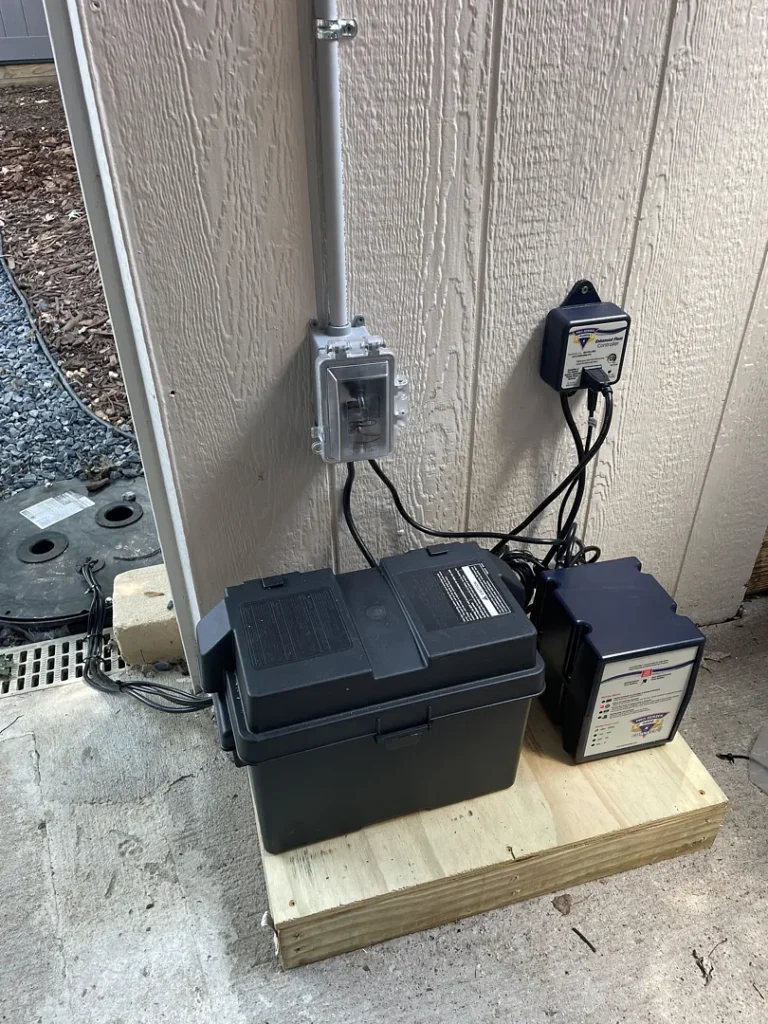
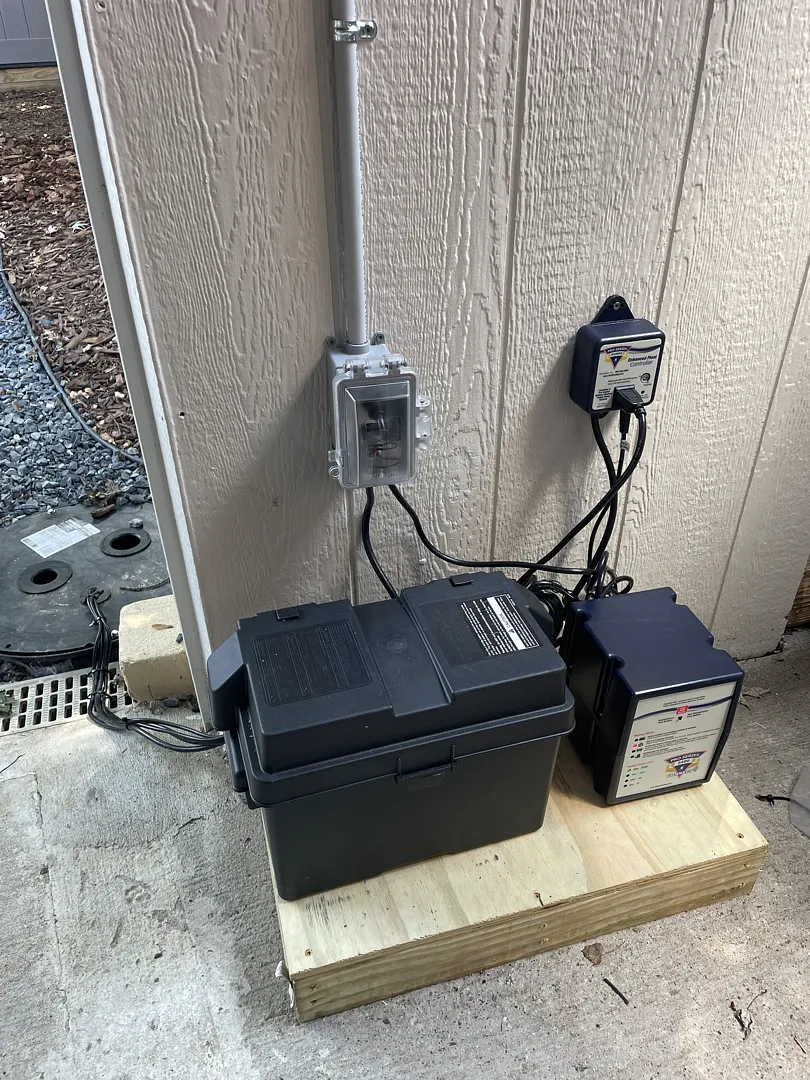
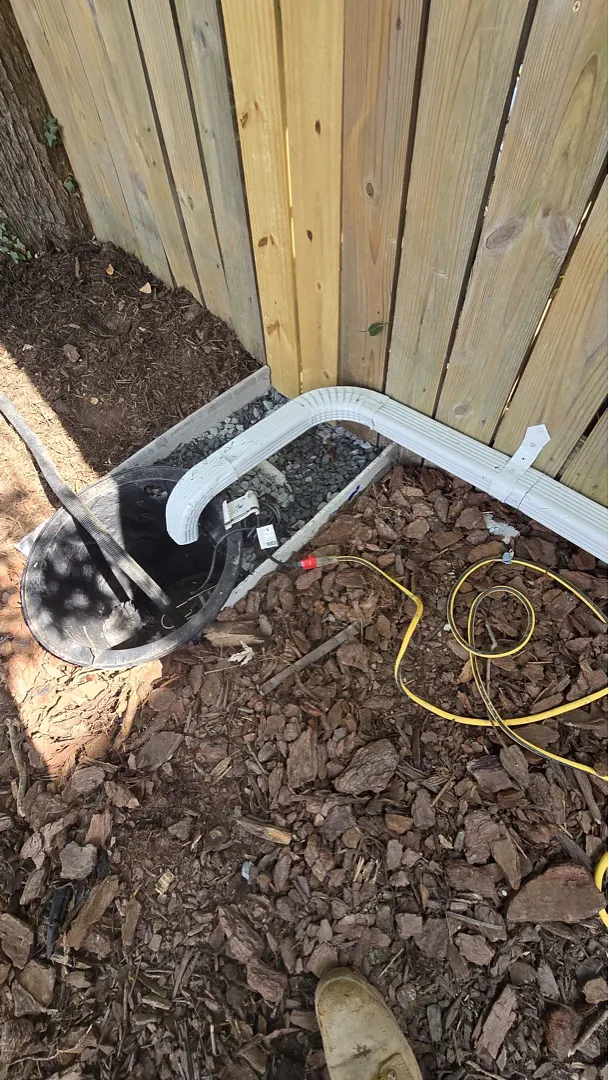
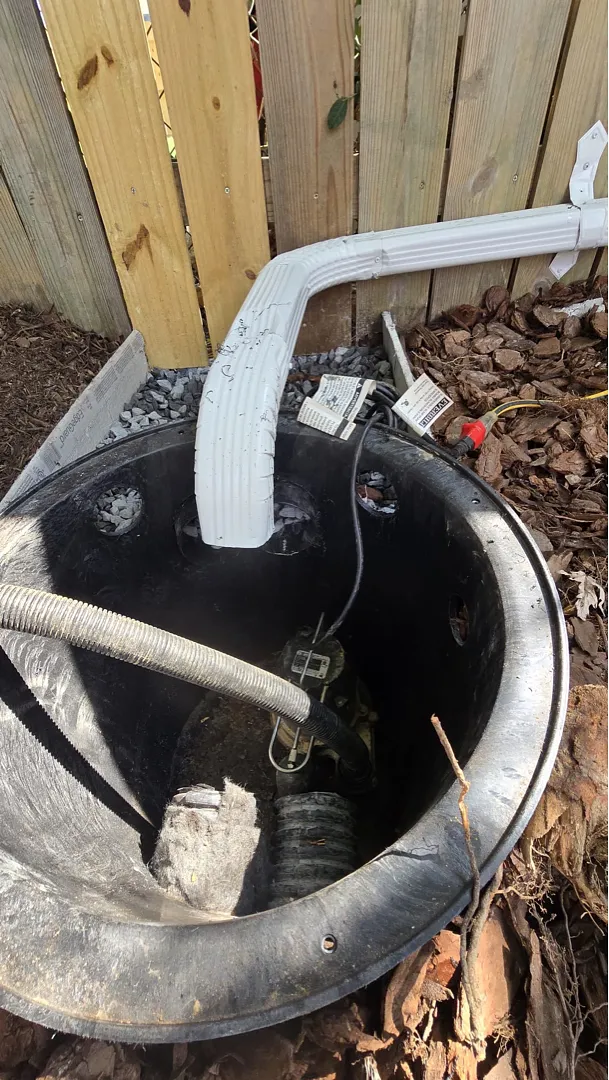
This completed Alexandria, Virginia drainage job combined a recorded 34-foot exterior trench with perforated pipe and gravel, a 12-inch catch basin, and a sump system with battery backup. Newly matched, same-job photographs show battery/control equipment and an open sump basin during installation. They replace the earlier assumption that only permits and receipts were available, but they do not show the entire buried route or a later rain test.
Why use a drain, catch basin and pump together?
Each component has a distinct role in the completed scope. The perforated pipe and gravel form a specified exterior collection run. The catch basin is a surface-water collection point. The pump and battery backup are mechanical equipment intended to move water when called upon. The record also lists an outlet and dedicated electrical line. These entries identify the planned and completed job scope, but the available images do not independently establish the finished electrical circuit or discharge destination.
Does the pump mean gravity drainage was impossible?
No such conclusion follows from these records. A pump is part of this scope, but no verified site elevation plan shows whether gravity drainage was possible elsewhere on the property. The earlier receipts and permit attachments are supporting paperwork, not work photographs. A separate closed electrical entry also does not prove a return visit or final wiring configuration.
What result is documented?
The main job is marked completed, and the images document installation-stage equipment and basin work. The reviewed records do not describe the homeowner’s detailed original complaint, a confirmed final discharge outlet, a pump test, or post-storm performance. This case therefore stops at the documented work rather than promising that flooding ended.
If runoff is collecting near your Alexandria home, request a drainage inspection to trace the water route and evaluate a drain, basin or pump.