
Polyurethane Crack Injection in Washington, DC | Case File
Rockville, MD·Kensington, MD·Ashburn, VA·Manassas, VA

Two Cracks, Sealed From the Inside: A Foggy Bottom Case File

Case file — Foggy Bottom, Washington, DC. One of the 25 jobs in our 250-home series. New here? Start with our open letter.

At a glance

LocationFoggy Bottom, Washington, DC
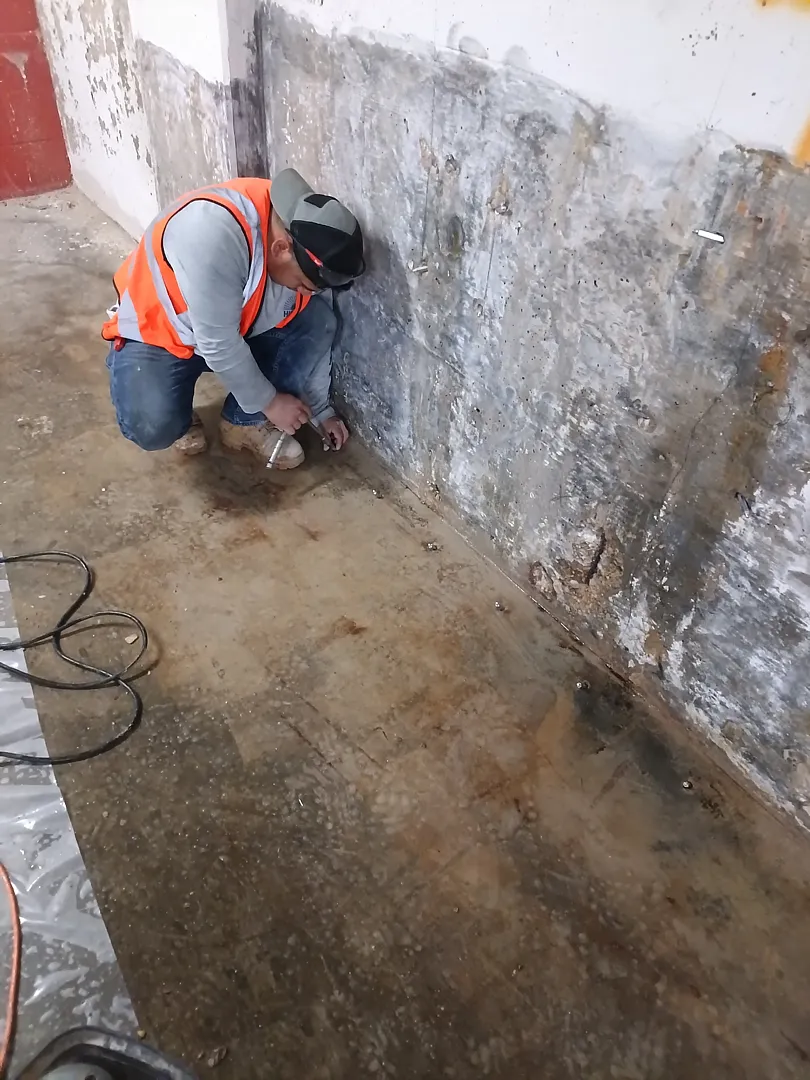
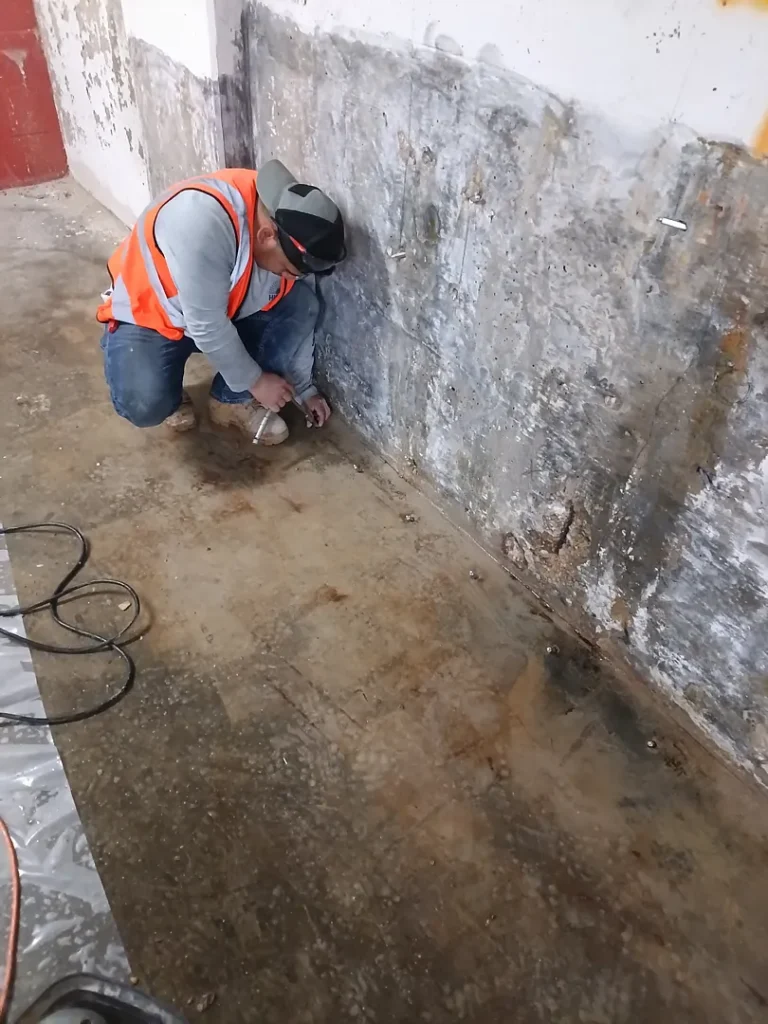
The problemTwo separate cracks in the foundation wall, both leaking while we were standing there
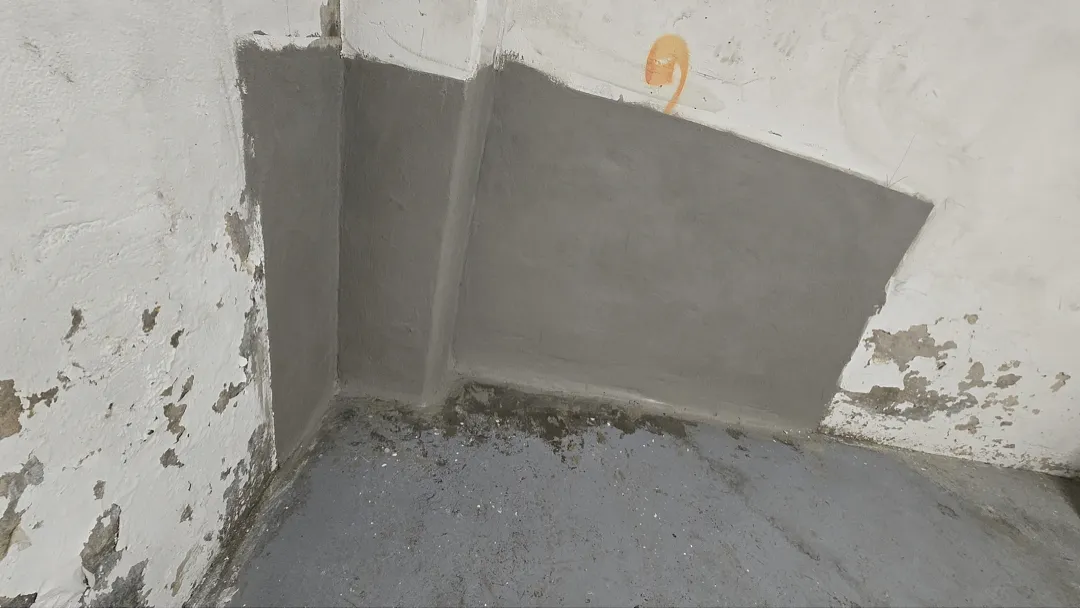
The fixPolyurethane grout injected into both cracks under low pressure, then the wall cut back, cleaned and patched
ScopeTwo wall sections, injected and finished

What injection actually is

A crack in a poured concrete foundation is not a flat line. It is a path — it wanders through the thickness of the wall, opens and closes along its length, and usually connects to voids in the pour that nobody can see.

That is why patching the face of a crack rarely works. You have sealed the two inches you can see and left the other ten inches of path open behind it.

Injection works the other way around. We drill a series of holes at intervals along the crack, set injection packers into them, and pump polyurethane grout in under low pressure. The grout travels the path. It follows the crack through the wall, fills the voids it meets, and reacts with the water it finds — the water is not a problem for it, it is what makes it expand and set.

When it cures you have a seal through the full thickness of the wall, shaped like the crack, because the crack is what formed it.

Why low pressure matters

High pressure injects faster. It also splits concrete.

Low-pressure injection takes longer and asks more of the technician — you are watching the grout appear along the crack and controlling the rate by hand. The payoff is that you are filling a crack rather than making it bigger. Anyone quoting you a fast injection is quoting you a risk.

The second visit nobody mentions

The job has a part two, and it happened on this house as it does on every one.

Once the grout has cured, the packers are still sticking out of the wall and there is cured polyurethane squeezed out along the crack. So the crew comes back, cuts the packers off flush, removes the excess, and patches the surface with a cementitious mortar so the wall is smooth again.

That finishing step is not cosmetic fluff. It is how the wall gets protected and how you can actually see, later, whether anything has moved. A wall left with packers in it is an unfinished job that photographs as a finished one.

When injection is the right answer, and when it is not

Injection is right when the wall is poured concrete and the problem is a crack. It seals that crack, permanently, through the wall.

It is the wrong answer when the water is not coming through a crack at all. Hollow block holding water like a sponge, groundwater pushing up through the slab, or a wall that has failed generally rather than in one line — those need an exterior system or an interior drain, and injecting them is money spent on the wrong diagnosis.

Two cracks in a poured wall, both actively leaking, is exactly the case injection was invented for. That is why this house got it and did not get a drain.

More on how we handle foundation cracks.

Two Downspouts and a Pop-Up: The Smallest Job in This Series

Two buried downspouts and a pop-up emitter, a little over $1,200. The last of 25 case files, and the cheapest…

The Pipe Is the Cheapest Part: A Gaithersburg Yard Drain

A 100-foot yard drain in Gaithersburg, broken down by where the money went. The pipe was under a tenth of…

The Ordinary Job: What Is Actually in an Exterior French Drain

A textbook 40-foot exterior French drain in Silver Spring, layer by layer - and the one layer that decides whether…

Twenty-Five Feet to Collect It, Fifteen to Carry It Away

A Montgomery Village drain with 25 feet of collecting pipe and 15 feet of carrying pipe. Why the discharge run…

The Drain That Had Nowhere to Fall: An Alexandria Case File

An Alexandria exterior French drain with nowhere downhill to go, so it got a pump, a battery backup and its…

110 Feet Along a School Building: A Montgomery County Case File

An exterior French drain along 110 feet of a Montgomery County school building, with drain board and termination bar. What…

Leave A Comment

Your email address will not be published. Required fields are marked *

Licensed & insured Maryland MHIC #167693 Washington, DC Basic Business License #410526000488