

Case file — Olney, Montgomery County · DMV Waterproofing, Rockville branch. A project note on recurring basement moisture. New here? Start with our open letter to DMV homeowners and our guide to DMV foundation types.
At a glance
- Location: Olney, MD (Montgomery County)
- Foundation: CMU (concrete block)
- The problem: Mold returning in three exact spots, stepped cracks, cracked slab
- Runoff concern: Downspouts discharged close to the foundation; the basement also needed an interior water-management system
- The fix: Buried/redirected downspouts + 124 ft interior French drain + dual sump
What the homeowner saw
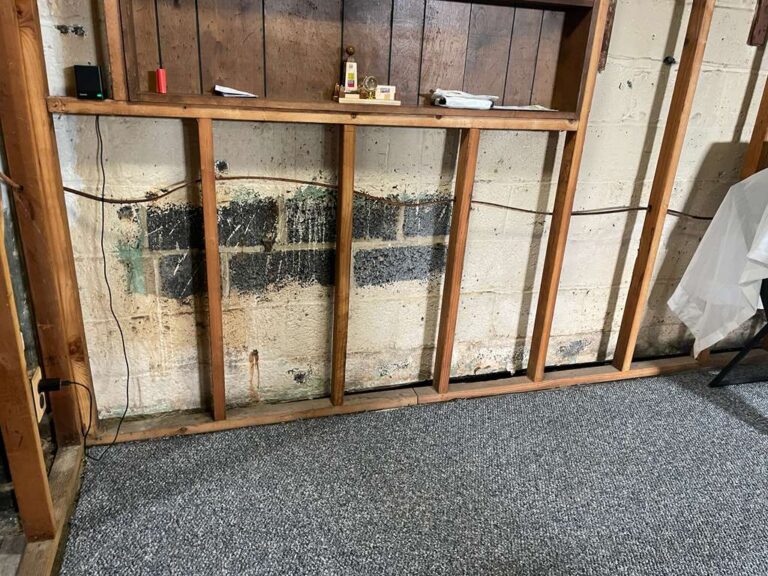
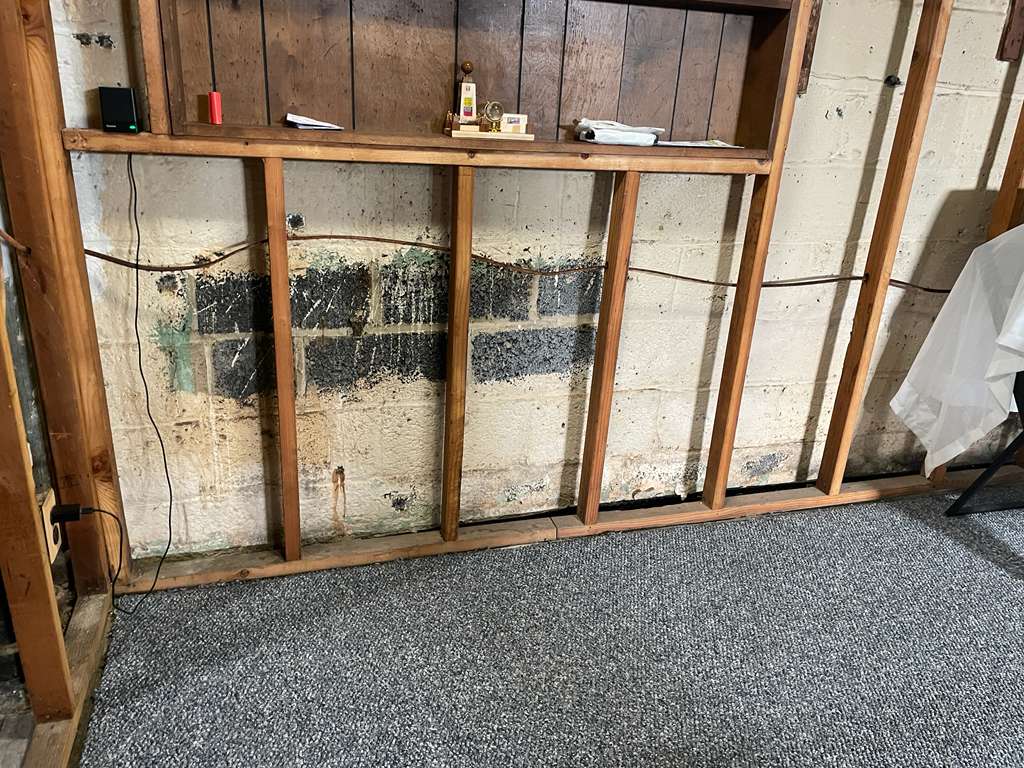
The owners kept finding mold along the base of the block wall — and it kept coming back no matter how many times they cleaned it. There was a musty smell in the basement, and the wall felt damp at the bottom.
What I found
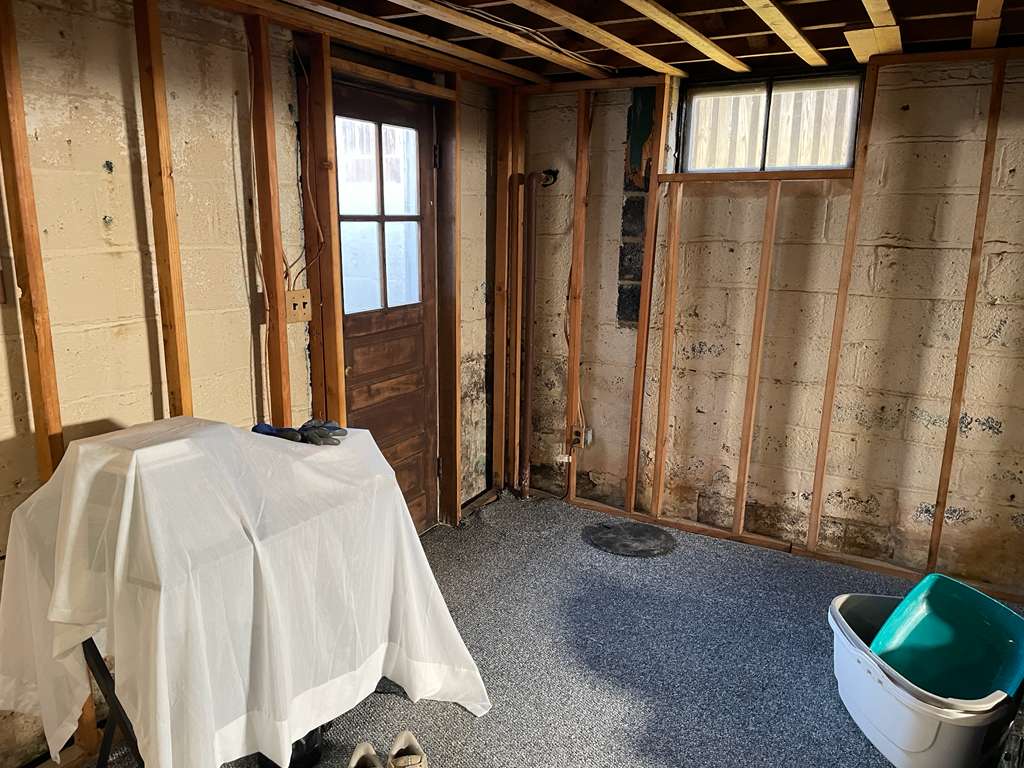
The first thing I do on any inspection is read the wall. Walking down the stairs, the mold wasn’t random — it was sitting in three specific places: directly across from the stairs at the base of the CMU wall and slab, then the far right corner, then the far left corner. Those locations suggested a recurring moisture path, but staining alone could not prove where the water entered.
The site notes describe stepped cracks through mortar joints and cracking in the slab near the corners. Those conditions were recorded alongside the damp wall. Cracks can have more than one cause, so their presence does not by itself prove that roof runoff was the only water source.
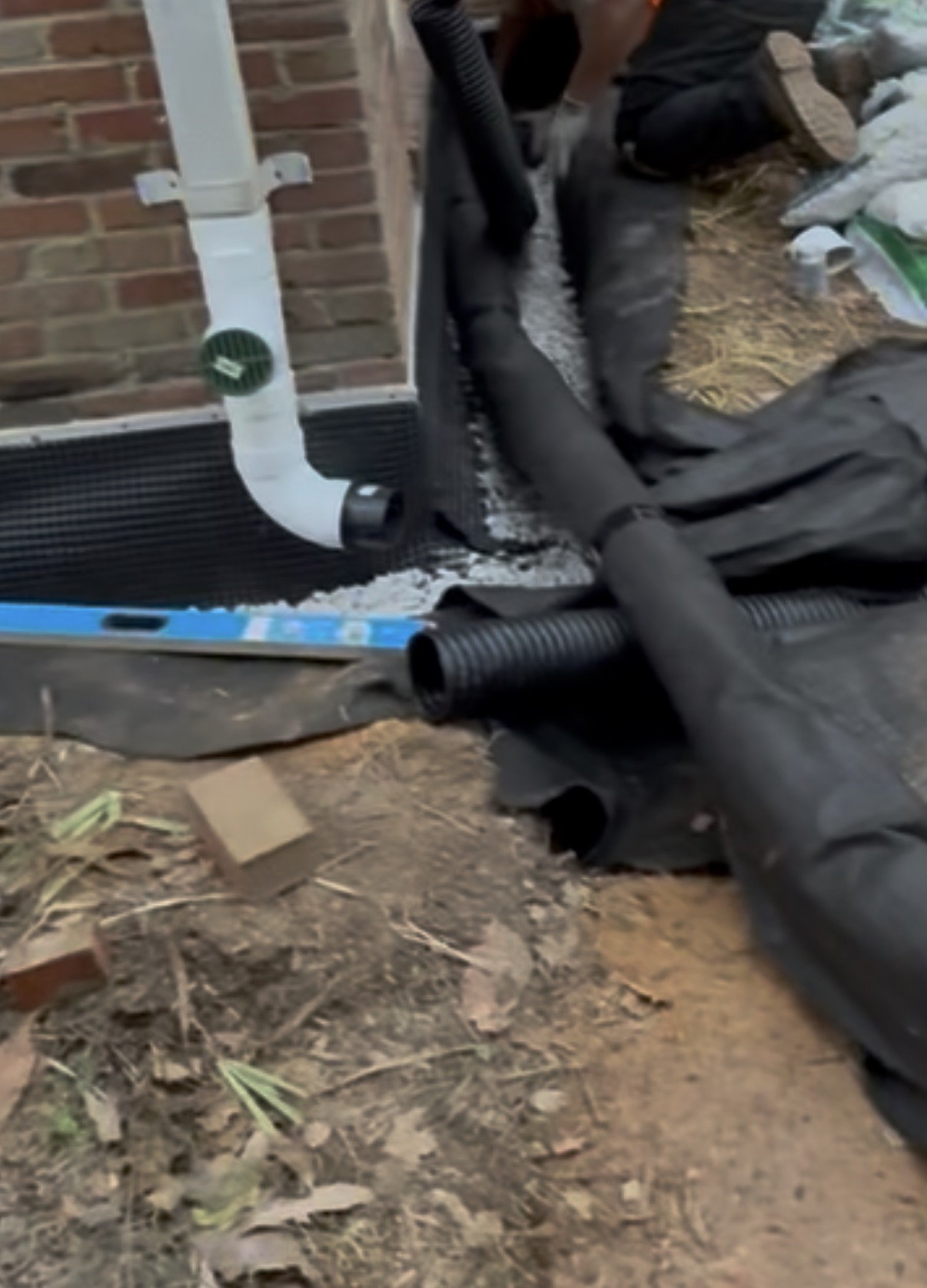
Outside, the downspouts discharged close to the foundation corners. That routing could add roof runoff to already damp soil around the block walls. The team addressed that source while also installing an interior system to collect water reaching the basement perimeter. The visible staining and cracks are reasons to investigate; they are not, by themselves, a measurement of how much water came from each path.
What we did
The fix had to work on two fronts — outside and below.
First, outside: we buried and extended the downspouts to carry the roof water well away from the foundation, to reduce the roof-water load beside the wall.
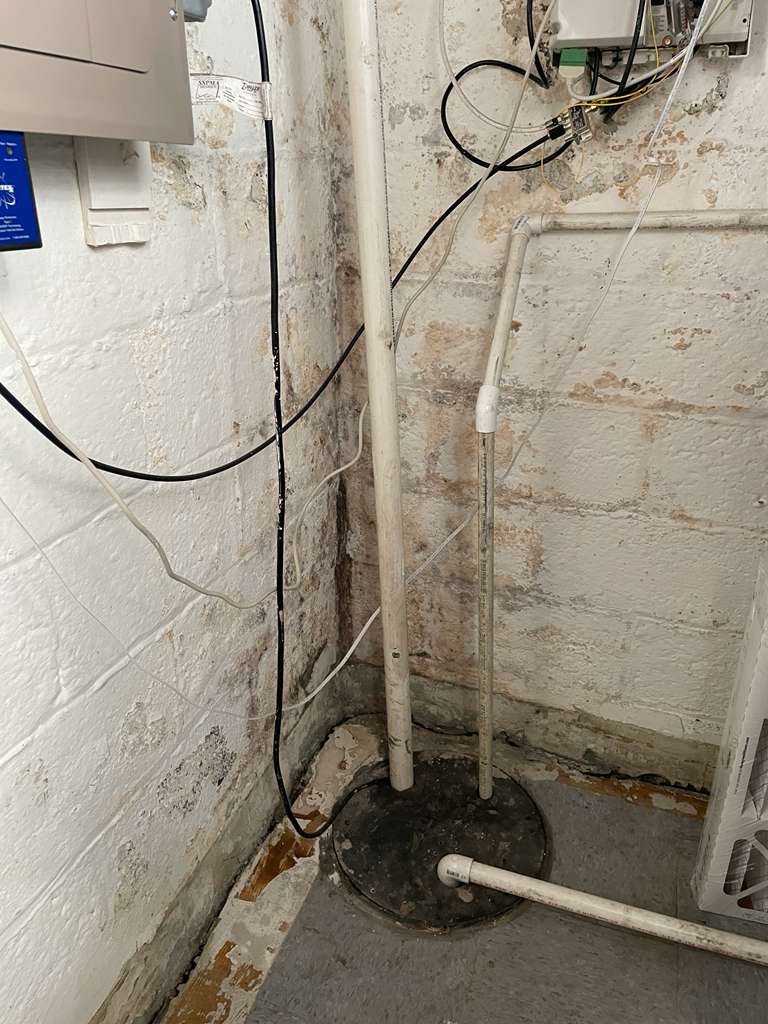
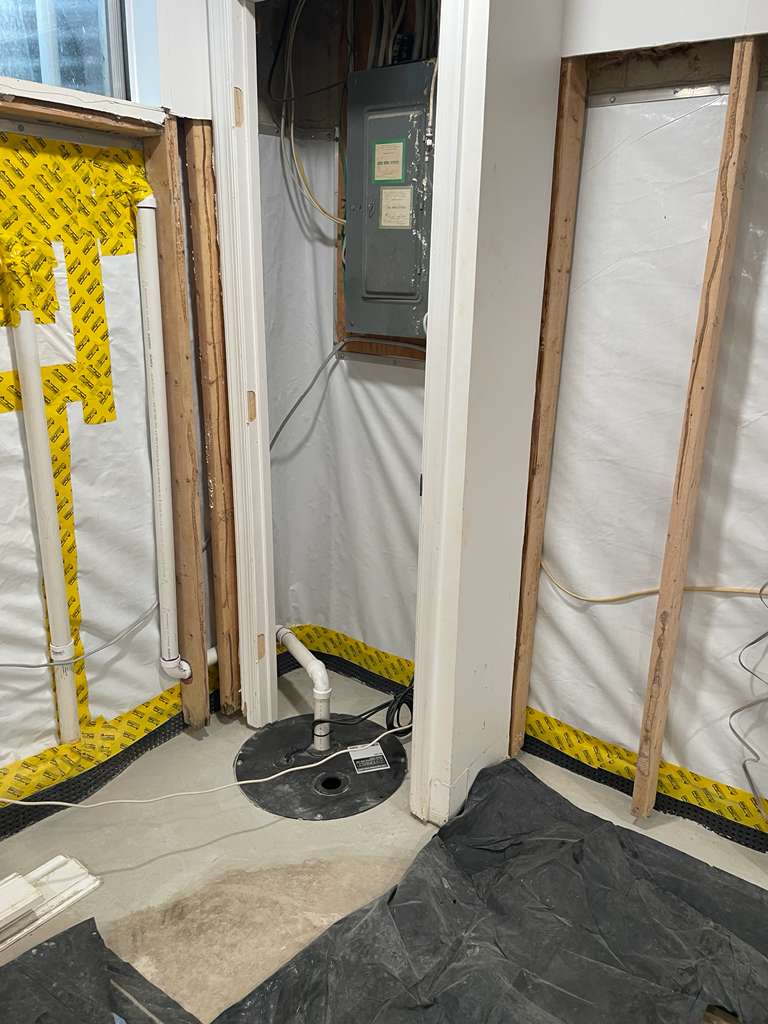
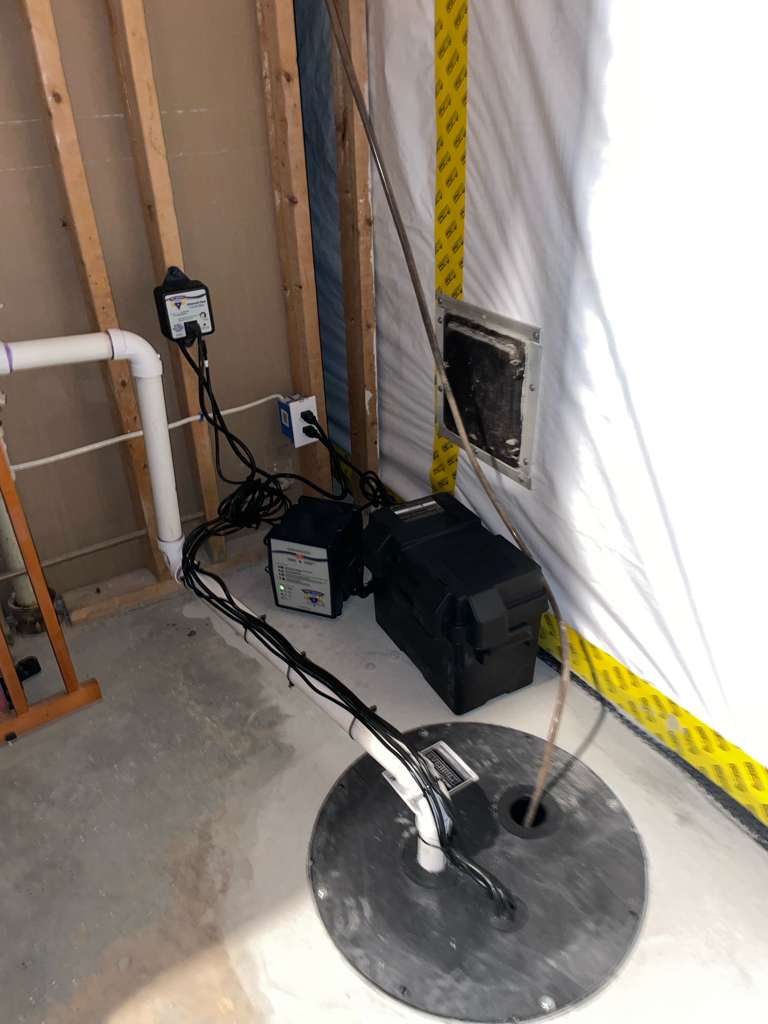
Then, inside: the project notes describe 124 feet of interior French drain feeding a sump, with a primary pump, a secondary pump and battery backup. The crew also addressed the visible mold and installed a wall liner. The purpose of the drain is to collect water at the basement perimeter and move it to the sump; it does not make the block wall itself waterproof.
The result
The available photos show the installed wall liner and sump area. We have not verified a dated post-storm follow-up or mold-clearance result for this article, so the documented outcome here is the completed work—not a promise that every future storm will leave the basement dry.
The takeaway
Recurring mold calls for finding and correcting the moisture source, not just cleaning the surface. Downspouts and grading are worth checking, but condensation, plumbing, wall seepage and water at the wall-floor joint can also matter. Here, the plan combined roof-runoff redirection with interior collection and pumping because the two measures address different parts of the water path.
Seeing mold or damp block that won’t go away in your Olney or Montgomery County basement? Schedule a free inspection — I’ll read the wall, find where the water is really coming from, and tell you honestly what it takes to fix it. Learn more about our interior French drain & sump systems.
FAQ
Why can mold return after I clean a block basement wall?
If the wall or surrounding air stays damp, cleaning alone will not remove the underlying moisture. Check roof runoff, grading, leaks, condensation and water at the wall-floor joint before choosing a repair.
Can a downspout cause basement moisture?
Yes. A downspout that releases roof water beside the foundation can increase local soil wetting. It may be one contributor rather than the only cause, so the wall and slab water paths still need inspection.
Why install an interior French drain after redirecting downspouts?
Redirecting roof runoff reduces one source outside. An interior perimeter drain manages water that still reaches the wall-floor area and routes it to a sump. The two measures have different roles; neither substitutes for diagnosing the actual water path.
Written by Selcuk Altan Atasoy — civil engineer (University of the District of Columbia) and licensed waterproofing inspector (DC, MD & VA), in the field since 2005. I started in waterproofing at ECS in Chantilly, VA, inspecting foundations across the DMV — from single-family homes to apartments and parking structures to hospitals — and I now inspect residential basements for DMV Waterproofing.