

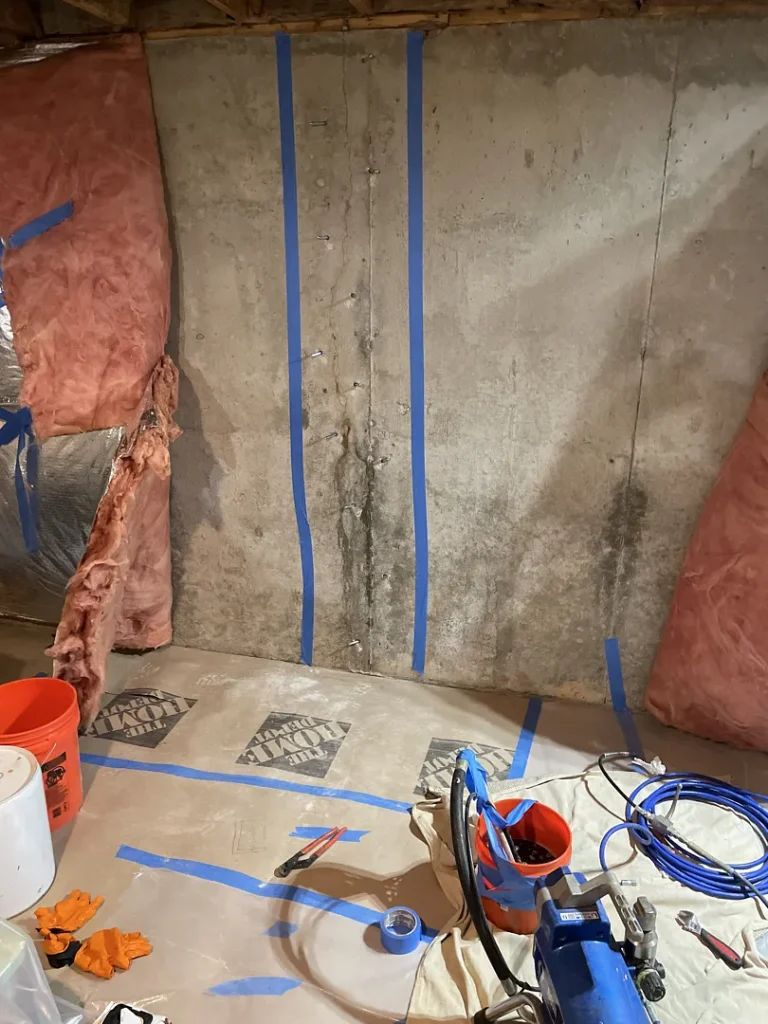
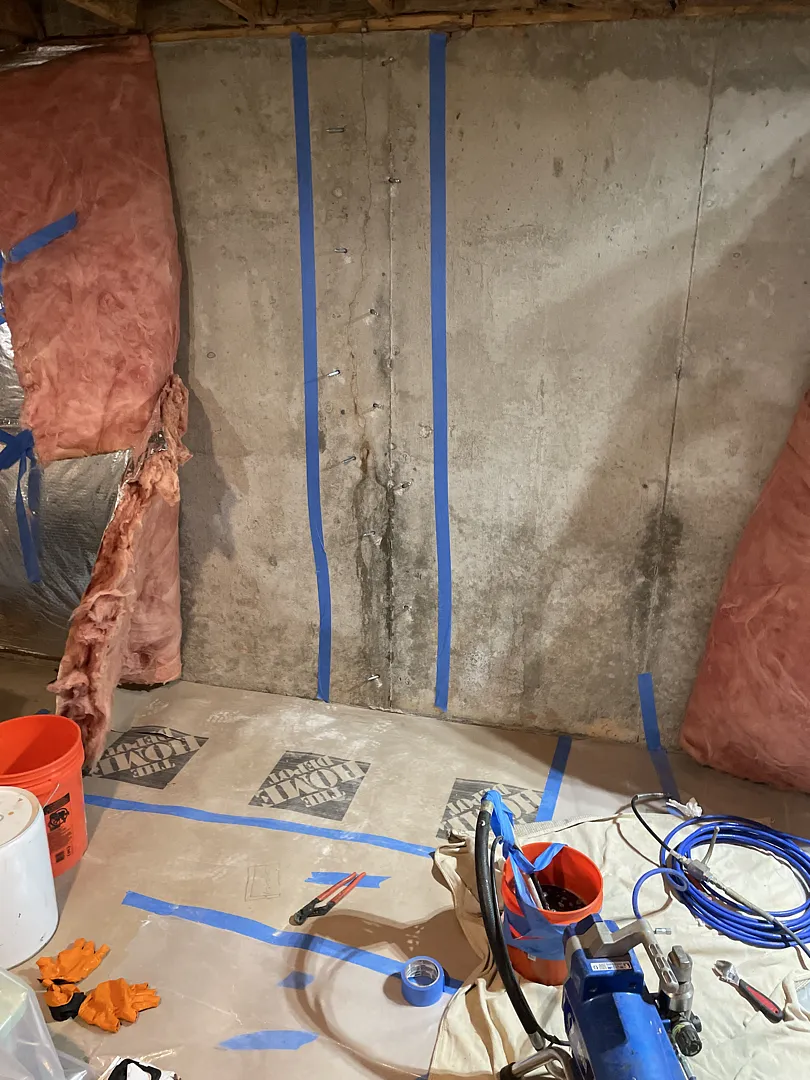
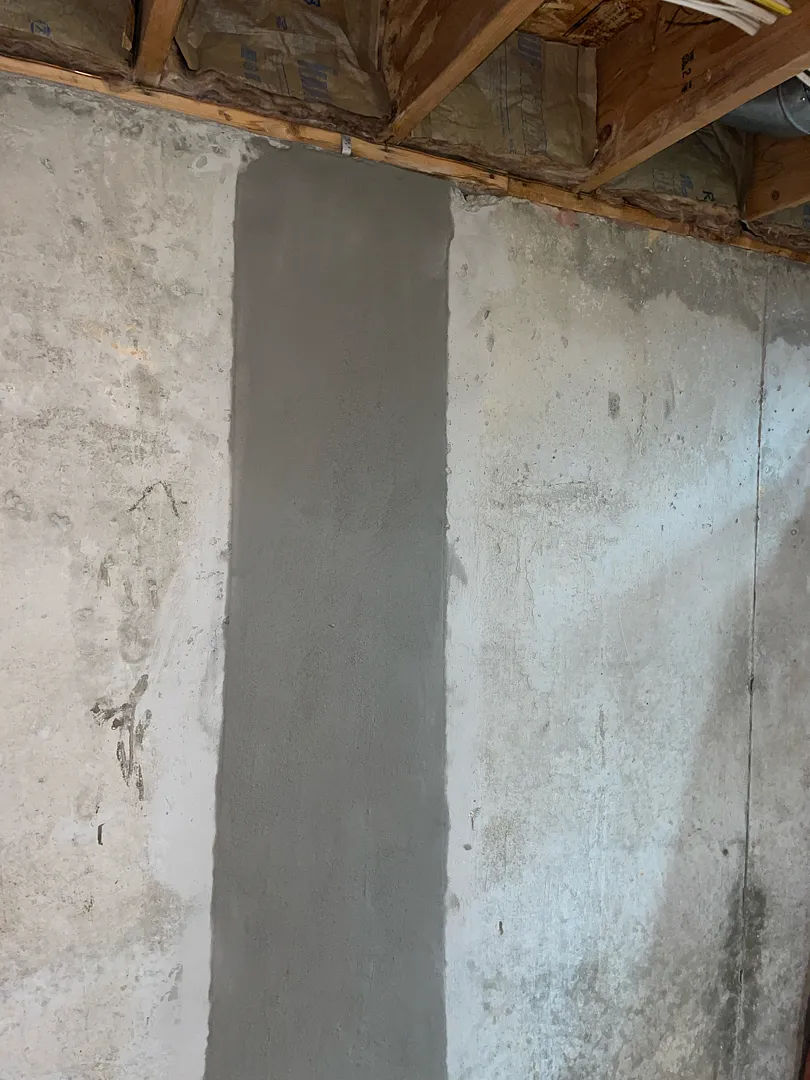
Two separate crack-injection jobs were completed at this Gaithersburg, Maryland home. The earlier repair has its own case study. Newly matched photos from the later job show a vertical wall crack marked with blue tape and injection ports already installed, followed by a gray patched strip. These are photographs of the later work—not evidence that the earlier repair failed.
Why was there another crack-injection job?
The later job note says “Another Crack.” It does not establish whether the first injection failed, whether the new repair was on a different wall, or whether the two water paths were connected. Keeping the two job records and photo sets separate avoids implying a diagnosis the record cannot support.
What did the later repair include?
The completed scope lists polyurethane grout injection, removal of the temporary packers and excess grout, and a cementitious-mortar surface patch. The first photograph shows the marked area after ports were placed; the second shows the later patched surface. Neither image is a post-rain moisture test.
Does a second crack mean the first repair failed?
Not necessarily. The available note identifies another crack-related service but does not connect it to the earlier repair. A site inspection would need to identify the exact opening and compare its location with prior work.
What can the finished photo establish?
It documents a patched wall area. The reviewed record does not provide a later storm observation, so this case stops at the documented scope and visible finish.
If a new crack or seepage appears in a Gaithersburg basement, request a site-specific inspection before assuming it is the same leak as an earlier one.