

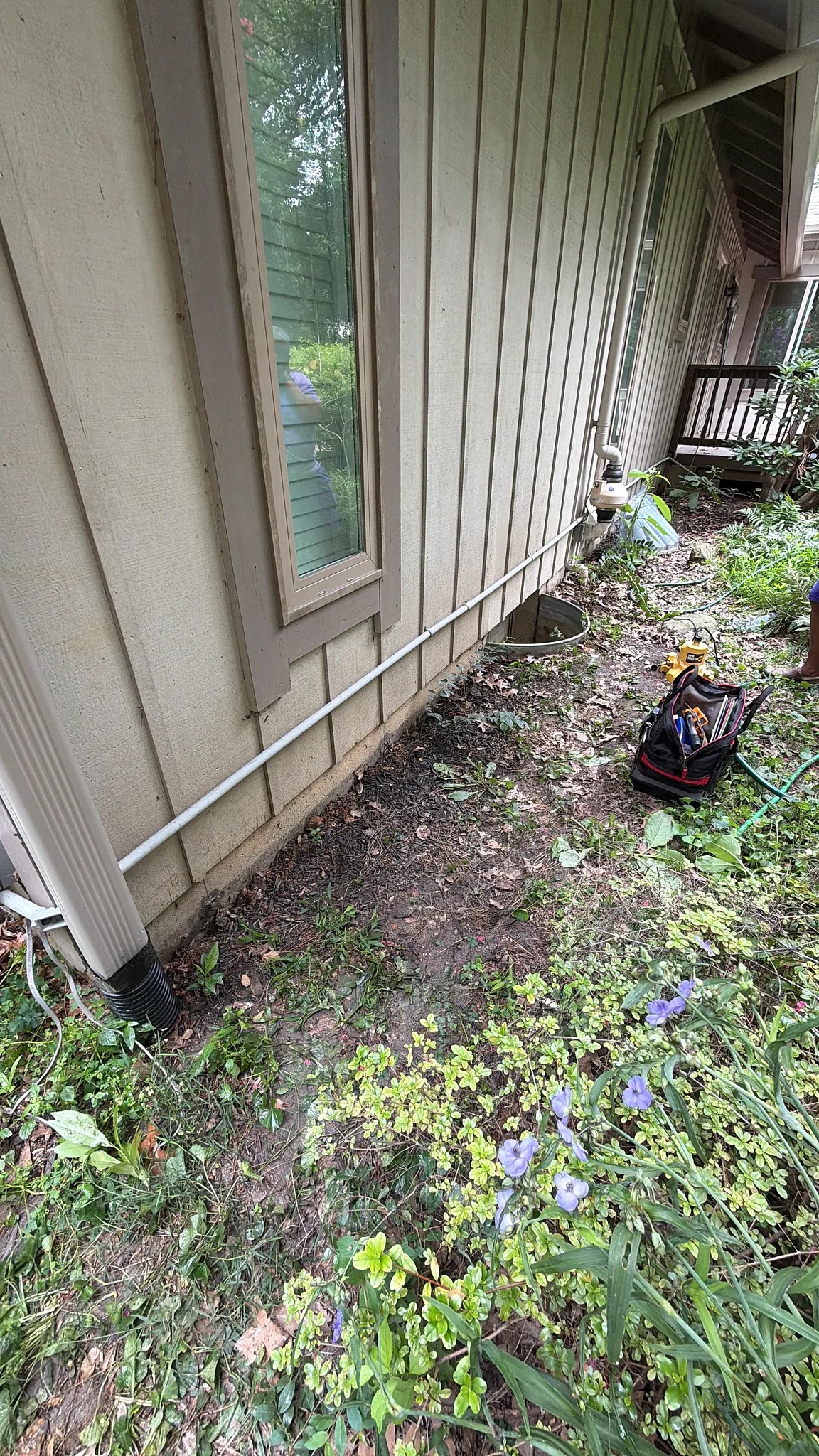
Documented scope: A completed Montgomery Village, Maryland job record lists 26 linear feet of exterior-drain trench, perforated 4-inch pipe and gravel backfill. It also lists one buried downspout and 16 linear feet of solid 4-inch pipe with a pop-up emitter in the item description. One pre-work field image exists, but the later attachments inspected for this job are receipts, not construction or finished-system photographs.
What is the difference between perforated and solid pipe?
Perforated pipe can collect water through its openings when placed in a properly designed gravel trench. Solid pipe is generally used to convey water without releasing it along the run. The two line-item lengths in this record describe different components; they do not, by themselves, prove exactly how the perforated drain, buried downspout and solid pipe were connected on site.
Where did this system discharge?
The solid-pipe item includes a pop-up emitter, but the available evidence does not establish the installed outlet location, its elevation or whether the discharge remained away from the building in rain. The older article claimed 16 feet was the first safe downhill point and that both collection and roof water shared one line. Those are design conclusions that need an as-built photo or plan, so they have been removed.
What else remains unverified?
The available request does not document the homeowner’s first water complaint, and the job-note images do not show the trench depth, pipe fall, connection details, finish or storm performance. A completed job record confirms the scope was recorded as done; it does not supply those missing field facts.
When reviewing an exterior French-drain or yard-drainage quote, ask for separate collection and conveyance lengths, a sketch of every connection, and the intended discharge location.