

CrackShield™ · DC, Maryland & Virginia
Foundation Crack Repair
A leaking crack needs more than a surface patch.
CrackShield™ uses polyurethane pressure injection for suitable leaking cracks in poured concrete. We assess the wall and the water path first, then explain the repair and any separate drainage or movement concerns.
We identify the problem, explain the repair, and give you a written price before we leave.
- Assess the crack
- Seal the leak
- Restore the surface
The wall and the water path
Choose the repair for the crack you have.
The wall material, crack pattern, signs of movement and water-entry location all matter. A photograph alone does not establish the cause.
Leaking poured-concrete cracks
Polyurethane injection can seal suitable water-entry paths within a concrete crack. We assess access, moisture conditions and the crack before selecting the material and installation approach.
Masonry or movement concerns
Block and brick walls may need damaged units or mortar joints repaired. Displacement, bowing or ongoing movement may need further evaluation and a separate repair plan. Injection for a leak does not replace structural stabilization.
Water along the wall-floor joint or across a wider area may need interior drainage, exterior waterproofing or outside runoff management. We explain any additional work before it is included in your scope.
Our repair · Step by step
See the injection and the finished repair.
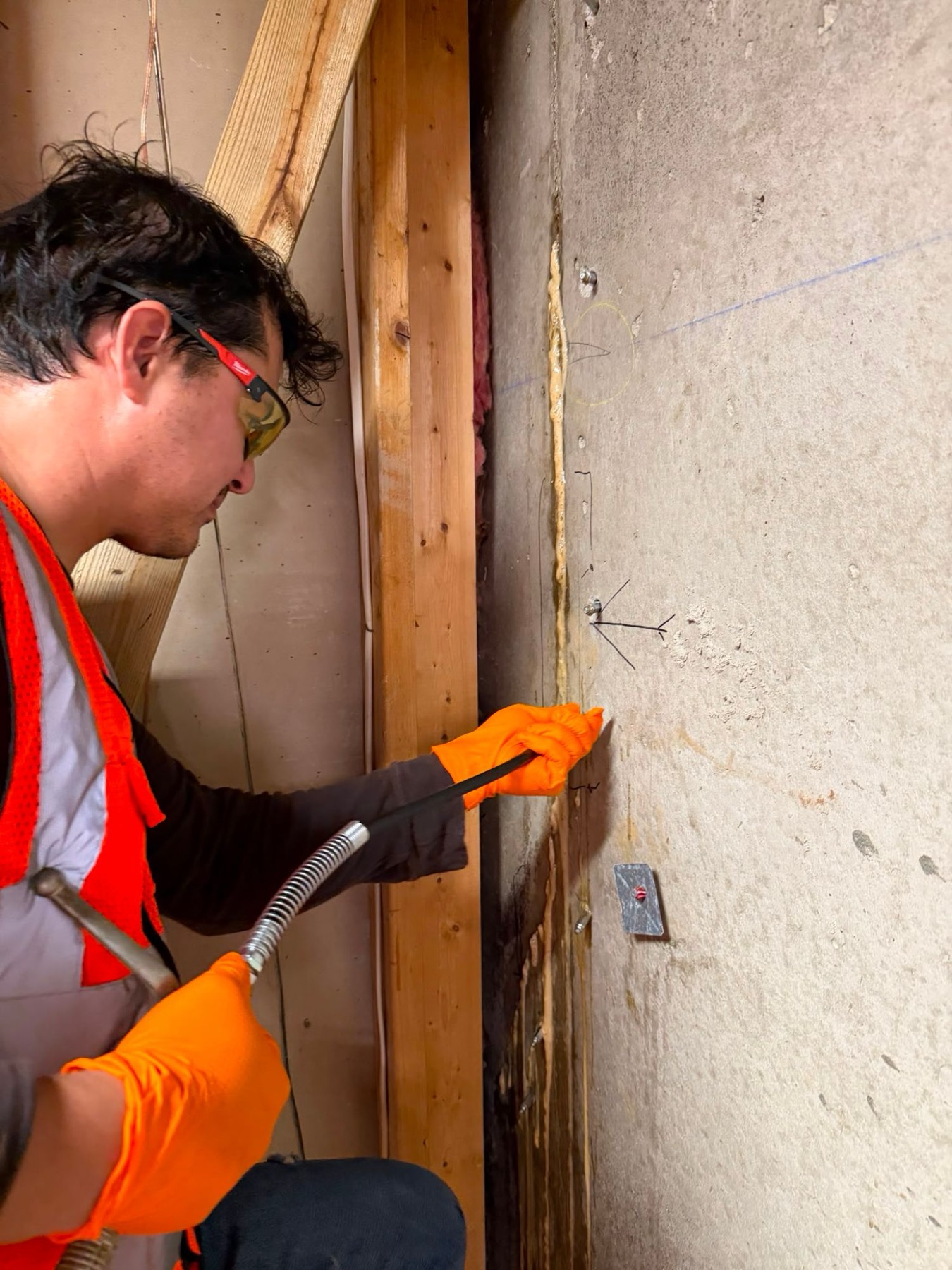
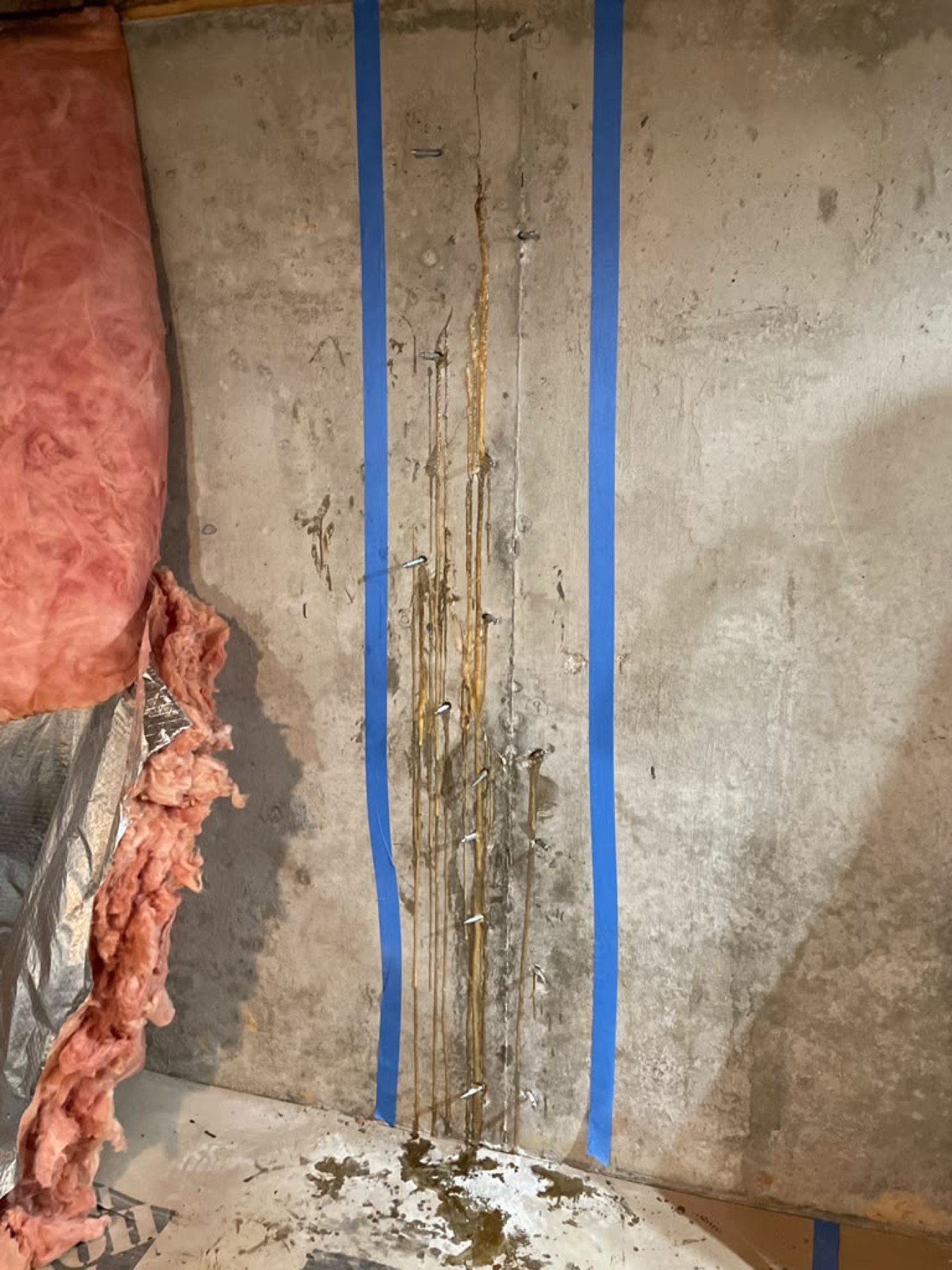
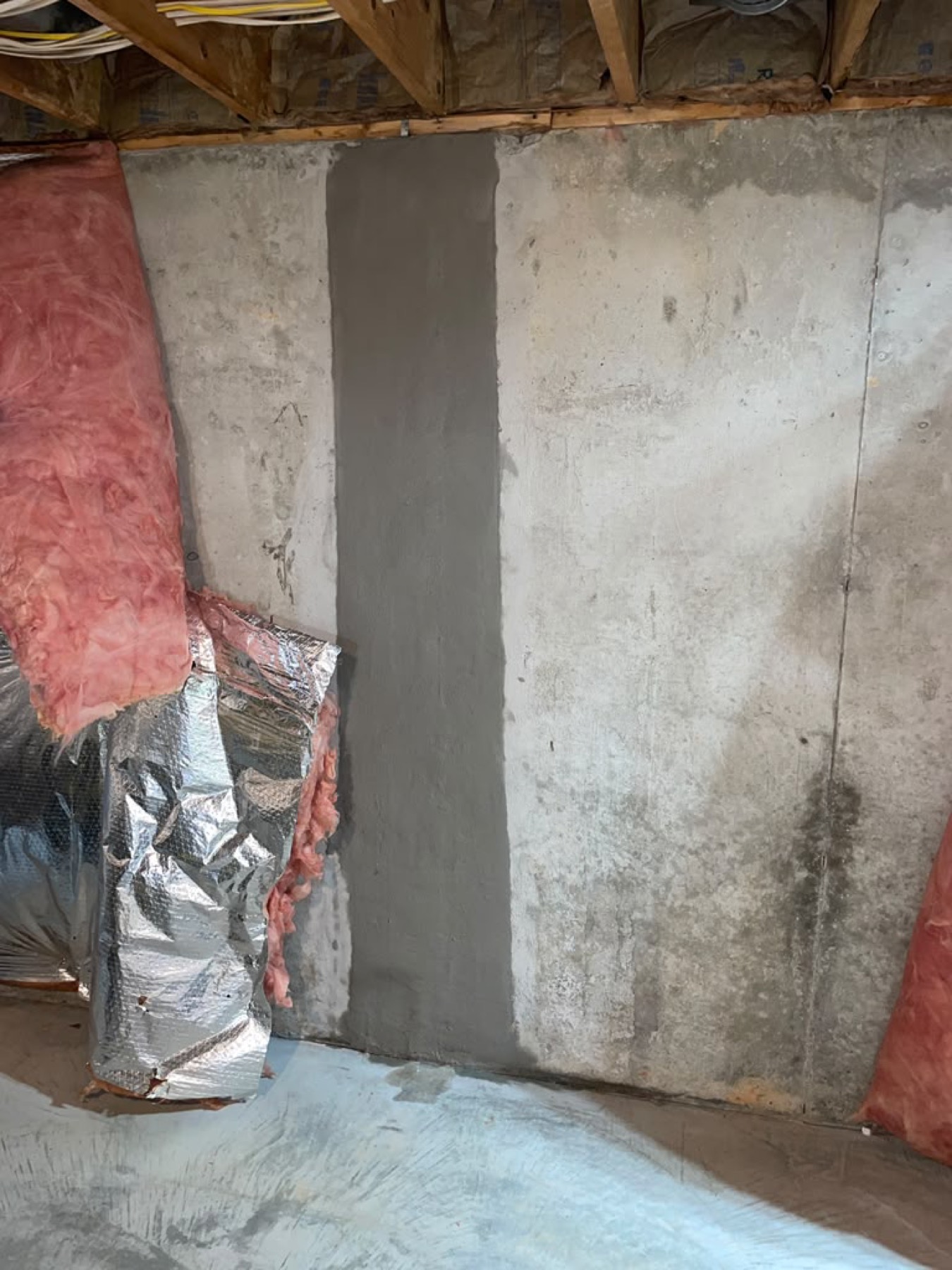
Three work-site photos show pressure injection, the injection path with packers and resin, and the final surface patch.
Swipe to follow all 3 stages → · Tap a photo to view it full size.
What the repair does
Seal the water path. Then finish the surface.
The injection and the visible patch have different jobs. We explain both before the work begins.
Assess
Review the wall, crack, moisture and any signs that a different repair is needed.
Inject
Install mechanical packers and inject the selected polyurethane resin for a suitable concrete leak.
Allow to cure
Follow the selected product’s cure requirements and the actual site conditions.
Restore
Trim or remove injection fittings as appropriate, clean excess material and restore the surface.
What to expect
A clear scope before the repair.
Access and preparation
The crack must be accessible. We explain whether wall finishes or stored items must be moved and what work-area protection is included.
Injection and cure
Hole locations, injection pressure and cure time depend on the material, crack and wall. We explain the expected sequence rather than promising one fixed procedure for every crack.
Surface restoration
The repair area is cleaned and patched. Texture and color can differ from the surrounding concrete; painting or replacing wall finishes may be separate work.
Written warranty
CrackShield™ carries a 25-year written warranty for the covered repair. The written warranty explains the repaired location, coverage and exclusions, including how separate cracks or movement are treated. Read our warranty overview →
A written price for your home
What affects the cost?
We inspect the crack and the work area before giving you a written scope and price.
Number & condition of cracks
The crack length, moisture conditions and any previous repair material.
Wall material & access
Poured concrete, block or brick need different repair plans. Existing finishes affect access.
Preparation & restoration
The agreed removal, cleaning, injection or masonry work and surface restoration.
Related issues
Any separate drainage or movement concerns are explained and priced in the agreed scope.
Homeowner questions
Before you decide.
Does sealing a leak repair a structural problem?
Leak sealing and structural repair are different. A crack with displacement, bowing or ongoing movement may need further evaluation and a separate repair. We explain those concerns during the inspection.
Can every foundation crack be injected?
No. The wall material, crack condition and water path determine whether injection fits. Block and brick repairs may involve replacing damaged masonry or repointing mortar joints instead.
Will the repaired area be invisible?
No invisible-finish promise is made. The surface patch may differ in texture or color. Painting and rebuilding finished walls are included only if they are part of the written scope.
How long does the repair take?
Access, crack condition, the selected resin and its cure requirements affect the sequence. We explain the expected work and any return visit before starting.
What if water is also coming through the floor?
That can require a different water-management plan. We review the wider water-entry pattern and explain whether drainage or another repair is needed in addition to the crack work.
What does the 25-year warranty cover?
Coverage applies to the repair described in your written warranty, subject to its terms and exclusions. Review the repaired location and how any new cracks or foundation movement are treated in that document.