

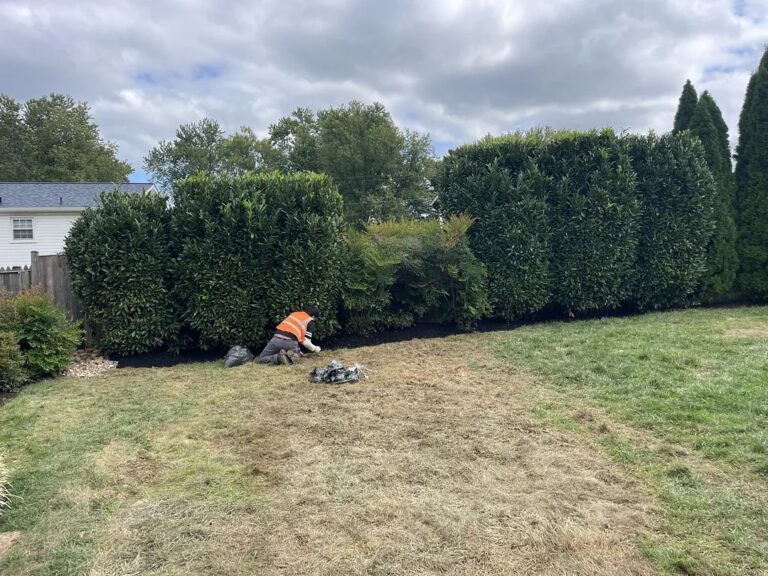
Yard drainage in Potomac, MD starts with the direction water actually travels. At this home, water pooled in the yard, moved toward the basement, and flooded it. An earlier contractor’s yard drain had not solved the problem; according to the project owner, its slopes sent water the wrong way. Our completed project rebuilt the drainage path to intercept surface water, carry roof runoff away, and protect the vulnerable basement entrance.
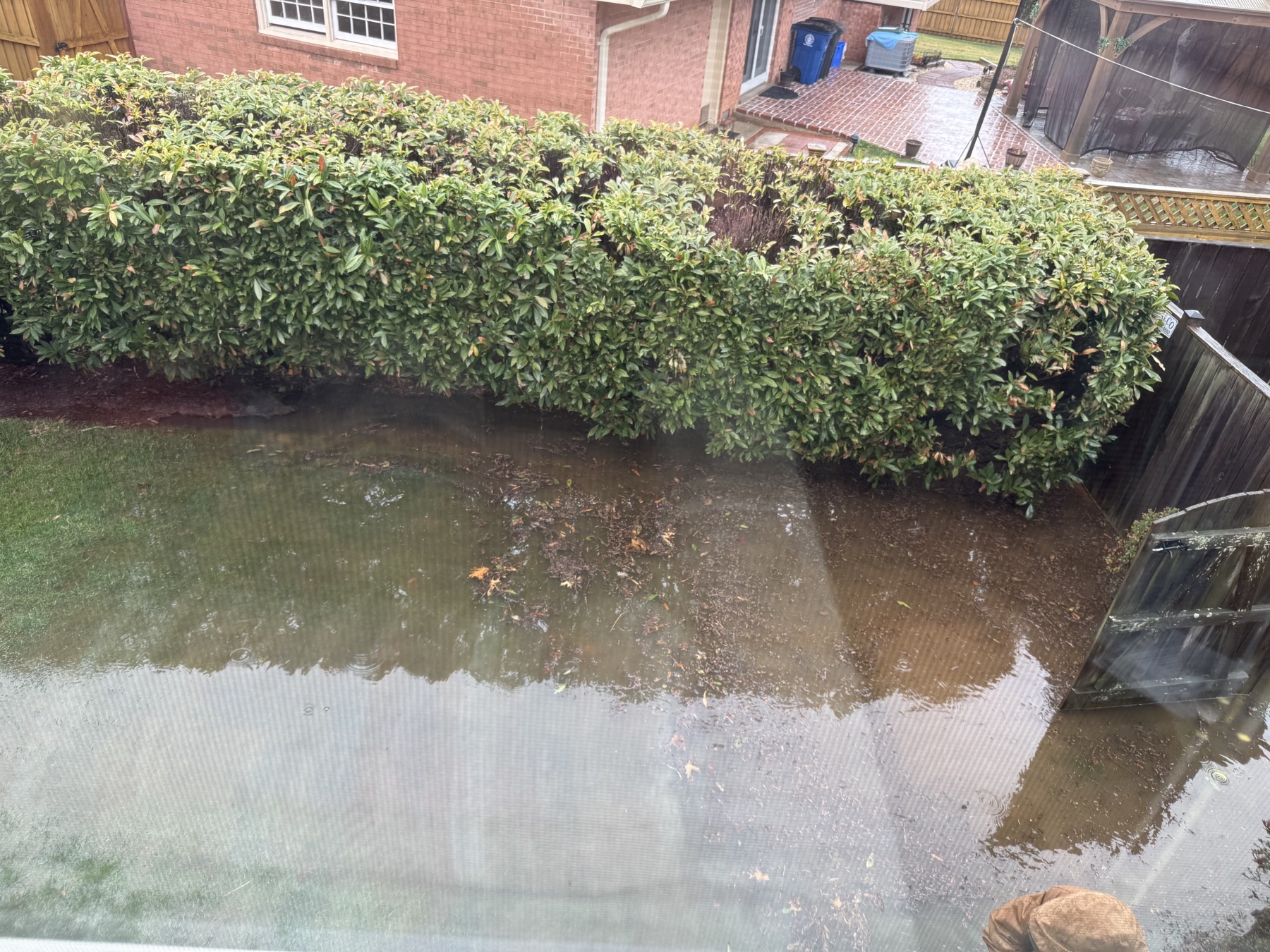
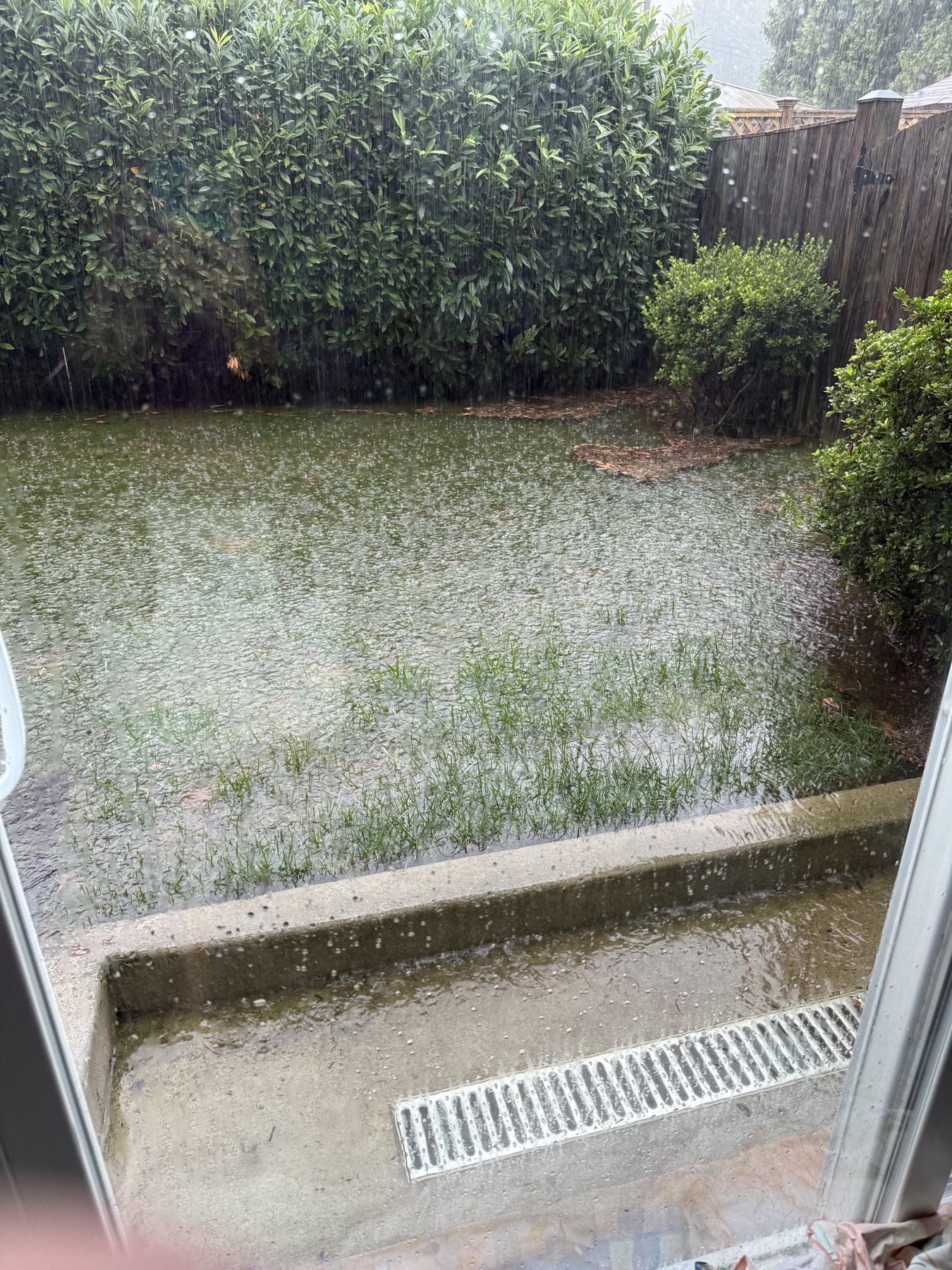
Before the repair: water across the yard
The homeowner’s rain photos show the original problem clearly: standing water spread over a broad section of the backyard and collected near the basement entrance. These are pre-repair photos of this property, not illustrations of a typical drainage problem.
Why the old yard drain failed
A yard French drain needs more than a pipe in gravel. Its location must cross the real flow path, and the trench bottom must fall continuously toward a workable outlet. A reverse slope or low spot can leave water standing or allow it to keep moving toward the house. Here, grade control was the central repair.
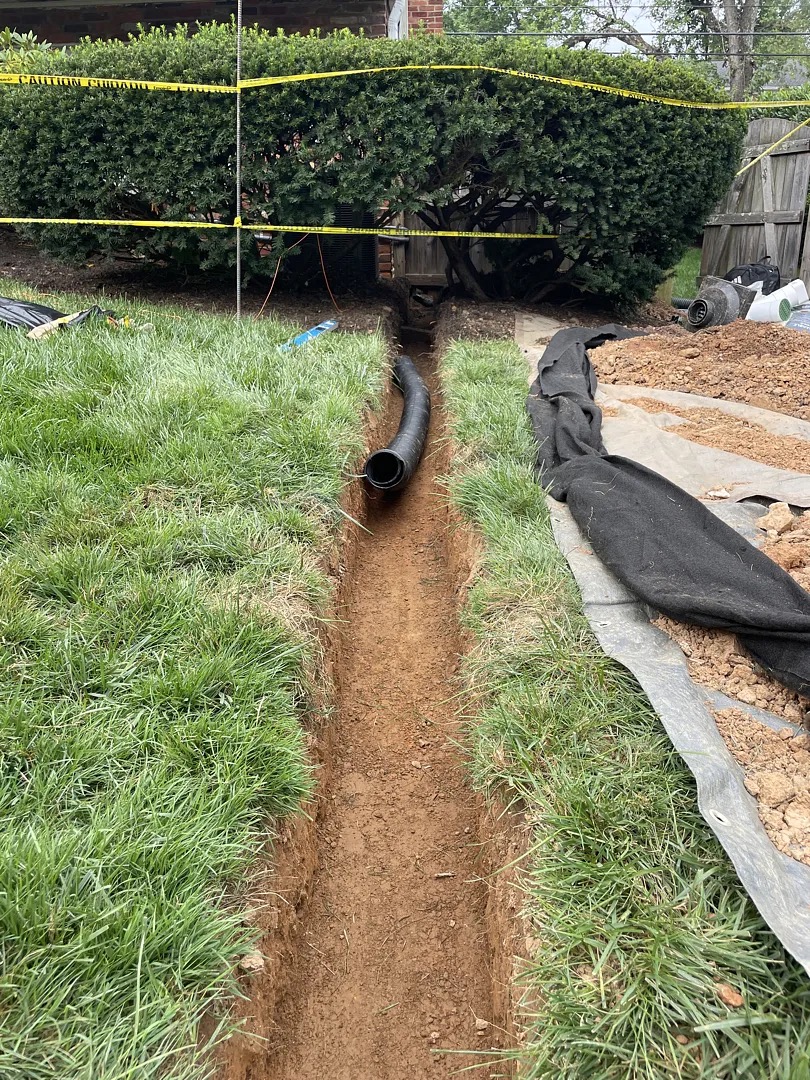
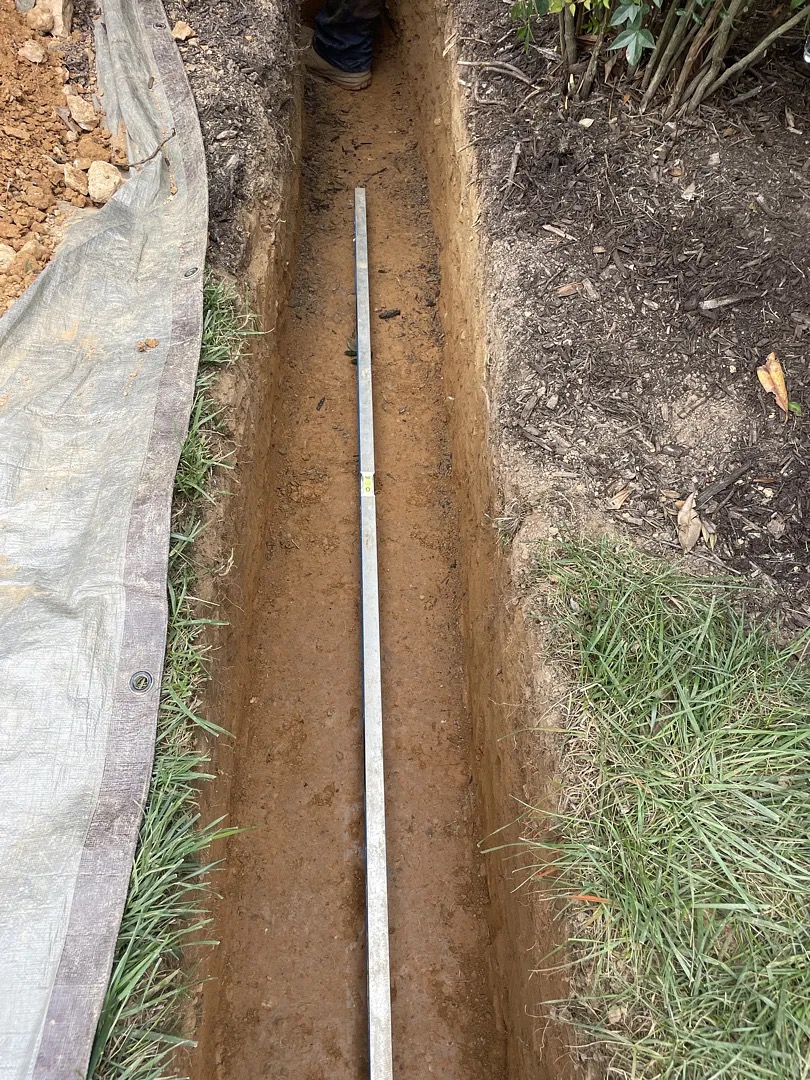
The crew opened the new route, established the fall at the bottom of the trench, and compacted the base before placing the drainage layers. Compaction helps prevent later settling from changing that carefully set slope. The completed job scope records approximately 225 feet of yard trench and four-inch perforated drain tile.
How the new yard drain collects water
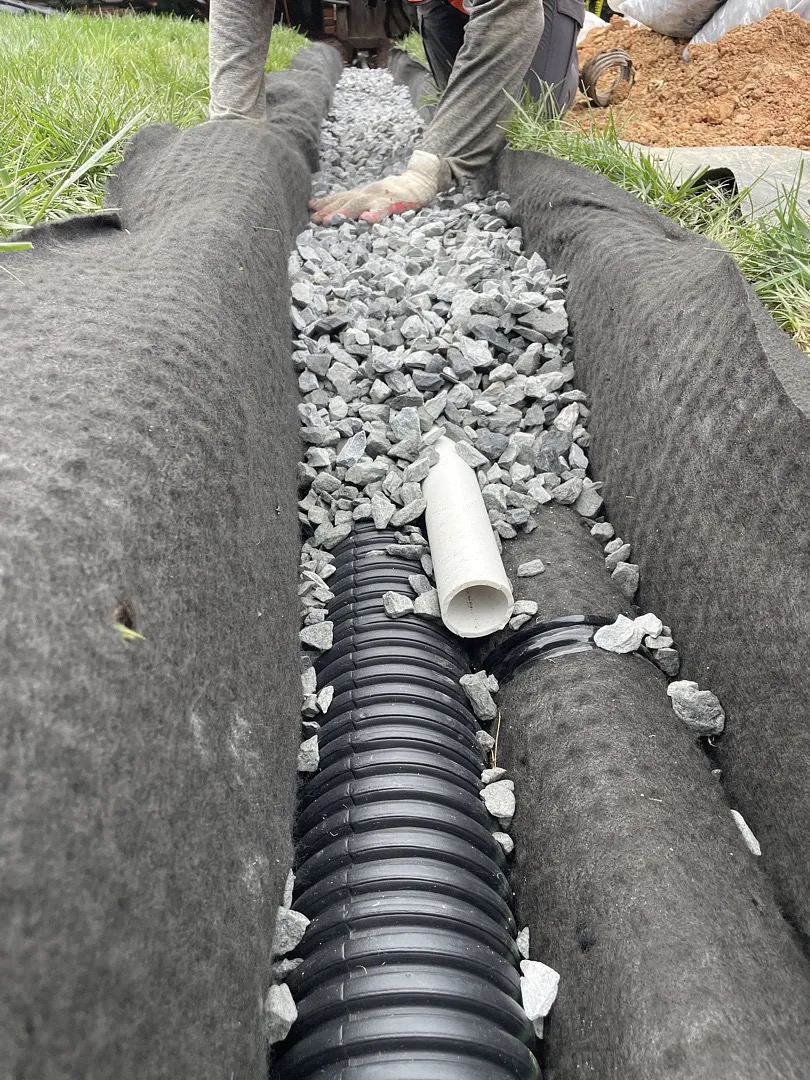
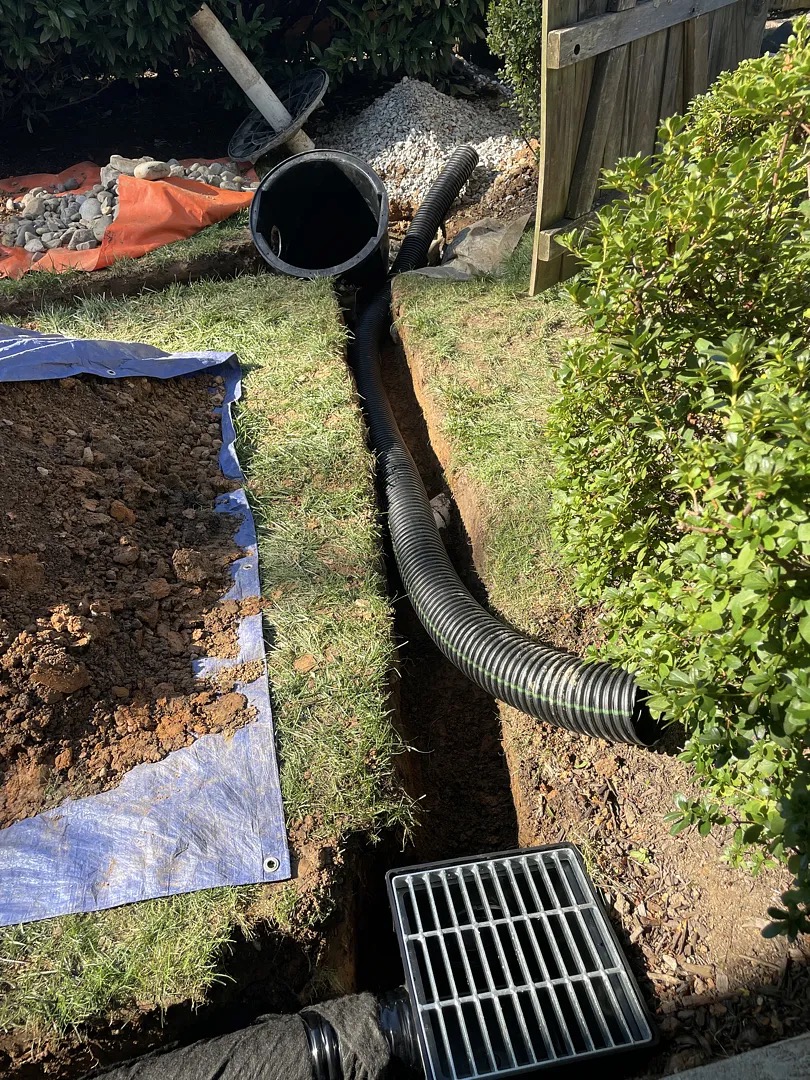
This collection trench runs through the landscape across the water’s path. The crew lined it with geotextile, placed perforated pipe, and surrounded the pipe with clean stone. Water enters through the gravel and pipe openings while the fabric helps keep soil fines from migrating into the stone. Two catch basins collect concentrated surface runoff at selected points.
Four buried downspouts, a basement-door trench, and a backup pump
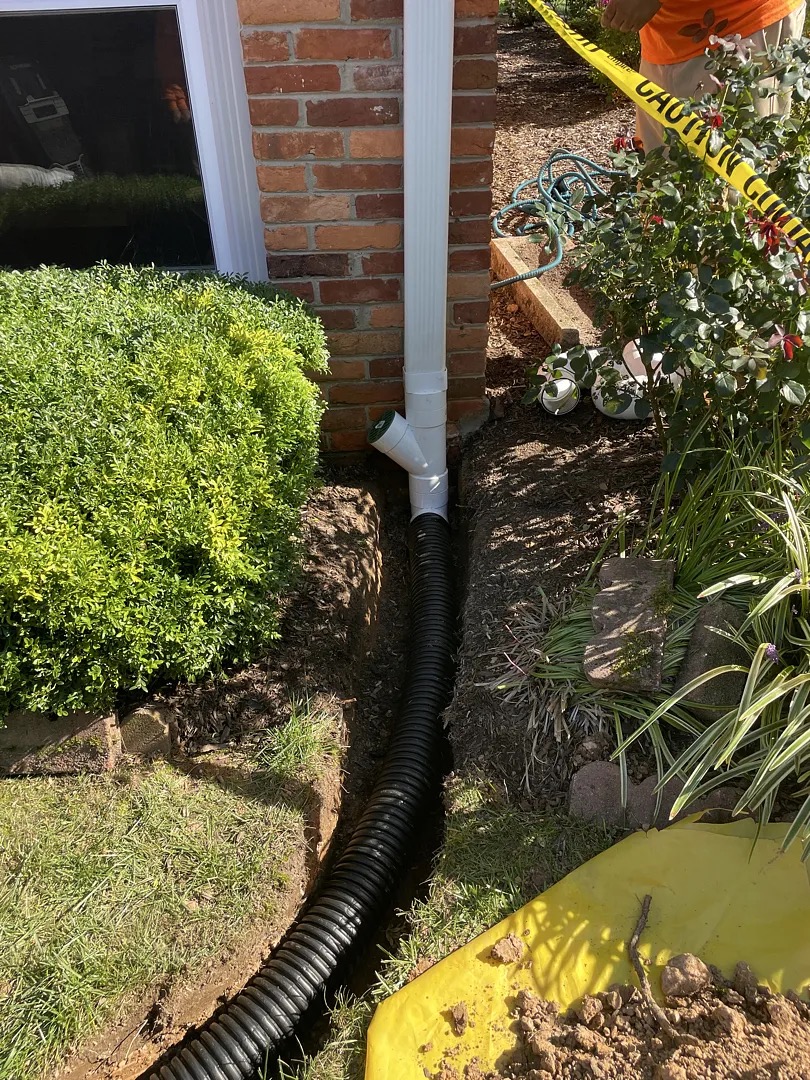
The owner confirms that all four downspouts were redirected underground. Three use gravity-fed routes away from the home. The fourth downspout and water approaching the basement door also have a gravity outlet. The trench bottoms were graded and compacted so the system was designed to move water by gravity as its primary method.
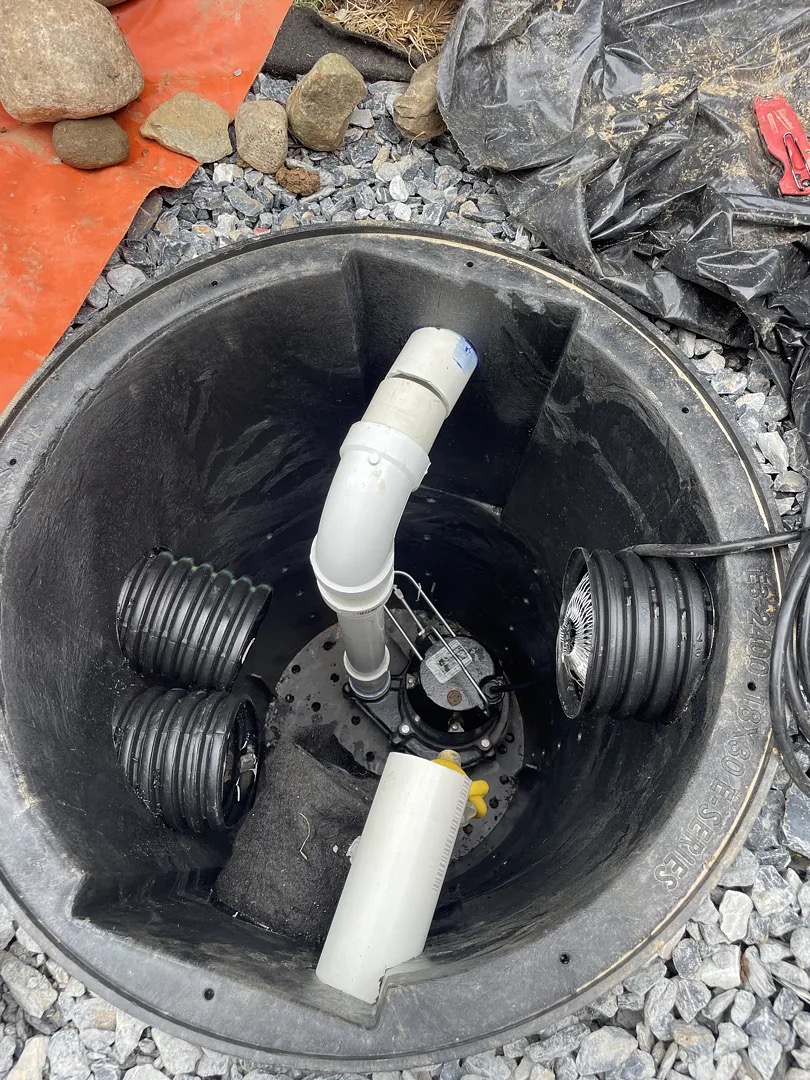
The basement entrance was the most vulnerable location. An exterior trench drain in front of the door catches water before it crosses the threshold and directs it away by slope. A sump pump was installed there only as a backup if exceptional rainfall overwhelms that gravity route. It is not the primary means of draining the yard. If the backup operates, it discharges the door-area water to a purpose-built dry well. The owner describes that dry well as approximately five by six feet and five feet deep, positioned so discharge does not harm neighboring property.
After installation: yard restoration and a rain test
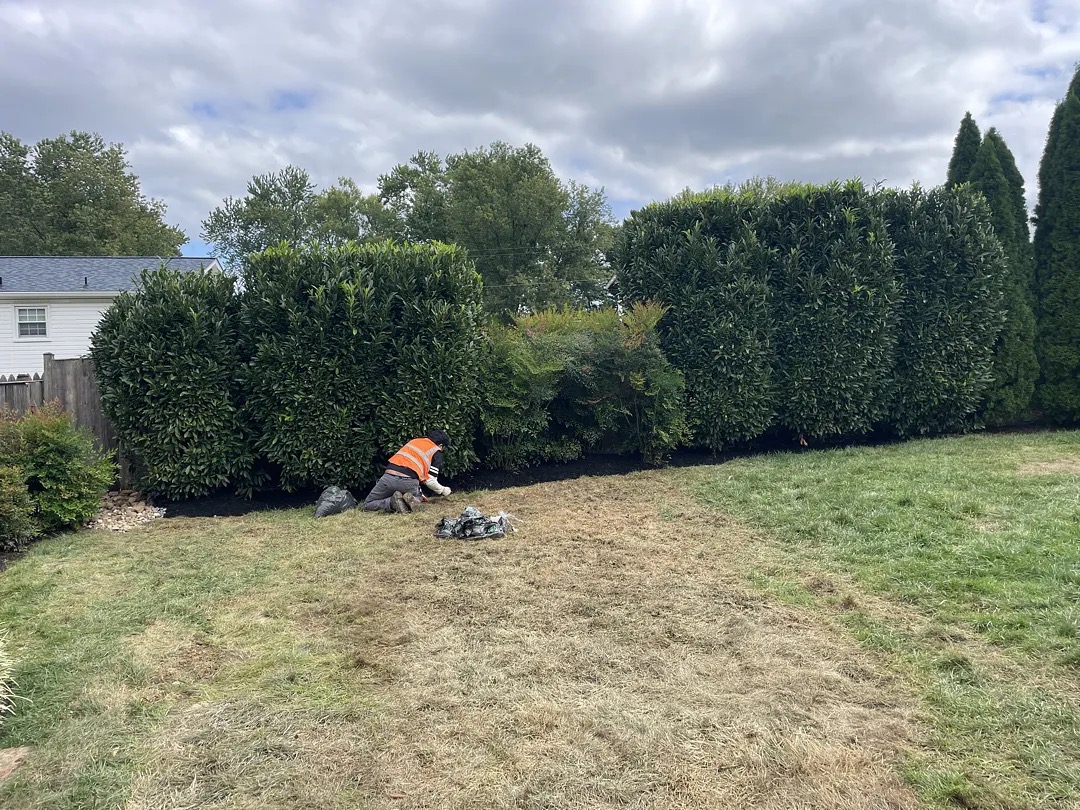
After the buried work, the crew restored the yard surface; a project photo shows sod installation over the route. The owner reports that five days of rain followed completion without a repeat of the basement flooding. That is an observed early result, not a promise that any drainage system can handle every possible future storm.
Questions homeowners ask about yard drainage
Can a yard French drain keep water from moving toward a basement?
It can intercept surface water before it reaches the home when it is placed across the actual flow path, given a consistent fall, and connected to a suitable outlet. This project combined a yard drain, catch basins, buried downspouts, and a separate basement-door trench.
What if a yard drain has a reverse slope?
Water may remain in low sections or continue toward the house. The fall should be checked on the open trench bottom before geotextile, gravel, and pipe cover it.
Why are perforated and solid pipes used for different purposes?
Perforated pipe collects water from a gravel-filled trench. Solid pipe carries collected water or roof runoff without releasing it along the route.
Does every yard drainage system need a sump pump?
No. This system was designed for gravity drainage. Its pump is only backup for unusually high inflow at the basement-door collection point.
Can downspouts be buried as part of a yard drainage project?
Yes, when each roof-water line has an appropriate route and outlet. All four downspouts on this property were routed underground away from the home.
Water pooling in your yard or heading toward your basement? Request a drainage inspection to identify the water path, set a reliable slope, and choose an outlet suited to your property. Learn more about our yard drainage work.