

Three separate Rockville job records: The same property has a completed polyurethane crack-injection job, a separate approximately 40-foot exterior French-drain job, and a later buried-downspout job with about 15 feet of solid pipe. The records show distinct work scopes, not a proven single diagnosis or a measured sequence of leak resolution.
What did each job cover?
The injection record lists polyurethane grout and finishing work for a concrete-wall crack. The exterior-drain record lists a trench, approximately 40 feet of perforated drain tile, gravel backfill and a buried downspout. That drain job has its own photo-documented Rockville case study. A later record lists another buried downspout and approximately 15 feet of solid conveyance pipe. Perforated pipe collects water along a drainage run; solid pipe carries collected roof water toward an outlet. The exact outlet for the later job is not established by the available images.
Why was the downspout work done later?
The records establish the order of the jobs, but not the homeowner’s reason for scheduling the later work. They do not show that the first two jobs failed, that a rainy season exposed a remaining source, or that the three scopes were intentionally staged as one treatment plan. Those explanations would require a request, inspection note or customer follow-up.
What can the photos and records prove?
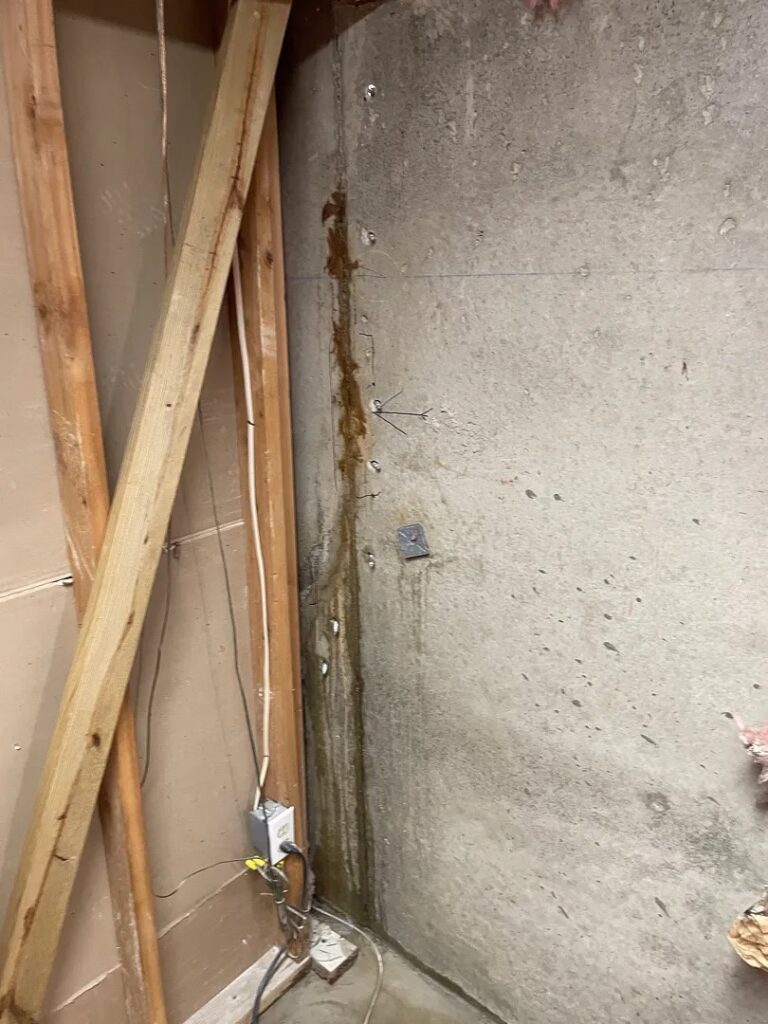
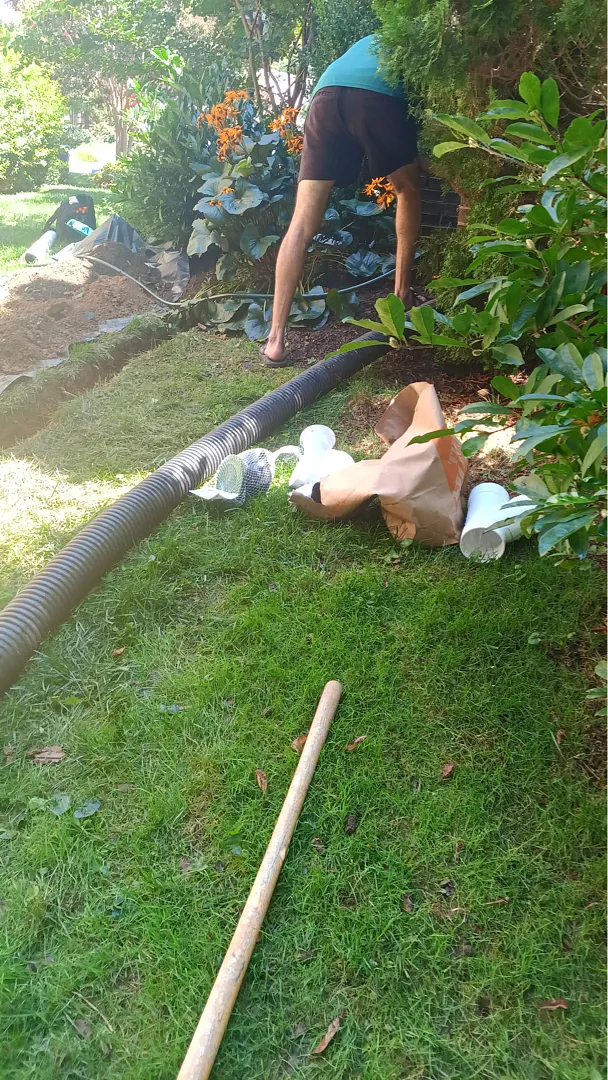
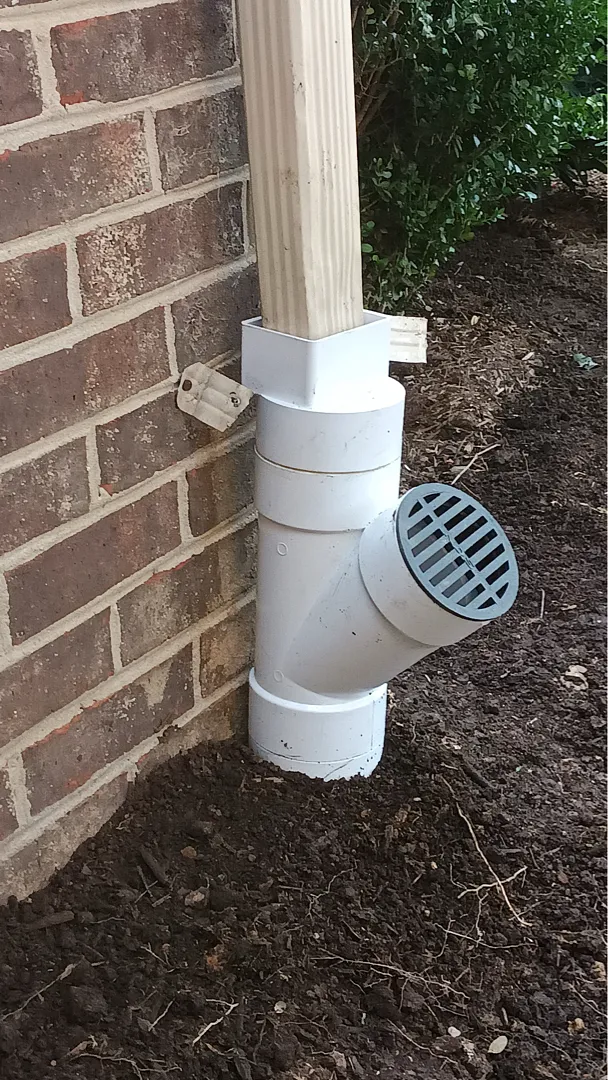
The exterior-drain job has same-job construction and finish images on its separate case page. The first photo below belongs to the crack-injection job and shows packers still in place during work. Newly matched photos from the later downspout job show pipe staged on the lawn beside a crew member and a connection at the home. The older material receipt is still a receipt, not a work photograph. None of these images establishes the later pipe’s full buried route, final outlet or post-storm basement performance.
What do the later downspout photos show?
The completed later scope calls for one buried downspout and about 15 feet of 4-inch solid conveyance pipe. Unlike the earlier French drain’s perforated pipe, solid pipe carries concentrated roof runoff away from a downspout. The work photo shows pipe staged on the lawn—not pipe visibly installed in an open trench. The connection photo shows a grated branch near the foundation but does not show where the buried run ends.
Is a buried downspout the same as a French drain?
No. The later solid-pipe run conveys roof water. The earlier perforated-pipe drain collects water along its gravel bed. The separate crack injection treats a localized wall opening. Their order does not prove one repair failed or that all three were a single treatment plan.
If water appears at a crack or near a foundation, ask for the source and discharge path to be documented before choosing crack repair, exterior drainage or downspout routing.