

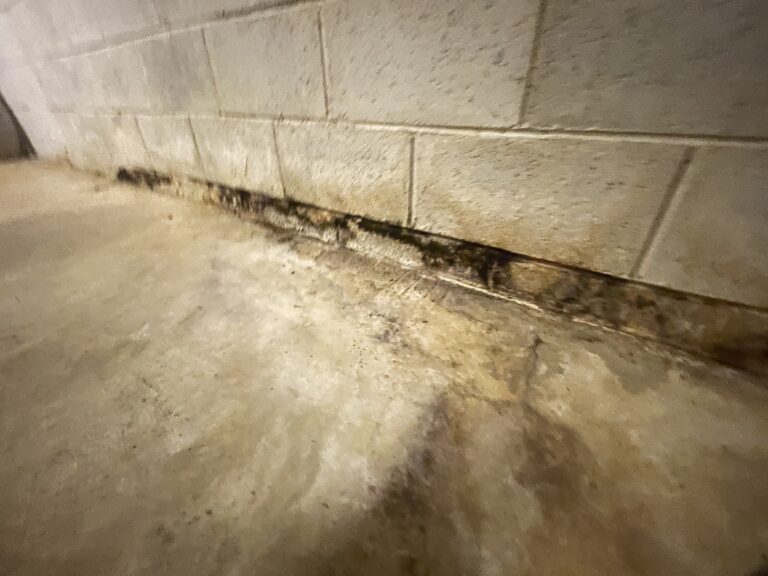
Does a damp basement always need waterproofing? No. A wet basement can result from outdoor runoff, a foundation opening, groundwater, a plumbing leak, or humid air condensing on cool surfaces. The right repair depends on the path. These eight signs tell you where to look; none is a diagnosis by itself.
1. Water appears after rain
Note the first place you see it: a window well, a wall crack, the wall-floor joint, a floor drain, or the basement door. Check downspouts and grading outside that area. A pattern that follows storms points toward rain-related entry, but only a site inspection can distinguish runoff from groundwater and other sources.
2. The floor is wet near a wall
Water along the wall-floor joint may come from pressure below or beside the foundation, but a nearby supply line, drain, or appliance can also leak. Photograph the wet edge before cleanup and note whether it changes when it rains. If water is rising quickly or close to electrical equipment, keep clear and arrange prompt help.
3. White residue or stains appear on masonry
White powdery deposits can be efflorescence: minerals left as moisture moves through masonry and evaporates. A stain shows that moisture has been present; it does not, by itself, tell you the current water route or whether a wall needs structural repair. Check for fresh dampness and compare photos over time.
4. The basement smells musty
An odor is a reason to inspect behind stored items, finished walls where accessible, and nearby crawl spaces. Damp materials, a plumbing leak, and humid air can all contribute. Do not buy a drain or a dehumidifier based on odor alone. Find out whether there is liquid water, high humidity, or both.
5. Paint peels or finished materials swell
Bubbling paint, soft baseboards, or warped drywall can hide moisture. The water may be coming through the foundation, from a pipe, or from condensation at a cold surface. Avoid sealing over the damage until the source and affected materials are assessed.
6. A foundation crack changes or leaks
Location, width, movement, wall material, and water behavior matter more than a simple “vertical versus horizontal” label. A new or widening crack, wall displacement, or a crack accompanied by water deserves evaluation. A leaking crack in poured concrete may call for a different repair than a crack in CMU or brick. See our floor-crack guide for the separate question of cracks in the slab.
7. Mold-like growth or damp insulation is visible
Visible growth and wet materials should prompt a moisture investigation, not an automatic waterproofing sale. Remove the water source first; cleaning or replacing materials without that step may leave the cause in place. If the affected area is extensive or the work would disturb unknown materials, ask a qualified professional to assess it.
8. A sump pump runs often or fails to clear water
Record when it runs and where its discharge line ends. A pump may be doing necessary work during heavy rain, or it may be cycling because of an equipment or discharge problem. Do not assume a new pump alone will correct outside runoff or a blocked outlet. Ask for the intake, power, check valve, and discharge route to be checked.
What should you do first?
- Take dated photos and note the weather, location, and timing of each symptom.
- Check obvious sources you can see safely: plumbing, gutters, downspouts, window wells, and surface slope.
- Keep water away from electrical equipment and avoid entering a flooded area with an electrical hazard.
- Ask an inspector to identify the likely source and explain why the proposed repair fits it.
Some homes need a plumbing repair or humidity control; others need exterior drainage, crack repair, or an interior drain and sump. Our interior versus exterior waterproofing guide explains the tradeoffs. If the source is unclear or water recurs, request an inspection and bring your photos and rain history. The goal is a repair matched to the water path, not a product chosen from one symptom.