
Case file — Connecticut Avenue, Northwest DC. One of 79 projects we completed across the DMV in 2025. New here? Start with our open letter.
At a glance
- Location: Connecticut Ave, Northwest DC
- Home: A 1930s home
- Foundation: Brick (load-bearing)
- The problem: Water on the basement floor and mold on the brick wall
- Real cause: Heavy surface water soaking through aging brick and worn mortar — not a slab crack
- The fix: Exterior waterproofing (WallShield™) — clean the brick, cementitious coat, sheet membrane, drain board and drain tile
- Warranty: Written 25-year exterior warranty
What the homeowner saw
Water on the basement floor, and mold spreading along the brick foundation wall — the kind of thing that’s easy to keep mopping up and hard to actually stop, because the water was coming in faster than the basement could dry out.
What we found
This is a 1930s home on a brick foundation — and brick is its own animal. After ninety years, the mortar joints between the bricks had worn down. A brick foundation has far more joints than a block or poured-concrete wall, which means far more paths for water. We checked the slab: no cracks in the concrete floor, so water wasn’t rising up through the floor.
The real driver was heavy surface water hitting the foundation from outside and soaking straight through the aging brick and tired mortar. With a brick foundation, the smart fix isn’t to chase one spot inside — it’s to seal and drain the whole wall from the outside, protecting every joint at once.
What we did
This was an exterior job — our WallShield™ system:
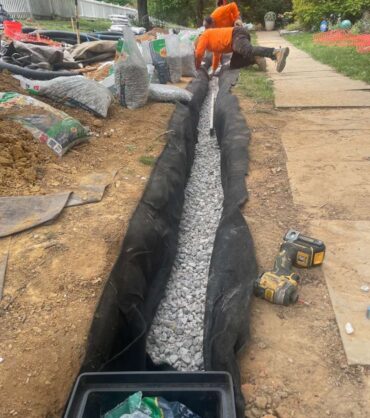
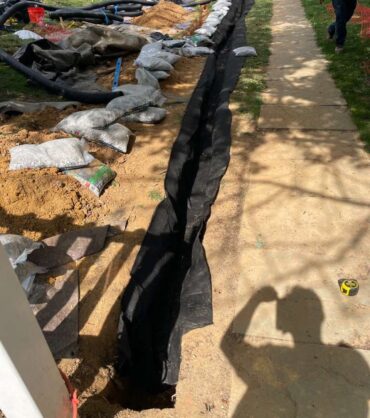
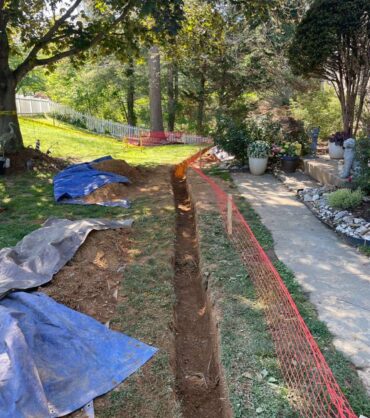
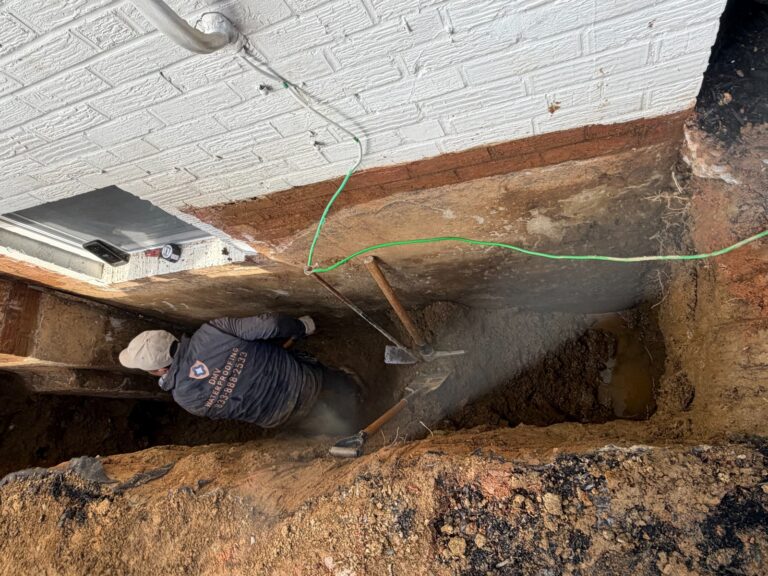
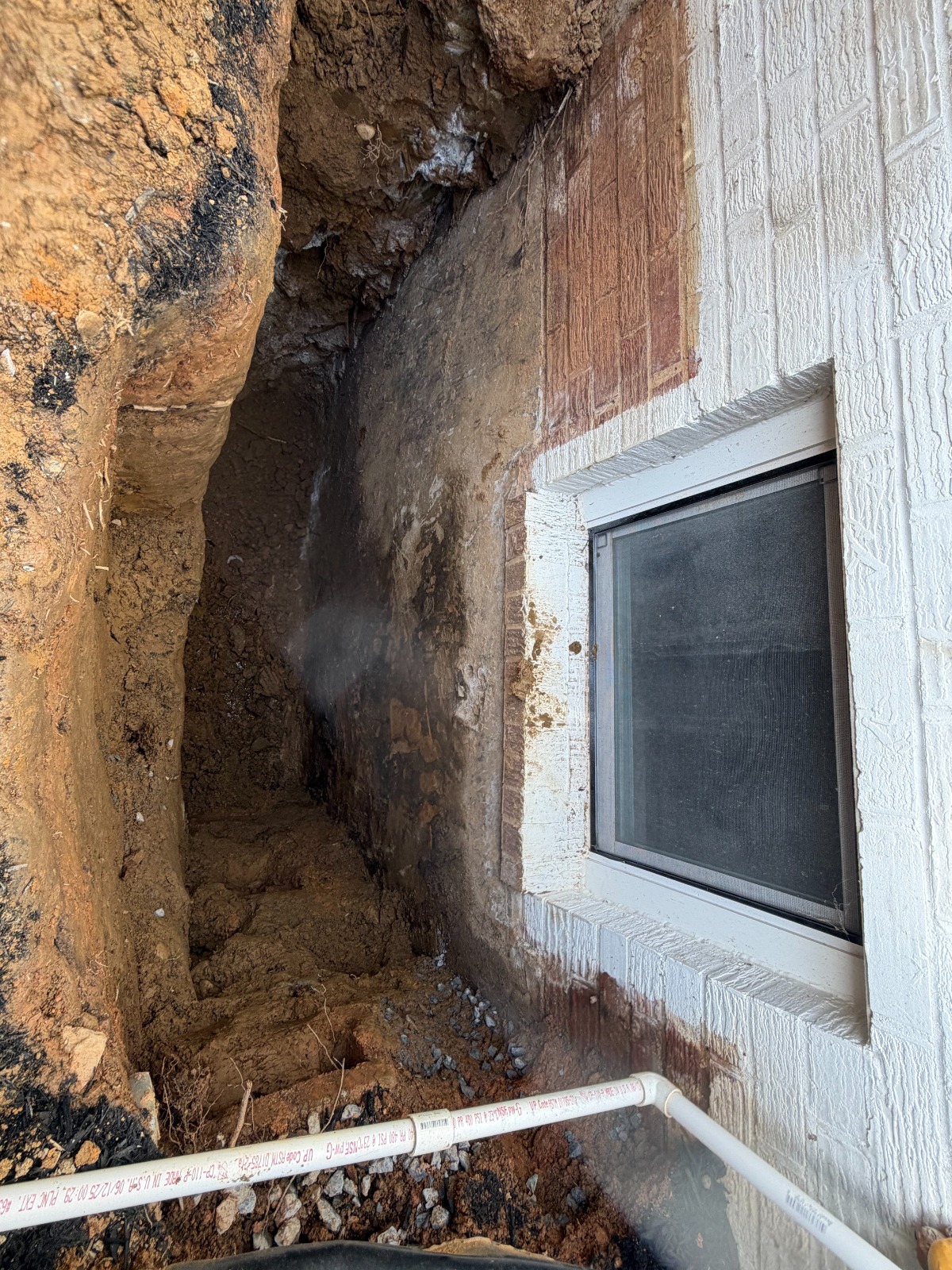
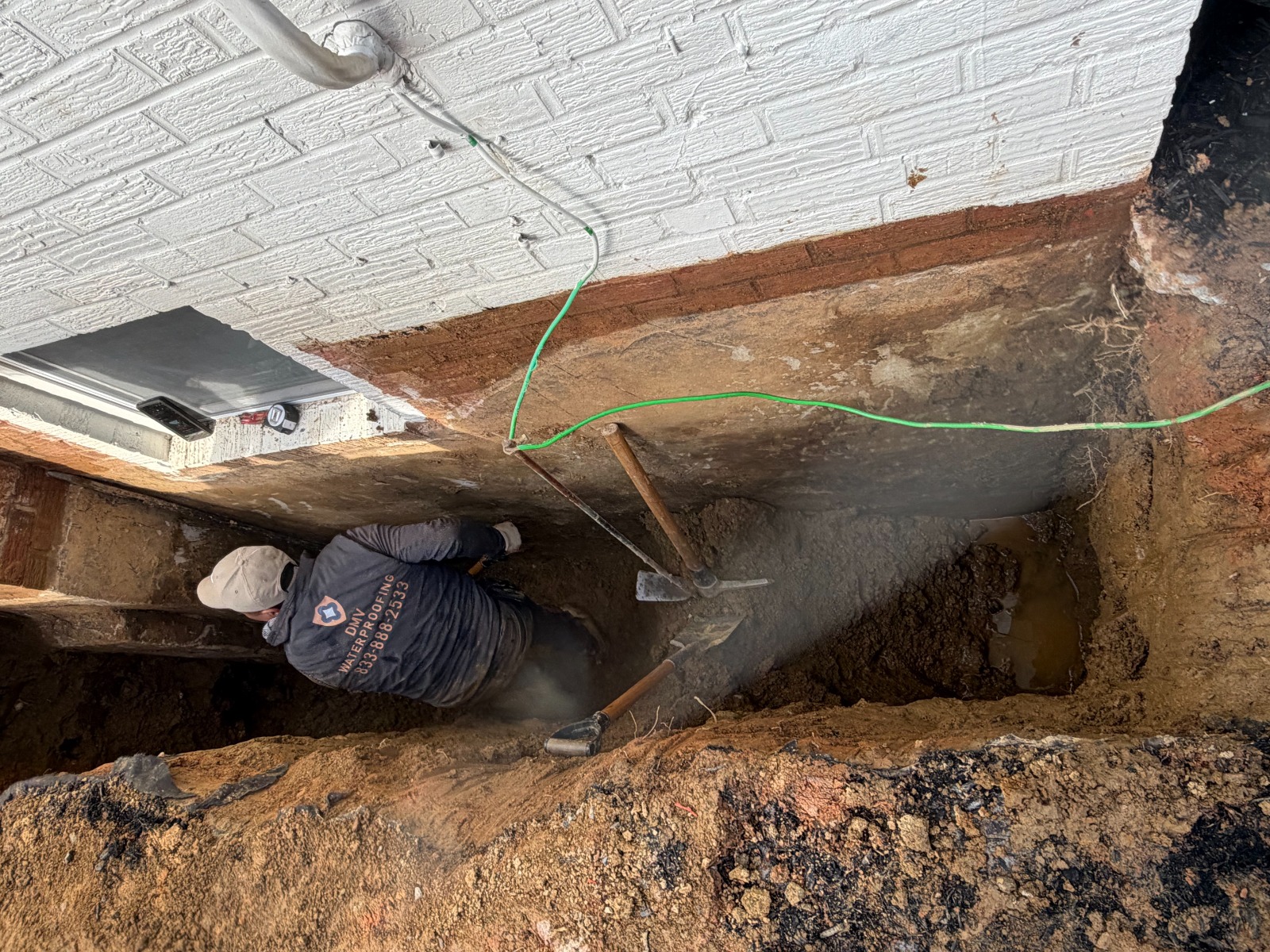
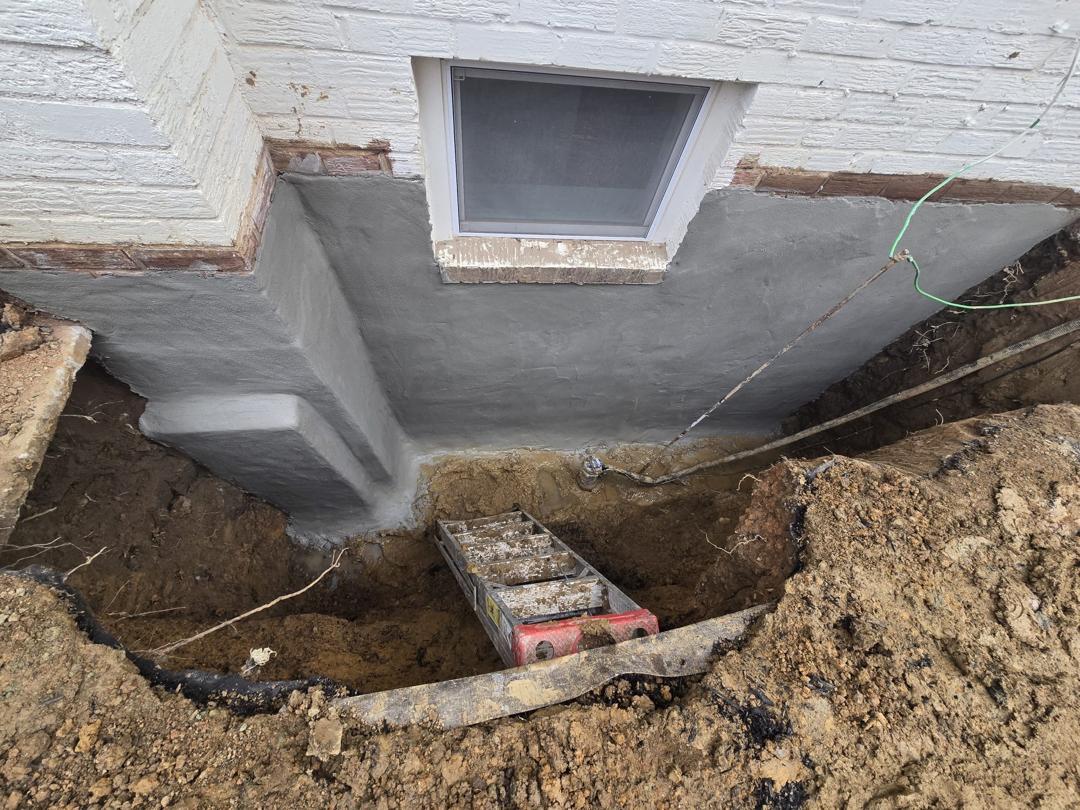
- Excavated around the water-affected perimeter of the house, down along the foundation wall.
- Cleaned the brick thoroughly so the surface and every mortar joint were ready to bond.
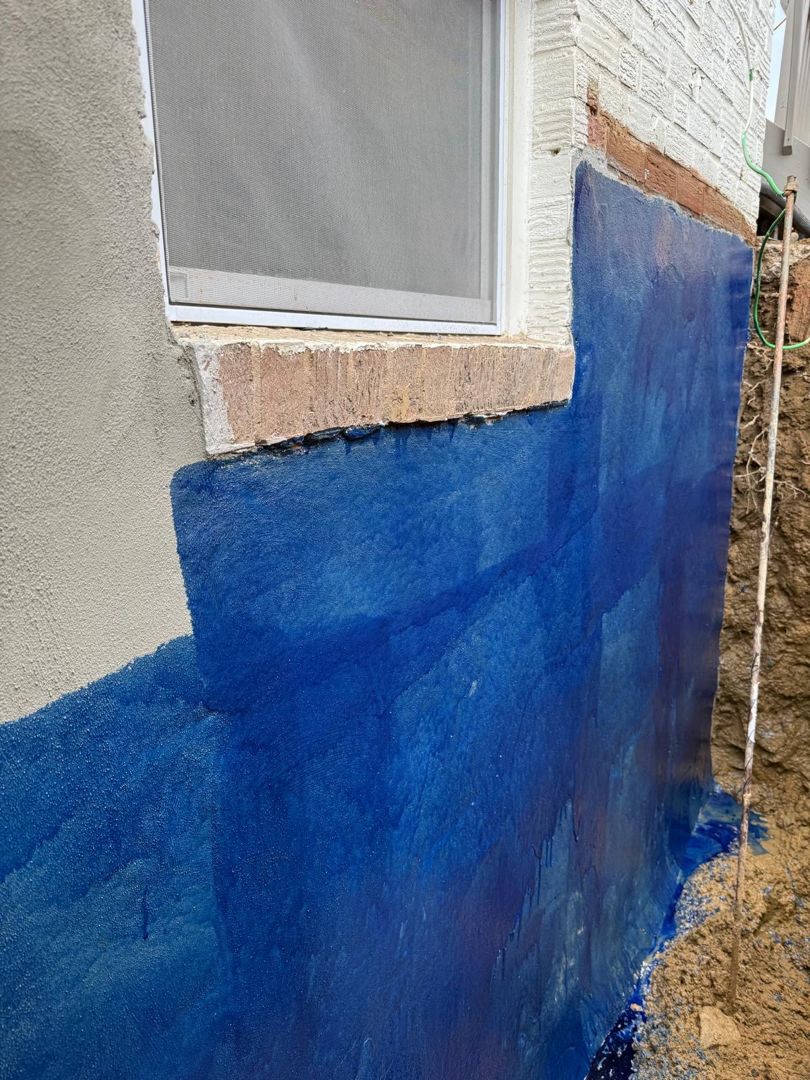
- Layer 1 — cementitious waterproofing across the wall.
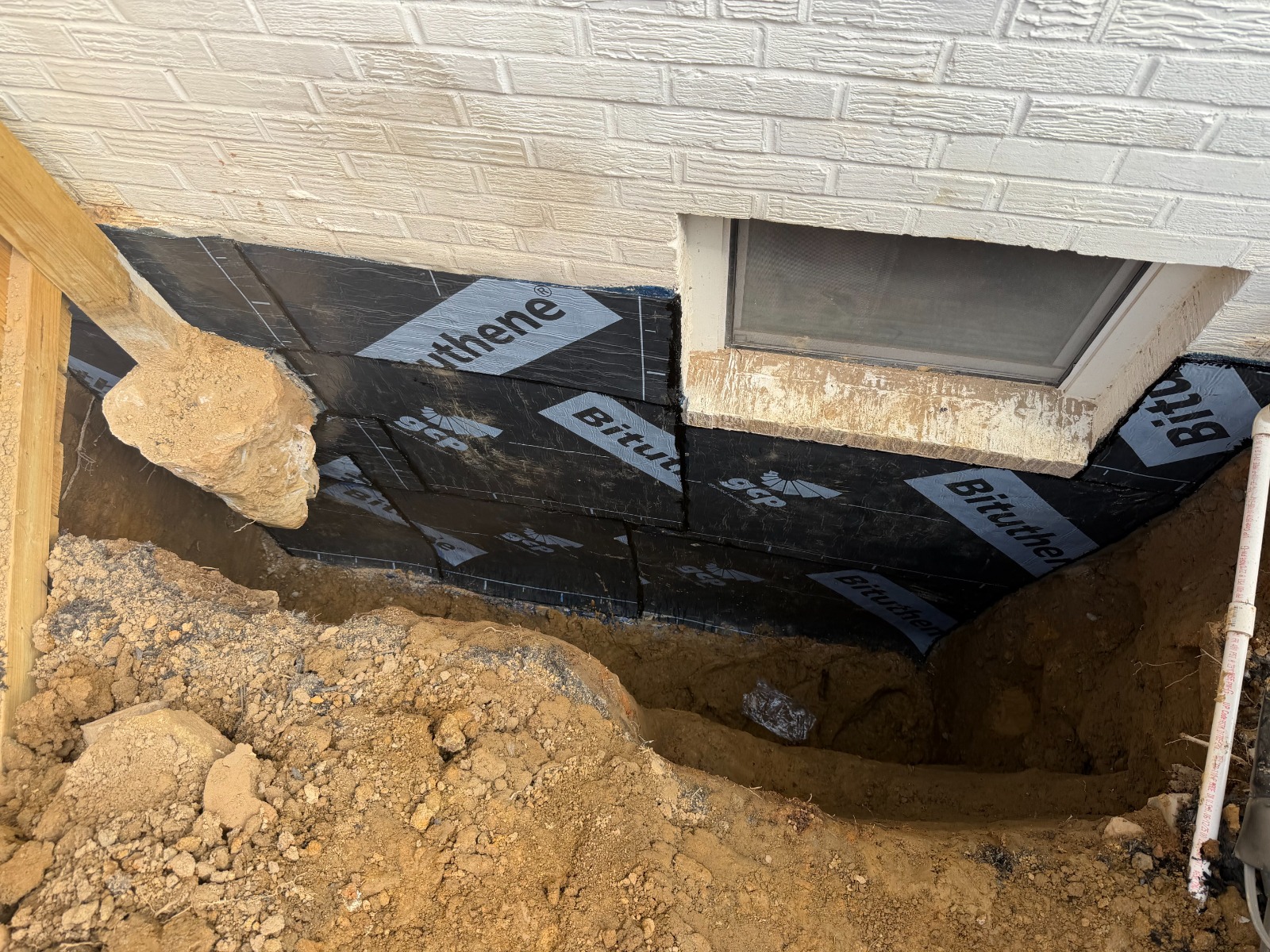
- Layer 2 — a bituminous sheet membrane over the cementitious coat.
- Drain board to protect the waterproofing from the backfill.
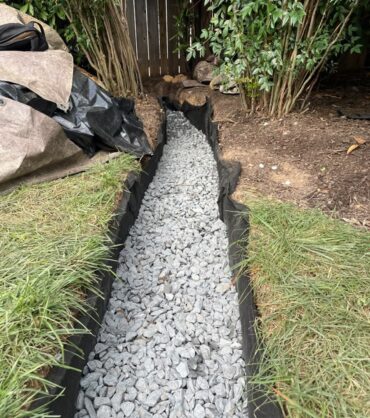
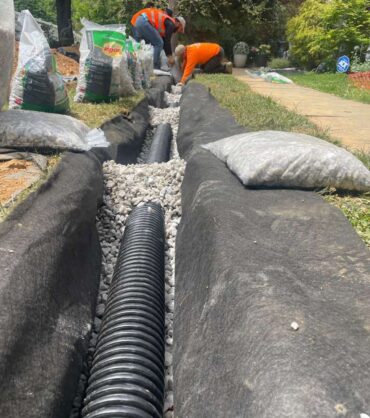
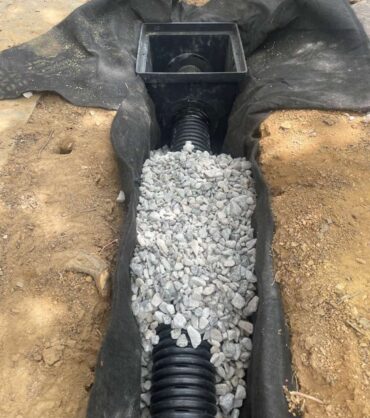
- Drain tile to capture the water and direct it away from the foundation.
Every step was done by our own crews — no subcontractors. The result came out clean and tight.
The result
A brick wall that had been wicking water for years was sealed and drained from the outside, and the basement floor stayed dry. Excellent result — exactly what an old brick foundation needs.
The takeaway
Old brick foundations rarely leak through one neat crack — they leak through dozens of worn mortar joints across the whole wall. That’s why a quick interior patch doesn’t hold. Sealing and draining the entire wall from the outside is what actually protects a 1930s brick home for the long run.
Have an older brick or stone foundation that’s wet in DC? Schedule a free inspection — we’ll find exactly how the water is getting in and tell you honestly what it takes to stop it. Learn more about our exterior waterproofing.
FAQ
Why does an old brick foundation leak even without a big crack?
Because brick has many mortar joints, and over decades that mortar erodes. Water comes through the joints and the porous brick face — not a single crack — so patching one spot won’t fix it. Sealing and draining the whole wall (usually from the outside) is what addresses every joint at once.
Written by S. Altan Atasoy — civil engineer (University of the District of Columbia), a member of the American Society of Civil Engineers, and MHIC-licensed in Maryland (#165773) — in the field since 2005.