

How Water Gets Into Basement — 7 Entry Points in DMV Homes | DMV Waterproofing

How Water Gets Into Your DMV Basement

How water gets into a DMV basement — 7 common entry points

From Our Field Notes

How Water Gets Into Your DMV Basement

7 entry points every homeowner should understand before fixing the wrong problem.

How water gets into basement spaces is one of the most common questions DMV homeowners ask us. If your basement is wet, water is getting in somewhere — and the hard part is figuring out where, because the spot you see water isn’t always where it’s entering. Water can travel along the cold joint, behind drywall, or under the slab, and surface in a corner that has nothing to do with the actual leak.

Over 20+ years of field experience across Maryland, Virginia, and DC, we’ve narrowed it down to seven ways water gets into a DMV basement. The first five are interior — places inside your foundation where water shows up. The last two are exterior — sources outside your home that create the problem in the first place.

This is the overview. Each entry point has its own dedicated guide, where we explain the warning signs, why it happens in DMV homes specifically, and how we fix it at the source.

Why this matters: Seven different entry points mean seven different solutions. Wrapping your basement in waterproof paint or installing a stronger sump pump won’t fix water entering through a failed window well, a clogged drainage channel, or a downspout dumping 6,000 gallons next to your foundation every year. Diagnosis comes before treatment — every time.


Interior Entry Points

Where water shows up inside your foundation.

1

Underground Water — From Beneath the Slab

The DMV sits on a mix of clay, silt, and fill soil that doesn’t drain well. When it rains, water doesn’t quickly disappear into the ground — it lingers near the surface and saturates the soil beneath your basement. Your concrete slab is only about three and a half inches thick. Below it is wet, slow-draining soil holding water under pressure.

As the water table rises (especially in spring or after extended rain), pressure builds beneath the slab. The first signs are differential settlement cracks in walls and floors, then clamshell-shaped cracks across the concrete slab itself. If groundwater rises further, it climbs above the footer line and starts pressing against your foundation wall — which is when CMU walls bow, concrete walls crack, and brick mortar begins to dissolve.

This is the most common way water gets into basement spaces in DMV homes — and the one most homeowners never see coming, because the problem starts under the floor, not on the wall.

2

The Cold Joint — Where Footer Meets Wall

Your foundation has two parts: the footer (the concrete pad your home sits on) and the foundation wall (the vertical wall built on top of it). These two pieces are poured at different times — sometimes days apart — which means there’s a horizontal seam between them. That seam is called a cold joint.

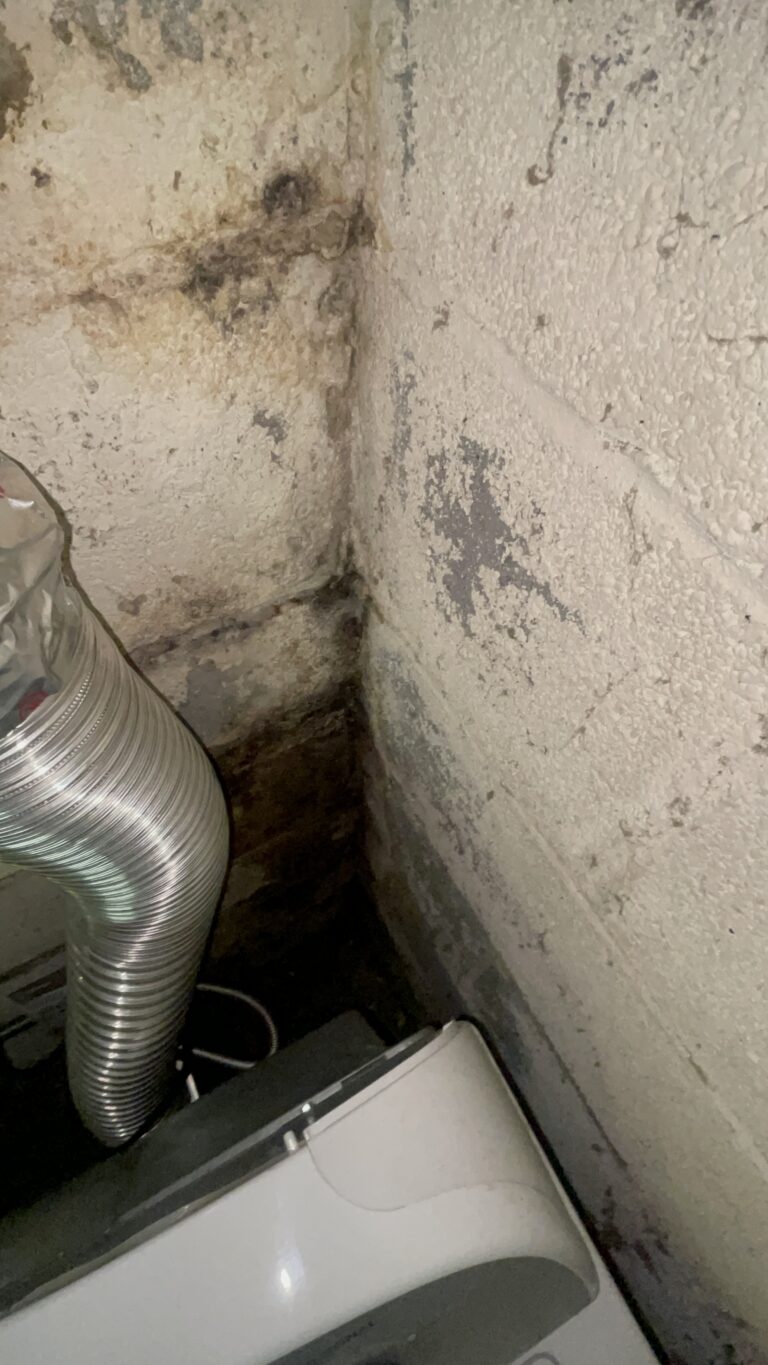
The cold joint is almost never waterproofed properly from the outside. It wasn’t designed to be a sealed surface — it was designed to be a structural connection. So when groundwater rises behind your foundation wall, the cold joint is often the first place water finds its way in. You’ll see it as a wet line along the corner where your floor meets the wall, especially after heavy rain.

Most homeowners try to seal this with hydraulic cement on the inside. It rarely holds. The pressure pushing water through the joint is greater than the bond strength of a surface patch.

3

Foundation Wall — CMU, Brick, or Concrete

Your foundation wall itself can be the entry point — and the way water gets through depends on what your wall is made of. DMV homes typically have one of three foundation wall types, each with its own failure pattern:

  • CMU (concrete block): Hollow and porous. Water seeps into the blocks themselves, fills the cavities, and shows up inside as wet patches, paint bubbles, white efflorescence, or active mold. Lateral pressure from groundwater can also cause step cracks through the mortar joints — sometimes the wall even bows inward.
  • Brick: Common in pre-1950 DMV homes. The mortar between bricks is the weak point. Over decades, water erodes mortar, leaving gaps that let water through and weakening the structural integrity of the wall.
  • Poured concrete: Usually the most water-resistant of the three, but not bulletproof. Existing weak points — tie rod holes, construction joints, vertical hairline cracks — start to weep water under pressure.

Knowing which wall type you have changes how the leak should be fixed. There is no universal solution — and applying the wrong one wastes money.

4

Window Wells — When Drains Fail or Don’t Exist

If your basement has below-grade windows, they sit inside window wells — those metal or concrete half-circles dug into the ground around the window. A properly built window well has a drain at the bottom that connects to your home’s drainage system. The drain prevents the well from filling up like a bucket every time it rains.

The problem: in many DMV homes, the drain either was never installed, has clogged with leaves and sediment, or has been covered over with mulch and dirt over the years. Without a working drain, even a moderate rain can fill the well to the top of the window — and water pours straight through the frame, the seal, or any gap into your basement.

Add a missing or damaged window well cover, and you’ve turned the well into a funnel pointing rainfall directly at your basement window.

5

Pipe Penetrations — The Leak Most Homeowners Miss

Every basement has pipes coming through the foundation: the main water line, the sewer line, the sump pump discharge, sometimes a gas line, and conduits for electrical. Each of these is a hole through your foundation wall. The hole was sealed when the home was built — usually with hydraulic cement or a pipe boot — but those seals don’t last forever.

Over time, the seal cracks. The pipe shifts slightly with ground movement. Water starts following the pipe through the wall, sometimes invisibly behind drywall or insulation. Homeowners often don’t realize a pipe penetration is the leak source because they assume the wall itself is the problem.

Hydraulic cement patches on the inside are a temporary fix at best. A real solution addresses the seal from the outside or installs a new mechanical seal around the pipe.


Exterior Sources

Where the problem actually starts — outside your home.

6

Bad Grading & Surface Water

The single biggest reason DMV basements leak isn’t a crack in the wall — it’s the grading around the home. The soil right next to your foundation should slope away from the house, dropping at least six inches over the first ten feet. In a perfect world, surface water from rain runs away from your foundation, not toward it.

The reality is that most DMV yards develop the opposite slope over time. Soil settles, mulch builds up against the siding, patios and driveways tilt back toward the house, and low spots form right next to the foundation. Now every rainstorm is sending hundreds of gallons of surface water directly to the soil at your foundation wall — where it pools, soaks down, and feeds the same underground water problem we covered in entry point #1.

Bad grading is the upstream cause of so many basement leaks that we always check it before recommending interior work. Fix the grading and the downspouts (entry point #7), and you’ve often solved 60–70% of the problem before touching the basement at all.

7

Gutters & Downspouts

Here’s a number that surprises most homeowners: a single inch of rain on a 1,000-square-foot roof generates over 600 gallons of water. The DMV averages 40+ inches of rain per year. That means each downspout on your home is moving roughly 6,000 gallons of water annually — and if that downspout dumps right next to your foundation, that’s where all 6,000 gallons end up.

The most common gutter and downspout problems we see in DMV homes:

  • Clogged gutters spilling water down the side of the house instead of routing it through the downspout.
  • Short or missing downspout extensions dumping water within two feet of the foundation.
  • Disconnected downspouts where the elbow has popped off and water just falls straight down the wall.
  • Underground drains that have failed — the downspout is connected to a buried pipe, but the pipe is crushed, clogged, or has separated underground.

The fix is rarely complicated: clean and repair the gutters, extend downspouts at least 10 feet from the foundation, and connect them to a working drainage system that carries water to a safe discharge point in your yard. Done right, this single intervention can dramatically reduce basement moisture.


How Water Gets Into Basement Spaces — Diagnosis Before Treatment

Seven entry points. Seven different sets of warning signs. And seven different correct solutions.

What we’ve seen over 20+ years in DMV homes is that water rarely comes in through just one of these — it’s usually a combination. Bad grading raises the water table, the rising water table pressures a CMU wall, the wall develops step cracks, and water shows up in the corner of the basement. Treating any single symptom without understanding the chain leads to repeat leaks, wasted money, and frustrated homeowners.

That’s why every job we estimate starts with the same question: where is the water actually coming from, and what’s causing it to get there? Until that’s answered, no waterproofing solution is the right one. For homeowners who want to learn more about basement moisture in general, the EPA’s basement moisture guide covers the basics.

Free Inspection

Not sure where your water is coming from?

Our engineer-founded team has been diagnosing basement leaks across the DMV for over 20 years. Schedule a free inspection and we’ll tell you exactly which of these seven entry points is causing your problem — and what it will take to fix it the right way.

Call 1-833-888-2533

or request a free inspection online

About DMV Waterproofing: Engineer-founded in 2005 by two UDC civil engineering graduates who began their careers as foundation field inspectors at ECS Limited. Based in Rockville, Maryland, with branches in North Bethesda, Ashburn, and Manassas. Over 20 years of field experience across the DMV. No subcontractors — every job done by our in-house crews.

Leave A Comment

Your email address will not be published. Required fields are marked *

x

Free Inspection

Blank Form (#3) (#4)