

From Our Field Notes · Crawl Space Guide
Crawl Space Encapsulation: What It Includes and When It’s Needed
A practical guide from an engineer-founded waterproofer with 20+ years of DMV experience.
Crawl space encapsulation controls moisture moving from exposed soil into the space beneath a home. It usually combines a continuous ground vapor barrier with carefully detailed air sealing and a plan for humidity. But a plastic liner is not a cure for standing water, a leaking pipe, or runoff entering through the foundation. Those sources need to be diagnosed first.
Homeowners often ask whether they need a vapor barrier, a sump pump, a dehumidifier, new insulation, or all four. The answer depends on the water path and the existing crawl-space design—not a fixed package of products. Below are the decisions our team works through in DC, Maryland, and Northern Virginia.
What Is Crawl Space Encapsulation?
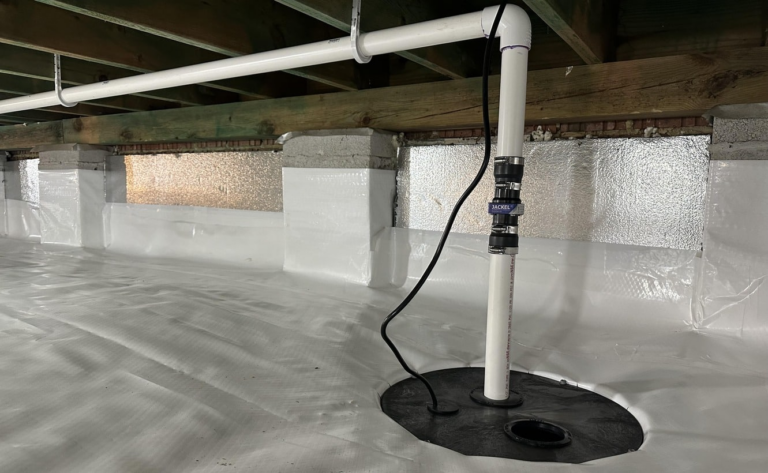
Encapsulation is a coordinated moisture-control assembly. A sealed ground cover limits water vapor from the soil; connections at seams, piers, and walls keep the cover continuous. Air sealing and a suitable ventilation or conditioning approach help manage humid air. Water-entry repairs, drainage, insulation, and dehumidification are added only when the inspection shows they are needed.
The U.S. Department of Energy explains why a continuous, sealed ground cover matters. The EPA also recommends covering dirt in crawl spaces to reduce ground moisture. Neither source says that every house needs a pump or dehumidifier.
How Do You Know If a Crawl Space Needs Work?
A musty odor, damp soil, torn ground cover, wet insulation, staining on wood, standing water, or persistent humidity can justify an inspection. Sagging floors need a separate structural assessment; they are not proof that encapsulation alone will repair a joist or column. The first question is where the moisture comes from: surface runoff, groundwater, plumbing, condensation, or humid outdoor air.
What Are the Seven Decisions in an Encapsulation Project?
These are checkpoints, not seven required line items. The scope changes with the house.
1. Diagnose the water source
Inspect after rain when possible. Trace downspouts, site grading, foundation openings, plumbing, and any low spots inside. A liner should not hide a continuing leak.
2. Remove damaged or obstructing material
Clear debris and failed ground cover as needed. Wet insulation and damaged wood must be evaluated before they are enclosed. Mold-like growth or structural deterioration may require a separate scope of repair.
3. Control liquid water—when it exists
Can roof runoff or surface water be moved away outside? Start there when feasible. If water still enters from below or gravity drainage is not practical, an interior drain and sump pump may be appropriate. A sump pump is not an automatic part of crawl space encapsulation.
4. Install a continuous ground vapor barrier
Choose the material for the conditions and expected access, then detail the seams, columns, edges, and wall connections. The barrier reduces vapor rising from soil. It is not a substitute for stopping liquid water. A barrier’s thickness alone does not tell you whether the installation is sound.
5. Decide how vents and air leaks will be handled
In an intentionally unvented or conditioned design, sealing exterior vents can be appropriate, but only with the required air, humidity, insulation, and local-code details. Closing vents by themselves can leave moisture problems unresolved. The DOE describes the unvented, conditioned approach; the existing house still needs its own assessment.
6. Plan humidity control and insulation
Some spaces need a dedicated dehumidifier; others can maintain acceptable conditions without one. Insulation belongs where the chosen crawl-space design and local code require it. Replacing wet insulation without fixing the moisture source risks repeating the problem.
7. Inspect the finished system
Check continuity at seams and penetrations, the route for any collected water, access for future service, and measured humidity over time. Encapsulation is a system to maintain, not a one-time promise that the space can never get wet.
Does Encapsulation Stop Water Leaks?
No. A vapor barrier helps limit moisture evaporating from soil; it does not stop a foundation crack, plumbing leak, or water running toward the house. Those problems need their own repair. If the crawl space has standing water, ask the contractor to explain where it enters and where it will discharge before agreeing to a liner.
How Long Does Crawl Space Encapsulation Take?
Duration depends on access, square footage, debris removal, repairs, drying conditions, and whether drainage or electrical work is required. A small barrier repair and a full water-control project should not be given the same blanket timeline. Your proposal should separate the preparation, water repair, barrier installation, and final inspection.
What Does Crawl Space Encapsulation Cost?
There is no reliable site-wide price range without knowing the actual scope. Cost changes with the size and height of the space, access, water source, damaged materials, barrier detailing, and any drainage or humidity equipment. Ask for an itemized estimate that states why each component is needed. Be wary of a quote that includes a pump or dehumidifier without explaining the conditions it addresses.
Is Crawl Space Encapsulation Worth It?
It can be worthwhile when soil moisture or humid air is contributing to a persistent problem and the proposed design addresses the actual cause. A dry space with a few isolated air leaks may need a smaller targeted repair. If framing is damaged, that structural work must be evaluated separately. The useful question is not “Does every crawl space need encapsulation?” but “Which moisture path are we fixing, and how will we verify the result?”
For the narrower air- and gap-sealing part of this work, read our crawl space sealing guide.
Free Inspection
Considering Crawl Space Encapsulation?
Our engineer-trained inspectors will diagnose the actual source of crawl space moisture – and recommend only what your home actually needs, no more, no less. We serve DC, Maryland, and Virginia from local branches in Rockville, Kensington, Ashburn, and Manassas.
About DMV Waterproofing: Engineer-founded in 2005 by two UDC civil engineering graduates who began their careers as foundation field inspectors at ECS Mid-Atlantic. Based in Rockville, Maryland, with branches in Kensington, Ashburn, and Manassas. Over 20 years of field experience across the DMV. No subcontractors – every job done by our in-house crews.