

Where is the basement leak coming from? The first wet spot is not always the entry point. Water can travel behind a finished wall, along a footing, or across a floor before it becomes visible. A useful basement leak repair starts with the timing, location, and route of the water—not with a standard product package.
What should you record before an inspection?
Photograph the first wet area, not just the puddle after it spreads. Note the date, recent rainfall, whether water appears during or after a storm, and whether a plumbing fixture or appliance was used. Mark the wall, window, pipe penetration, floor drain, or wall-floor joint closest to the leak. If the space is finished, note any swollen baseboards or damp drywall without opening walls yourself.
Outside, check visible gutters, downspouts, low spots, window wells, and the direction water travels across the yard. Do not enter standing water near electrical equipment. A rapidly rising flood or suspected structural movement needs prompt professional attention.
Does rain timing prove the source?
No. Water during a storm can be related to surface runoff, but it may also arrive through a foundation opening. Water that appears later may involve saturated soil, but timing alone cannot prove “hydrostatic pressure.” Plumbing and condensation may mimic rain-related seepage. Match the timeline with the observed entry point and outdoor conditions before selecting a repair.
What repairs fit different leak paths?
- Water crossing the ground toward the house: Correct the gutter, downspout, grade, or yard drainage route and verify that discharge ends away from the foundation.
- A specific poured-concrete crack or penetration: Evaluate whether a targeted seal or injection is appropriate and whether the wall is stable. CMU, brick, and moving cracks require a different assessment.
- A window well or basement doorway: Check the opening, surrounding surface elevation, drain condition, and outlet before relying on a cover or new drain.
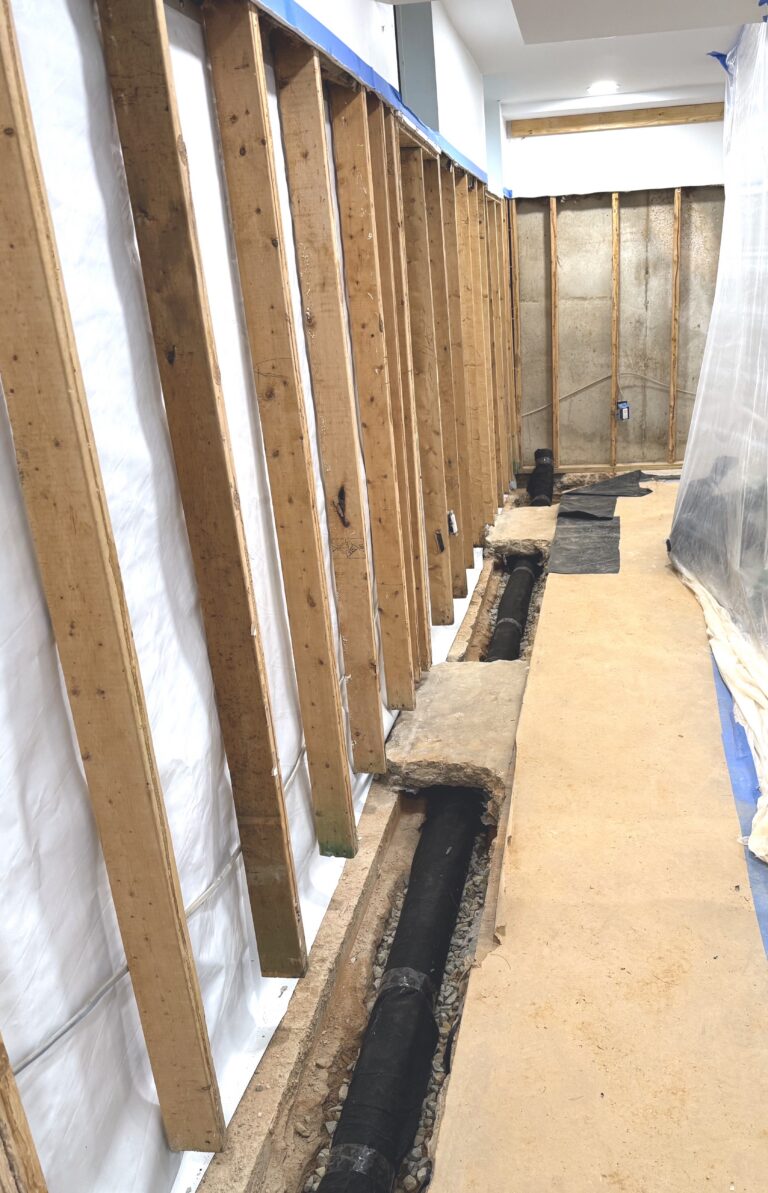
- Recurring water along a wall-floor joint or slab edge: An interior collection drain and sump may be considered when the water needs a controlled path out. The scope should specify the drain route, basin, power, and discharge.
- Water through an accessible exterior wall: Exterior excavation may allow wall repair and waterproofing at the entry face. The proposal should identify the waterproofing layer, protection, drain depth if included, and restoration.
These options can be combined, but none is automatic. A pump does not fix a downspout discharging against the wall; a surface seal cannot manage water arriving along an entire perimeter. Our basement water damage solutions guide compares the six repair paths in more detail.
What should a basement leak repair quote show?
- The observed leak location and evidence for the likely source.
- What areas will be opened, sealed, drained, or restored.
- The distinction between a near-grade yard drain and a footing-level foundation drain.
- Where collected water or roof runoff will discharge.
- Any electrical, plumbing, excavation, or finish-work exclusions.
- What photos or tests will document the completed work and what a warranty actually covers.
Price and schedule depend on measurements, access, wall material, water source, and restoration. Compare written scopes rather than assuming two quotes describe the same repair. A test after installation can verify a component, while performance through later storms still needs observation. If the leak is recurring and the path is unclear, request a site inspection and bring your photos and weather notes.