

Lawn Grading: 7 Critical Mistakes DMV Homeowners Must Avoid
Rockville, MD·Kensington, MD·Ashburn, VA·Manassas, VA

Lawn Grading: 7 Critical Mistakes DMV Homeowners Must Avoid

lawn grading mistake showing negative slope toward foundation in a DMV home creating drainage problem

Across thousands of DMV yards, the same lawn grading mistakes repeat. A 1970s split-level in Bethesda has flower beds raised six inches above the original grade, with mulch packed against the siding. A 1990s colonial in Fairfax has a patio extension that traps water against the foundation during every storm. A 2000s townhouse in Brambleton has a downspout discharging two feet from the wall onto a yard that slopes back toward the house.

Different houses, different decades, same physics. Lawn grading is the most overlooked exterior protection a DMV home has. It is the difference between rain that runs away from the foundation and rain that pools against the wall until it becomes a basement, crawl space, or foundation problem.

DMV Waterproofing is engineer-founded since 2005, with 20+ years of field experience across Washington DC, Maryland, and Northern Virginia. This guide explains the seven grading mistakes we see most often, why each one fails in DMV soil conditions, and when grading alone is enough versus when drainage or waterproofing is also needed.

Why Lawn Grading Matters in the DMV

The DMV receives more than 40 inches of rain in a typical year. That water has to move somewhere. If it does not move away from the house, it collects at the foundation and increases hydrostatic pressure below grade.

Much of the region sits on heavy Piedmont clay soil and the DMV water table. Clay has a very low infiltration rate, often less than 0.1 inch per hour when compacted. Water that cannot soak in quickly must either run away from the house or sit against it.

Building code recognizes this. IRC R401.3 requires surface drainage to fall away from the foundation, generally a minimum of six inches within the first 10 feet. That is a 5% slope. The rule is written for new construction, but it is also a useful maintenance standard for older DMV homes.

Surface grading is the first line of defense before French drains, sump pumps, or yard drainage services that pair with proper lawn grading matter. If the surface sends water toward the wall, every downstream system works harder.

drainage issues solution

7 Critical Lawn Grading Mistakes DMV Homeowners Must Avoid

Mistake 1: Negative Slope Toward the Foundation

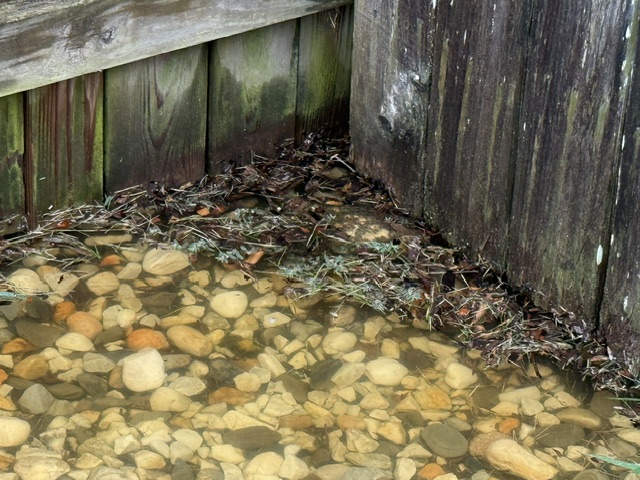
This is the most common grading failure we see. The yard slopes toward the house instead of away from it. After rain, water pools against the foundation, leaves splash marks on siding, and erodes soil directly along the wall.

The cause may be original construction, decades of settlement, or landscaping that changed the grade. In Montgomery, Fairfax, Loudoun, Prince William, Arlington, and DC, clay soil makes the problem worse because water sits longer after storms.

The fix is to rebuild the first 10 feet around the foundation to a minimum 5% slope away from the house where site conditions allow. Use mineral fill such as sandy loam or a sand-clay mix, not organic topsoil as the structural layer. Compact in four-inch lifts so the slope does not settle back toward the wall.

Mistake 2: Mulch and Bed Creep Raising Grade Above Cladding

Mulch creep looks harmless. A homeowner adds two or three inches of mulch every spring. Raised beds get built against the wall. Landscape edging traps soil. After five to 10 years, the grade is higher than the bottom of siding, brick weep holes, or stucco termination.

At that point, water no longer just touches the foundation. It can enter the wall assembly behind the cladding. This is one of the quietest ways lawn grading problems become moisture problems inside the home.

The fix is to remove excess soil and mulch until at least six inches of exposed foundation wall is visible below the cladding. Within 12 inches of the foundation, stone or pea gravel is usually safer than organic mulch because it does not hold as much moisture against the wall.

Mistake 3: Wrong Fill Material During Grading

Topsoil is good for grass. It is not good structural fill. Organic-rich soil holds water, compresses, and settles. Clay-heavy fill can trap water. Construction debris creates voids that collapse later.

For grading near a foundation, the bulk of the fill should be mineral material that can be compacted. A clean sand-clay or sandy loam mix is often more stable than topsoil alone. Topsoil should usually be limited to the top two or three inches for grass establishment.

For larger drainage or grading projects, No. 57 stone or similar clean aggregate may be used in drainage layers, depending on the design. The goal is simple: support the slope, move surface water away, and avoid creating a sponge beside the foundation.

Mistake 4: No Compaction After Grading

Fresh grading can look perfect the day it is installed. Then it settles one to three inches over the next year and creates low spots that did not exist before. This is common with budget landscaping and DIY regrading.

Compaction is not optional. Fill should be placed in four to six-inch lifts and compacted with appropriate equipment. For smaller residential corrections, water-settling can also help: wet the fill, let it dry, recheck the grade, and adjust before final topsoil.

Recheck the slope after six months and again after 12 months. Lawn grading is not finished just because the grass is growing. It is finished when the slope still moves water away after the soil has settled.

Mistake 5: Patios, Walkways, or Driveways at the Wrong Elevation

Hardscape creates a different problem. Concrete, pavers, and asphalt do not absorb much water. If a patio or walkway is installed too high at the foundation, it can act like a dam and hold water against the house.

This often happens after additions, driveway extensions, basement walkouts, or patio upgrades. The contractor matches the existing slab or door elevation but does not check the surrounding soil grade. Water then runs along the hardscape and collects where the foundation is most vulnerable.

The fix may require saw cutting, lowering the hardscape edge, installing a channel drain, or rebuilding the slope around the paved area. Future hardscape should slope away from the house at roughly 2%, or about 1/4 inch per foot, and should never trap water at the foundation.

Mistake 6: Mature Trees Creating Localized Grade Disruption

Mature trees are not the enemy, but their roots can change the way water moves. Large roots can lift soil, create small berms, crack drainage pipes, and redirect surface water back toward the home.

This is common near older maples, oaks, and willows in established DMV neighborhoods. The wrong response is to cut major roots without a plan. That can damage the tree and create new settlement problems.

The better approach is to work around the root mass. A swale can redirect surface water around the tree. A French drain may be placed at the perimeter of the root zone. Damaged drain pipe can be rerouted around the affected area. If work is inside the drip line, consult an arborist before excavation.

Mistake 7: Neighbor Lot Runoff Onto Your Yard

Sometimes the problem did not start on your property. A neighbor regrades, installs a patio, changes downspouts, or builds an addition, and now water crosses the lot line toward your foundation.

Most DMV jurisdictions, including Montgomery, Fairfax, Loudoun, Prince William, Arlington, and Washington DC, regulate stormwater discharge and generally prohibit redirecting runoff onto neighboring lots. Enforcement varies, and these cases can become neighbor disputes quickly.

Document the problem with photos before, during, and after storms. Ask the neighbor to correct their grading first. If that fails, file a stormwater complaint with the county. On your side, a swale or French drain along the property line may help intercept water before it reaches the house, but the upstream source should still be addressed.

yard grading process steps

How to Diagnose Your Yard Grading

Walk the property after a heavy rain, when active drainage failures are visible. Look for water pooling near the foundation, mud trails toward the house, splash erosion on siding, water marks on masonry, and dark-green grass strips that show water pathways.

Use a level, string line, or laser level to check the first 10 feet from the foundation. The benchmark is six inches of fall in the first 10 feet where site conditions allow. Also check downspouts. If they discharge two feet from the wall, the yard may be doing exactly what the gutter system is telling it to do: send roof water back to the foundation.

For deeper diagnosis, see how water gets into a DMV basement when grading fails. If water has already reached the basement, compare your symptoms with the signs your basement needs waterproofing when grading alone is not enough.

When DIY Regrading Works and When to Call a Pro

Some grading corrections are reasonable for a homeowner. Removing excess mulch, extending downspouts, filling a small low spot, or removing landscape edging that traps water can all improve surface drainage.

Professional regrading is different. Call a pro when the negative slope runs around an entire foundation, hardscape elevation needs correction, a tree root system is involved, neighbor runoff needs documentation, or the repair must tie into a county-regulated stormwater system.

DMV Waterproofing provides free written inspections that identify which category your situation falls into. If the issue is simple, we say so. If the grading problem has already reached the foundation, crawl space, or basement, we explain the larger system clearly.

Cost of Lawn Grading in the DMV

Lawn grading cost depends on access, slope, soil volume, compaction needs, existing landscaping, hardscape, drainage tie-ins, and whether the foundation has already been affected.

  • DIY spot correction: $200-$800 for fill, topsoil, mulch replacement, basic tools, and downspout extensions.
  • Professional spot regrading: $1,500-$3,500 for one side of the foundation or a specific low area.
  • Full perimeter regrading: $4,000-$10,000+ depending on lot size, access, soil volume, and restoration.
  • Combined grading, drainage tile, and downspout work: $6,000-$15,000+ depending on length, discharge, and stormwater requirements.

0% APR financing through Wisetack may be available for qualified homeowners on larger grading and drainage projects. If surface water has already caused seepage, review interior versus exterior basement waterproofing before assuming grading alone will solve the problem.

How Lawn Grading Connects to Waterproofing and Foundation Repair

Lawn grading is the surface-level first defense. If it works, less water reaches the foundation. If it fails, subsurface systems have to manage more pressure than they should.

Poor grading can lead to basement seepage, crawl space moisture, and foundation movement. In those cases, the solution may include basement waterproofing services across DC, MD, and VAcrawl space waterproofing for homes where grading water has reached the crawl space, or foundation repair when surface water has caused settlement.

Foundation type also matters. A block foundation, poured wall, stone foundation, and crawl space all respond differently to surface water. Our guide on how foundation type affects how grading interacts with water explains those differences.

County Stormwater Rules Matter

Stormwater is not just a landscaping issue. Local governments regulate where runoff can go. The EPA stormwater discharge guidance for municipal sources explains why counties and cities control stormwater discharge through MS4 programs.

Homeowners can also review local soil conditions through the USDA NRCS Web Soil Survey. Soil type does not replace a field inspection, but it helps explain why some DMV yards hold water longer than others.

DIY vs professional yard grading comparison

Why DMV Homeowners Choose DMV Waterproofing

  • Engineer-founded since 2005: Founded by UDC civil engineering graduates with foundation inspection backgrounds at ECS Limited.
  • 20+ years of DMV field experience: We understand Montgomery, Fairfax, Loudoun, Prince William, Arlington, DC, and surrounding soil conditions.
  • Three local offices: Rockville in North Bethesda, Ashburn, and Manassas.
  • In-house crews only: No subcontractors, no rotating crews, no franchise handoff.
  • Free written diagnostic inspection: We document grading, drainage, downspouts, slope, and foundation risk.
  • Financing options: 0% APR financing through Wisetack may be available for qualified homeowners.
  • Warranty options: Warranty coverage depends on the installed grading and drainage system.

Frequently Asked Questions

What is the proper slope for lawn grading near a foundation?

IRC R401.3 specifies a minimum of six inches of fall in the first 10 feet from the foundation, which is a 5% slope. This is a new-construction requirement, but it is also a useful maintenance benchmark for older DMV homes. Beyond the first 10 feet, the slope can ease as long as water continues moving away from the house.

How often should DMV homeowners check their lawn grading?

Check lawn grading once a year after the first significant rain of spring. Soil settles, mulch accumulates, and small grade changes happen continuously. Catching a one-inch settling problem early can prevent a larger water issue later.

Can lawn grading fix a wet basement?

Often, yes, if the basement water problem starts at the surface. Many DMV basement leaks have a grading component contributing to the moisture load. If groundwater pressure, cove joint seepage, or wall cracks are also present, grading may need to be paired with waterproofing.

What is the most common lawn grading mistake in the DMV?

The most common mistake is negative slope toward the foundation. The second is mulch bed creep that raises grade too high against siding, brick weep holes, or stucco. These two problems often work together over many years before the homeowner sees water inside.

Do I need a permit for lawn grading in Maryland or Virginia?

Minor grading usually does not require a permit. Larger grading that changes drainage patterns, affects impervious surface behavior, or connects to municipal stormwater systems may require permits in Montgomery, Fairfax, Loudoun, Prince William, Arlington, and DC. Reputable contractors identify permit needs before work begins.

How long does professional lawn grading last?

Properly graded and compacted mineral fill can hold for 15-25 years before major correction is needed. Annual mulch creep and minor settling should still be checked. The long-term performance depends on compaction, material choice, roof runoff control, and maintenance.

Will lawn grading damage my landscaping?

It can if the work is rushed. A careful contractor documents existing plantings, protects trees, and restores affected areas where required. If major tree roots are involved, an arborist should be consulted before excavation within the drip line.

Schedule a Free Lawn Grading Inspection

If your yard slopes toward the house, water pools near the foundation, mulch is covering the foundation wall, or basement moisture appears after storms, schedule a free lawn grading inspection with DMV Waterproofing.

Call 1-833-888-2533, email info@dmvwp.com, or visit dmvwp.com. We send a trained technician, not a salesperson, to evaluate slope, soil, downspouts, drainage, and foundation risk. Our Rockville in North Bethesda, Ashburn, and Manassas offices serve residential homeowners across Washington DC, Maryland, and Northern Virginia.

Leave A Comment

Your email address will not be published. Required fields are marked *