

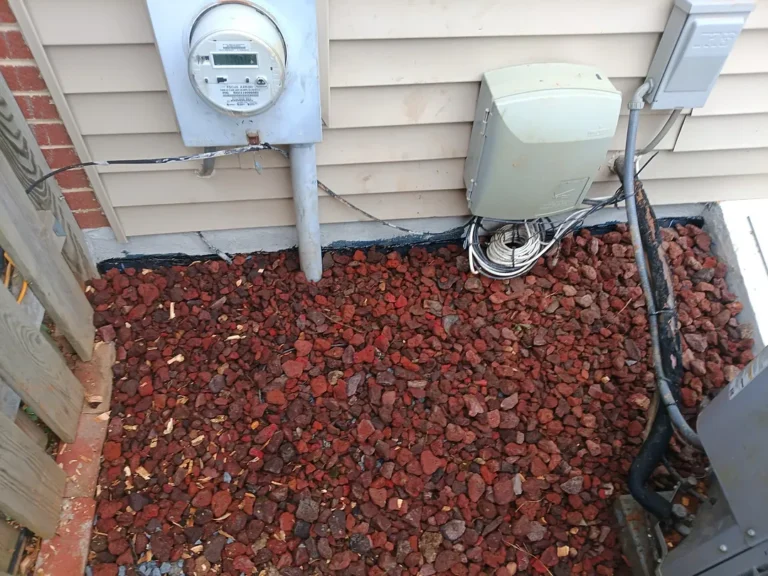
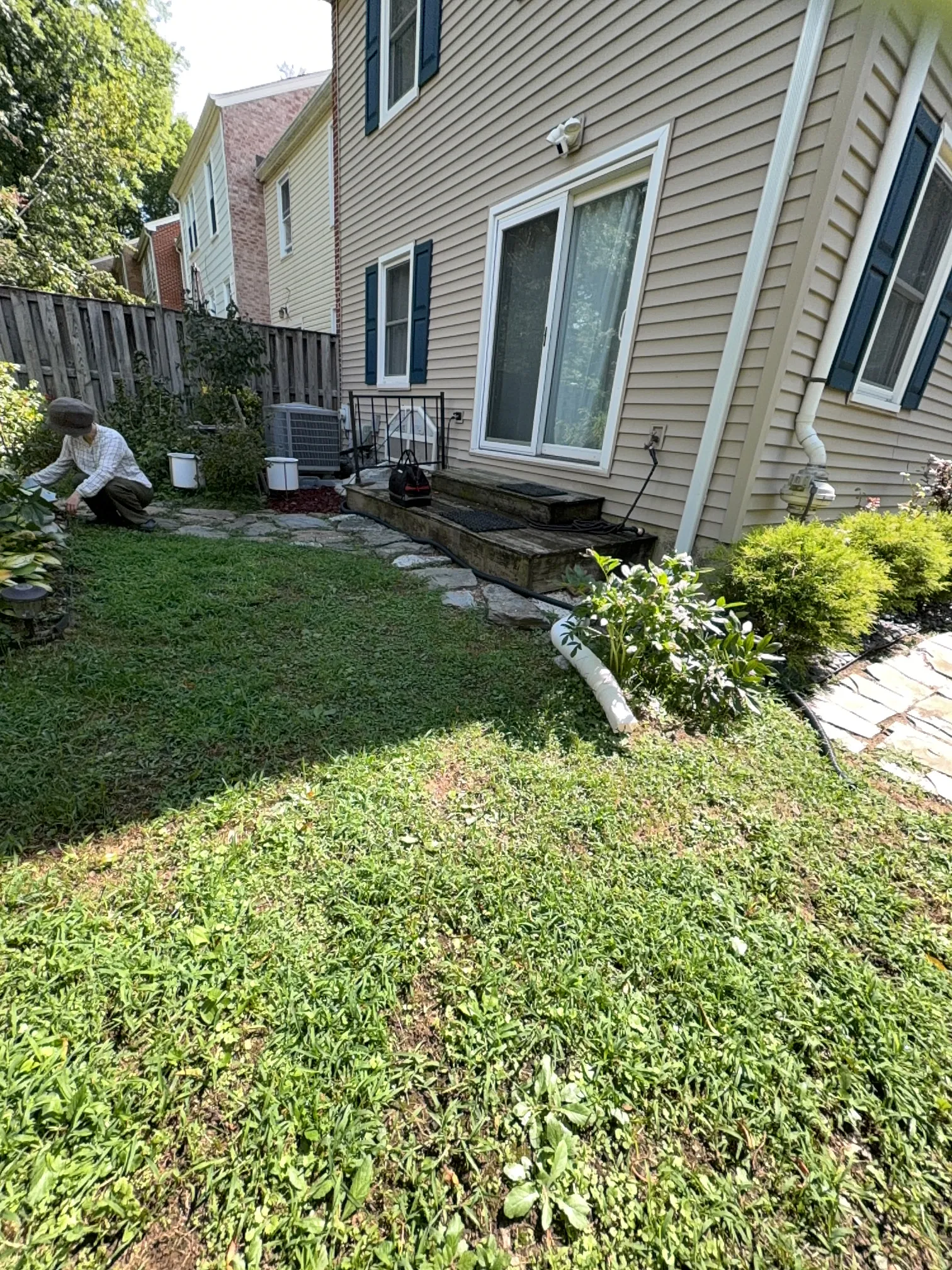
Water was entering beside a below-grade basement window well at a Rockville, Maryland home. The homeowner identified a separation between the cinder-block well and the foundation wall, and said the property sat low on a hill. An older French drain was present elsewhere, but its condition and connection to this opening were not established. We addressed both the buried wall and the surface water approaching the house.
Why was water entering beside the window well?
The homeowner reported water at the joint between the below-grade well and foundation. Runoff can collect at this kind of opening. Rather than assuming the decades-old drain elsewhere had failed—or that it protected this joint—the crew treated the reported entry area and planned a new route for near-surface water.
How was the exterior foundation wall waterproofed?
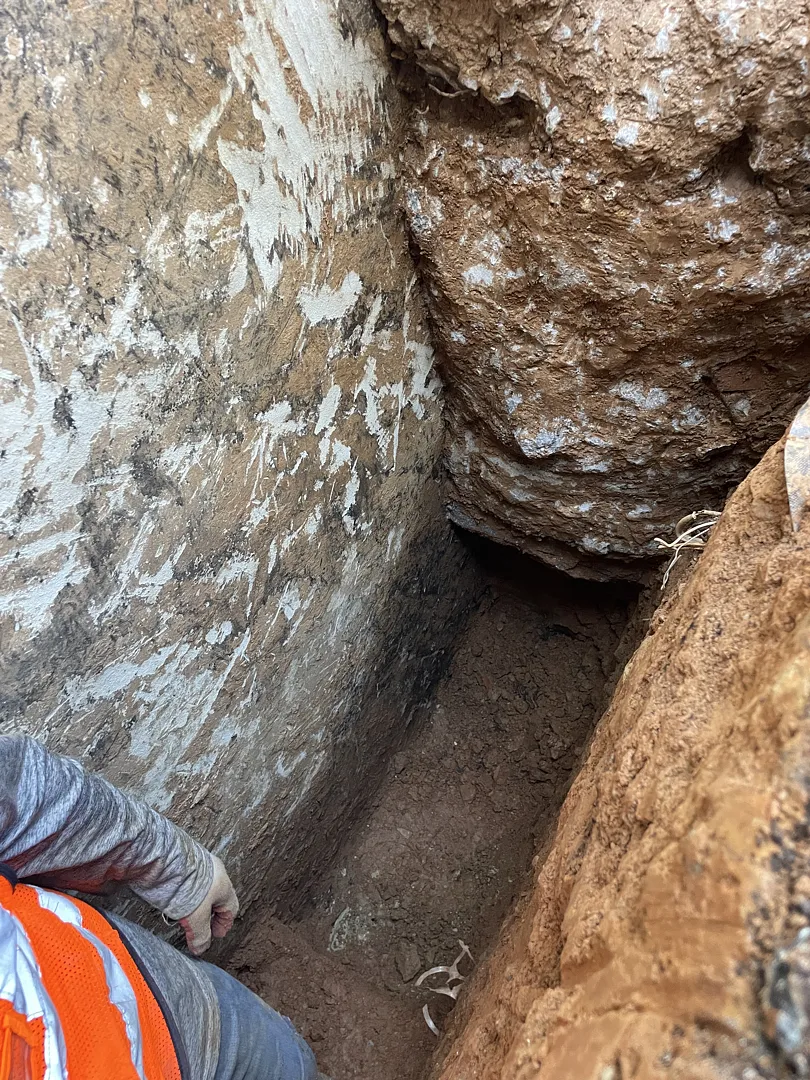
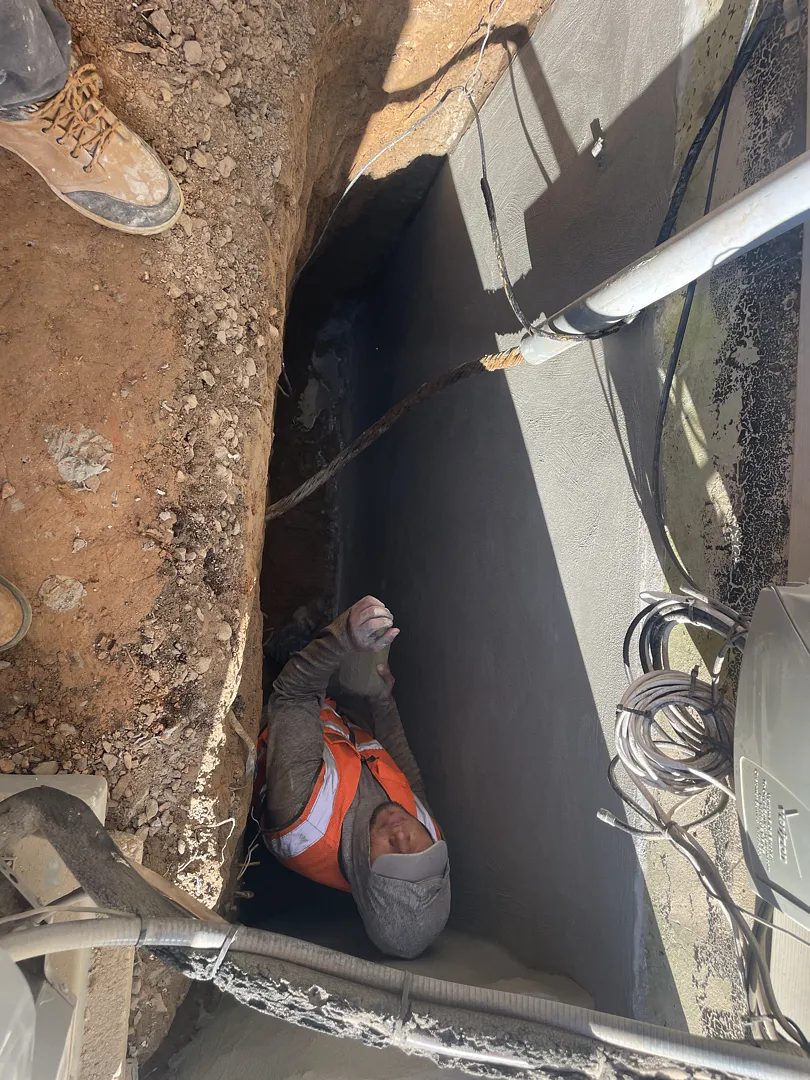
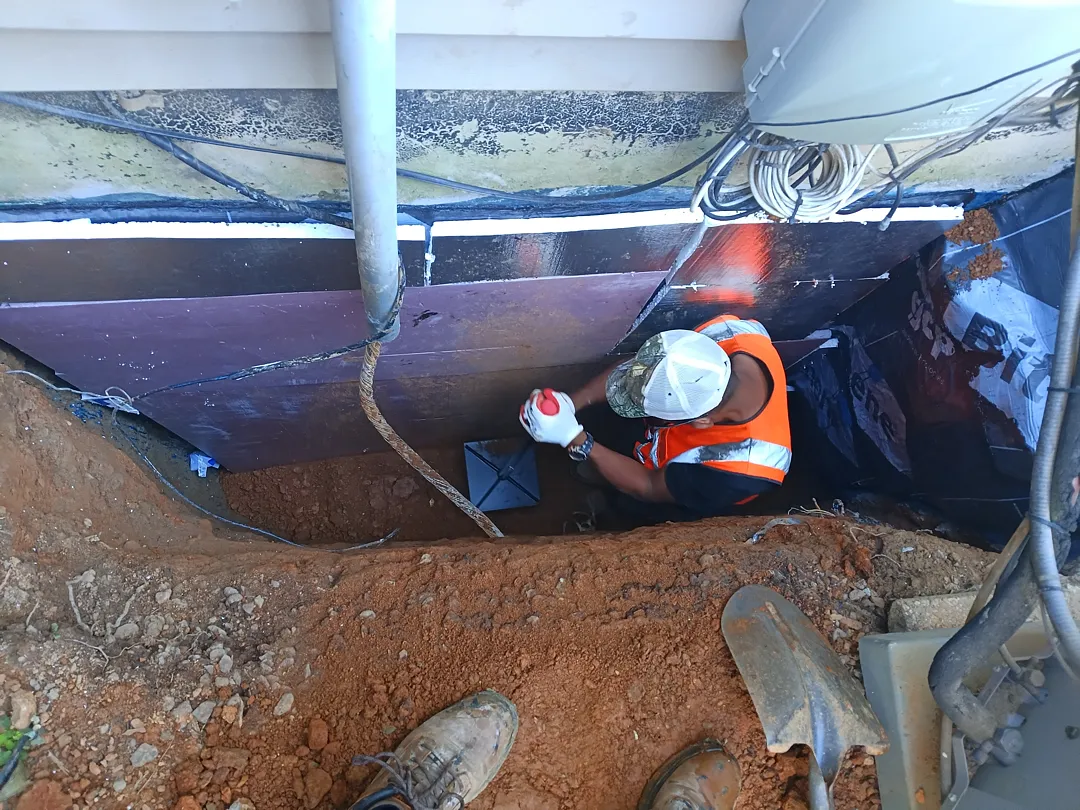
The crew hand-excavated the affected wall down to the wall-to-footing transition, working beside existing equipment and utilities. They cleaned the exposed masonry mechanically with a grinder and steel brushes, repaired open areas, and formed a polymer-modified mortar cove at the cold joint. A polymer-modified cementitious coat covered the prepared wall as the first waterproofing layer.
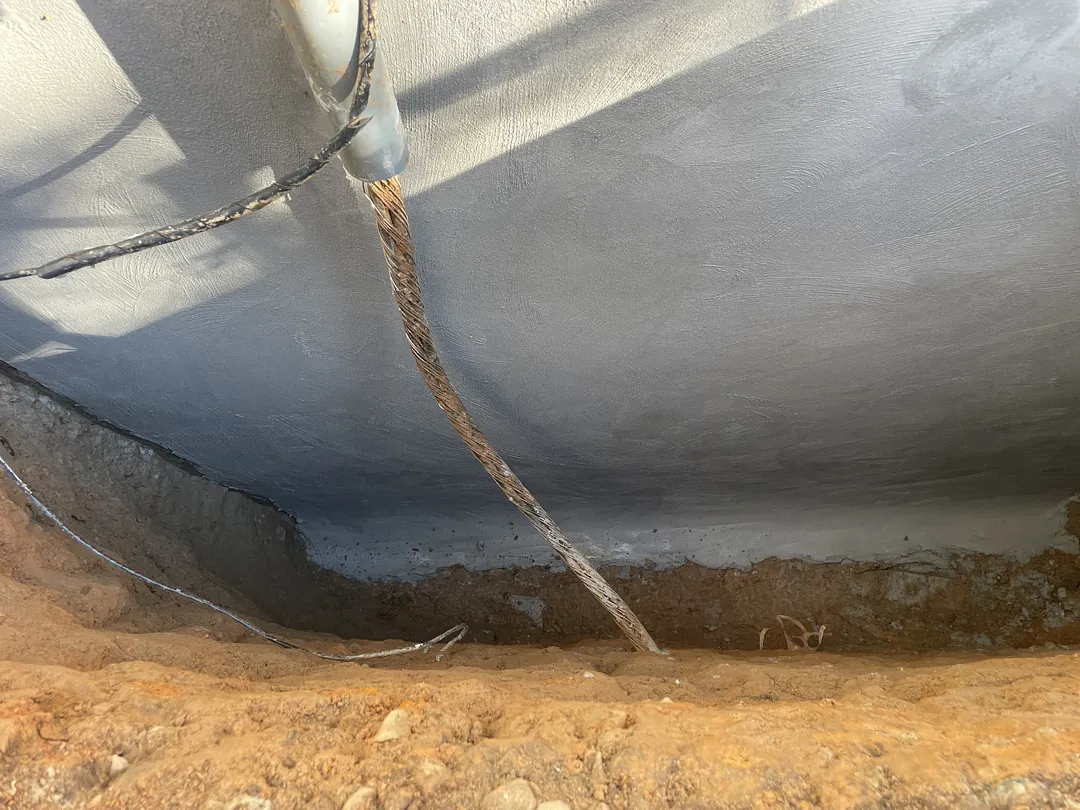
After that layer was ready, compatible primer and self-adhered modified-bitumen sheet membrane formed the second waterproofing layer. XPS board protected the membrane during backfill. Soil was returned and compacted in lifts to reduce settling beside the house.
Where does the surface water go?
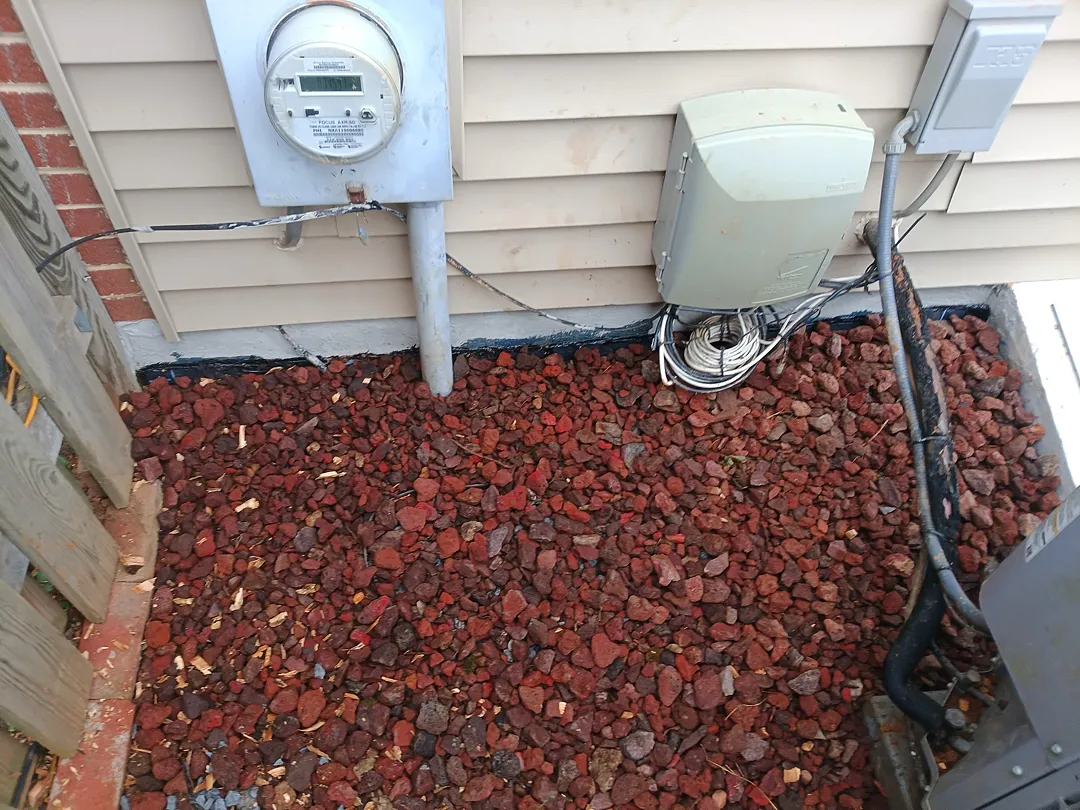
The completed scope included a near-grade grading tile, also called an exterior French drain. Soil was built up and compacted at the wall, then sloped toward a collection trench set away from the foundation. A waterproof membrane lined its pitched bed; washed stone and geotextile-wrapped perforated pipe collected approaching water. A separate solid discharge pipe carried the water to a pop-up emitter. This upper collection system handles a different water path from the waterproofed wall.
The work had four recorded visits from September 14 through September 17, 2026, and the job was marked closed the following day. The record does not document a later storm test, so this case describes the installed system rather than claiming a measured post-storm outcome.
Window-well leak questions
Why does water come in beside a basement window well?
Water can reach a gap between a below-grade well and the foundation. The joint, buried wall, surrounding grade and outlet should be evaluated together. Here, the homeowner reported a separation beside a cinder-block well.
Will an existing French drain stop a window-well leak?
Only if its location, elevation, condition and discharge route address that exact water path. The older drain at this property was not assumed to protect the window-well joint.
Why install grading tile if the wall has been waterproofed?
They serve different purposes. Wall layers protect the buried foundation; the upper drainage line intercepts approaching surface runoff and moves it to an outlet. This project included both.
Does a window-well leak always need an interior drain or sump pump?
No. The solution depends on the entry point and available discharge route. This project was addressed from the outside.
Water beside a basement window well in Rockville? Request an inspection of the wall, grade and discharge path. See our exterior waterproofing service.