

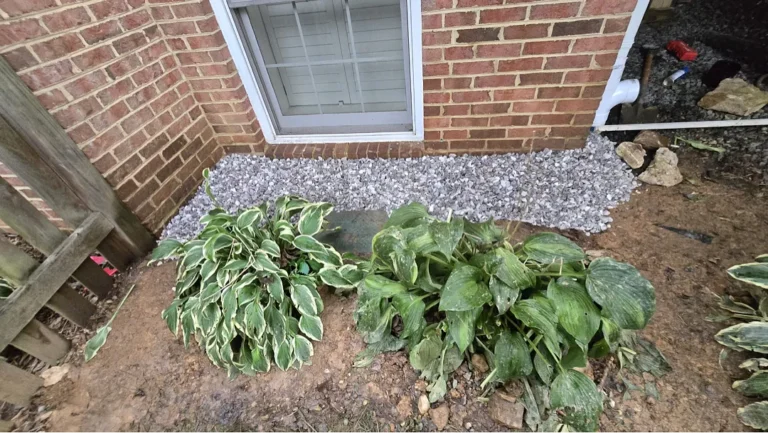
A Dunn Loring homeowner contacted DMV Waterproofing after noticing signs of a water leak in the basement. Outside, the affected block foundation sat below a window in a short, confined section beside a brick corner, fence and planting bed. The completed repair treated the buried wall, collected surface water near finished grade, and moved roof water away through separate buried downspout lines.
Where was the water problem investigated?
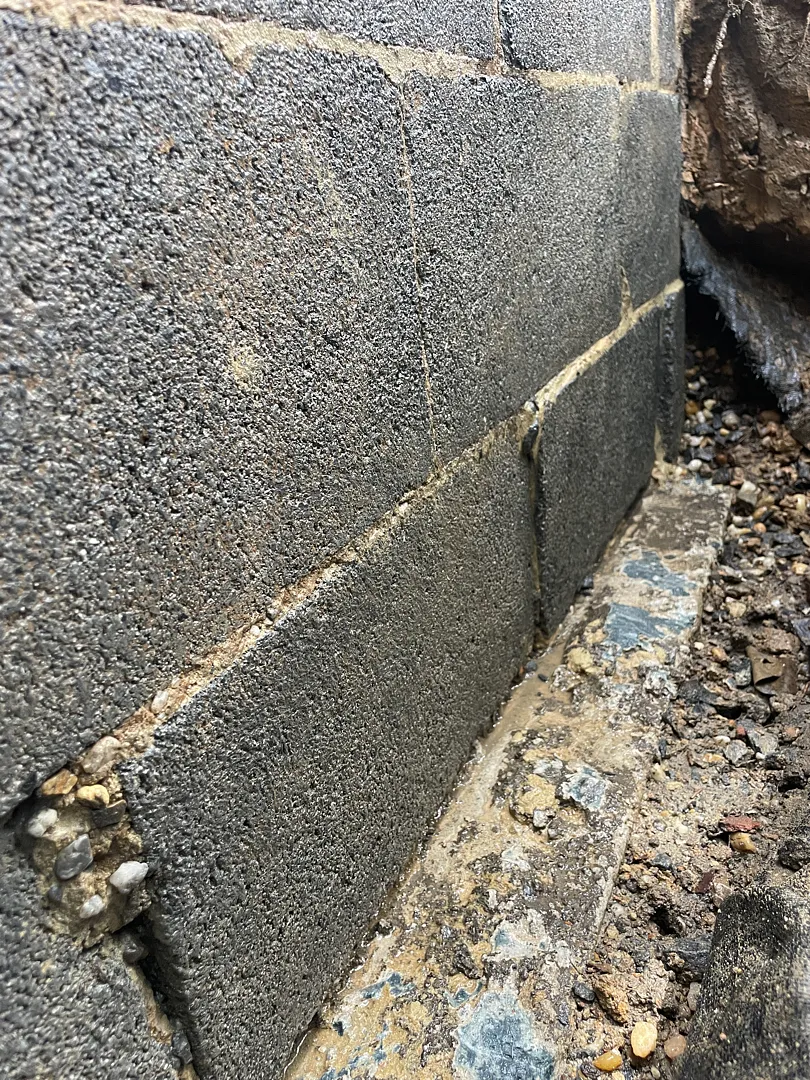
The customer’s initial request reported signs of a basement leak, but did not identify a single proven entry point. Work photos show the crew opening the exterior wall below the brick facade and window. They establish the block-wall material and the limited access; they do not establish that the window itself leaked. The project scope covered the wall-to-footing joint, the buried wall, near-grade surface-water collection and three downspouts.
How was the exterior block wall waterproofed?
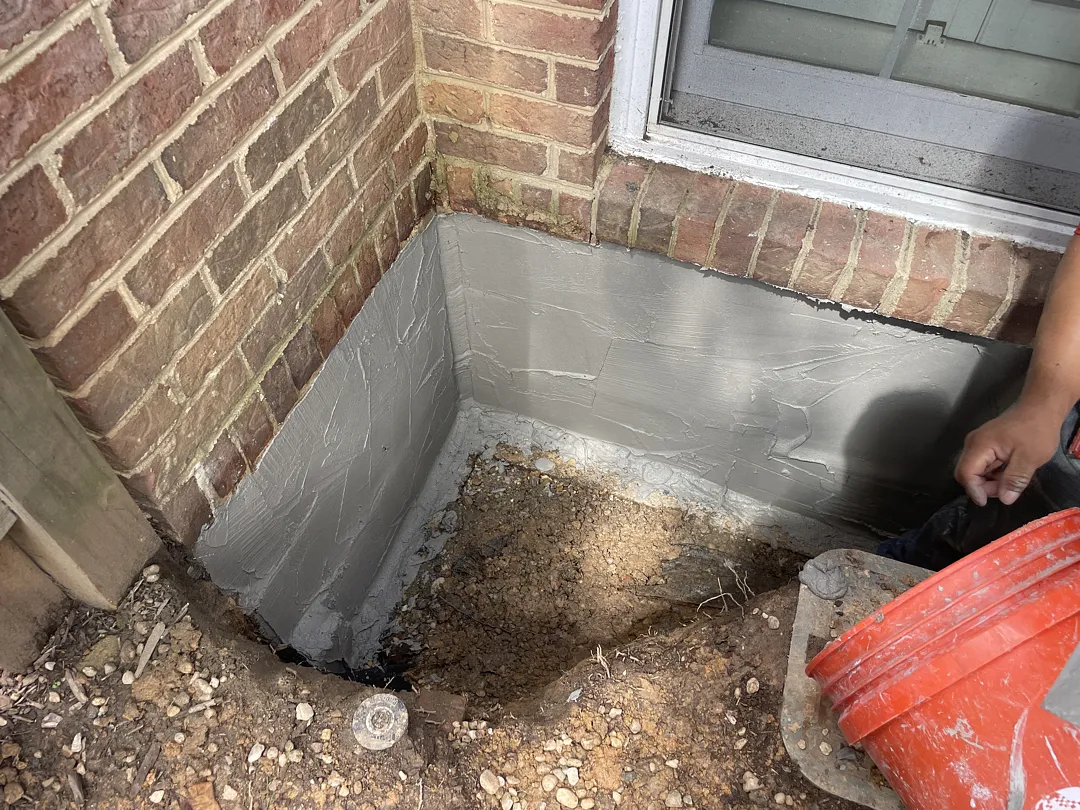
Working by hand in the narrow area, the crew excavated the affected section down to the wall-to-footing junction. A grinder and steel wire brushes prepared the masonry by removing soil, loose material and deteriorated coating. Polymer-modified mortar repaired defects and built a cove at the cold joint, allowing the waterproofing to continue through that change in plane.
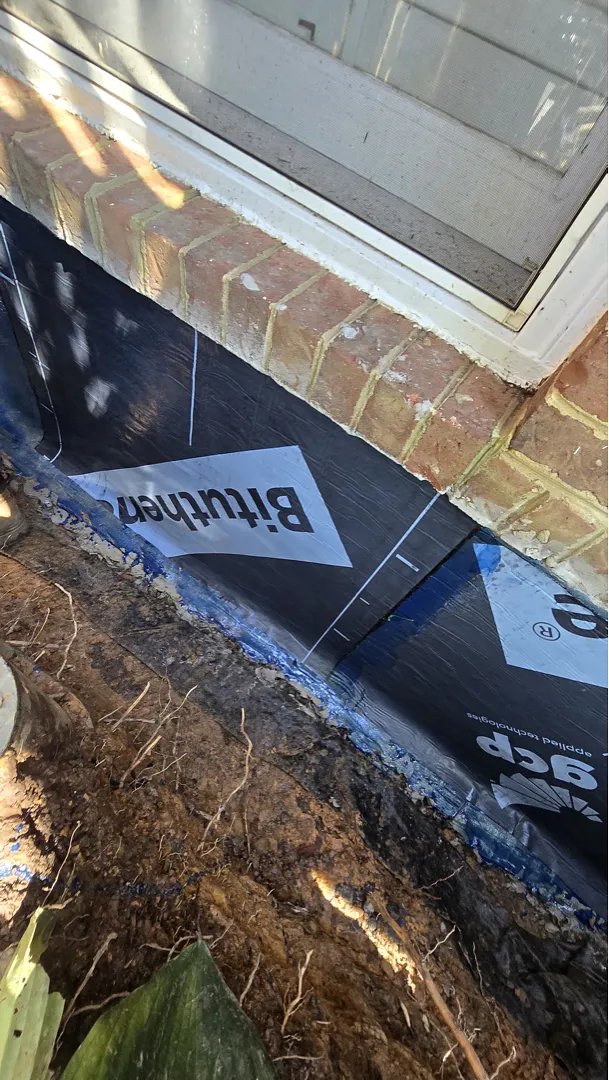
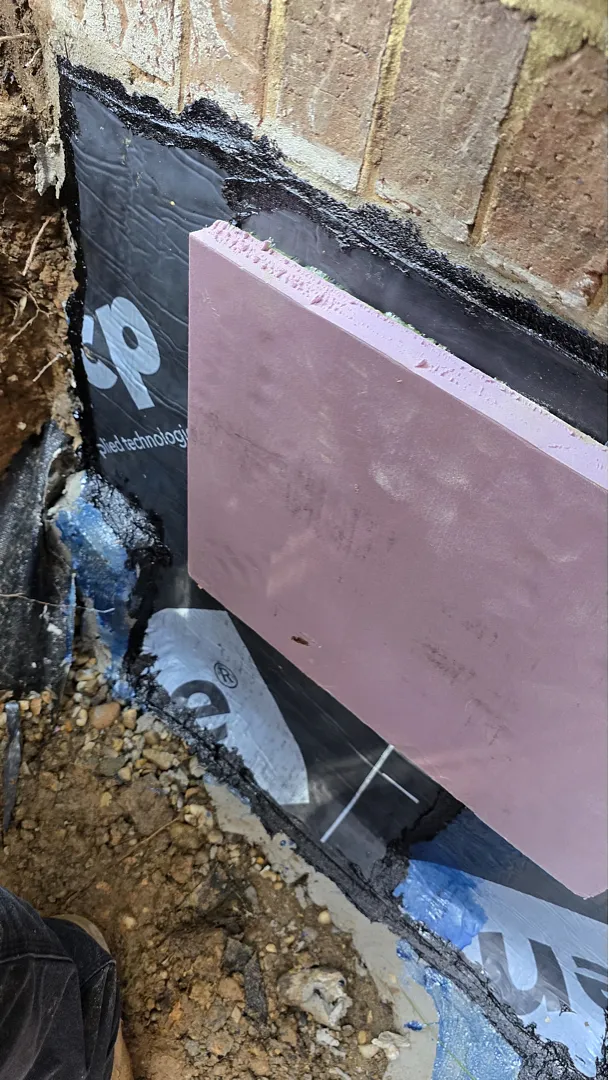
The first continuous waterproofing layer was a polymer-modified cementitious coat. Its gray surface is visible in the work photos before the next layer was installed. The crew then rolled on compatible primer and adhered a modified-bituminous sheet membrane. Pink XPS board protected that membrane during backfill; the board itself is not the waterproofing layer. Backfill was returned and compacted in lifts to reduce settlement beside the house.
What kept water from collecting against the repaired wall?
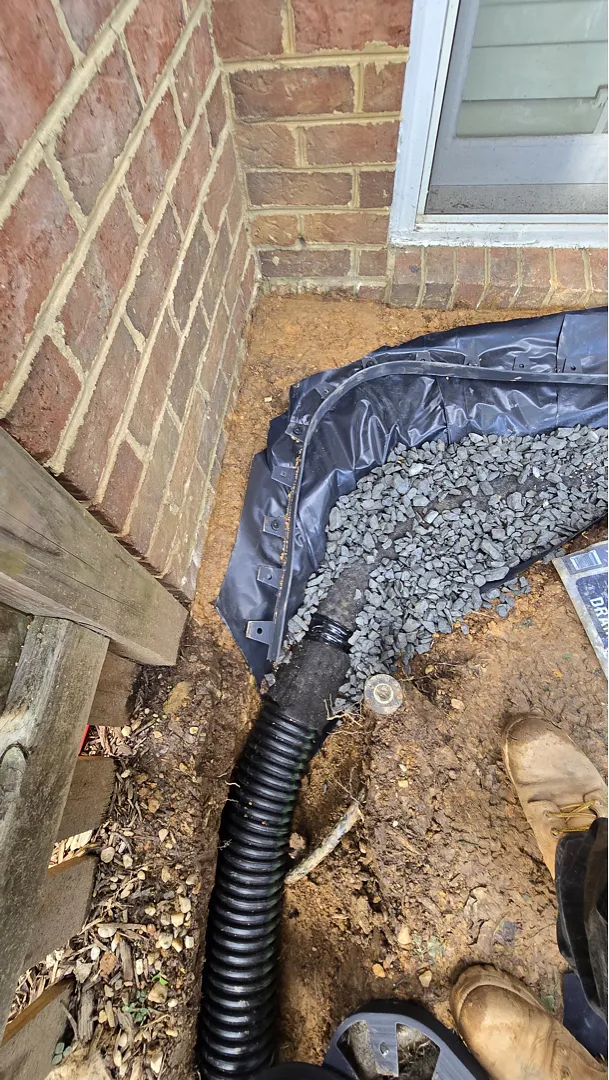
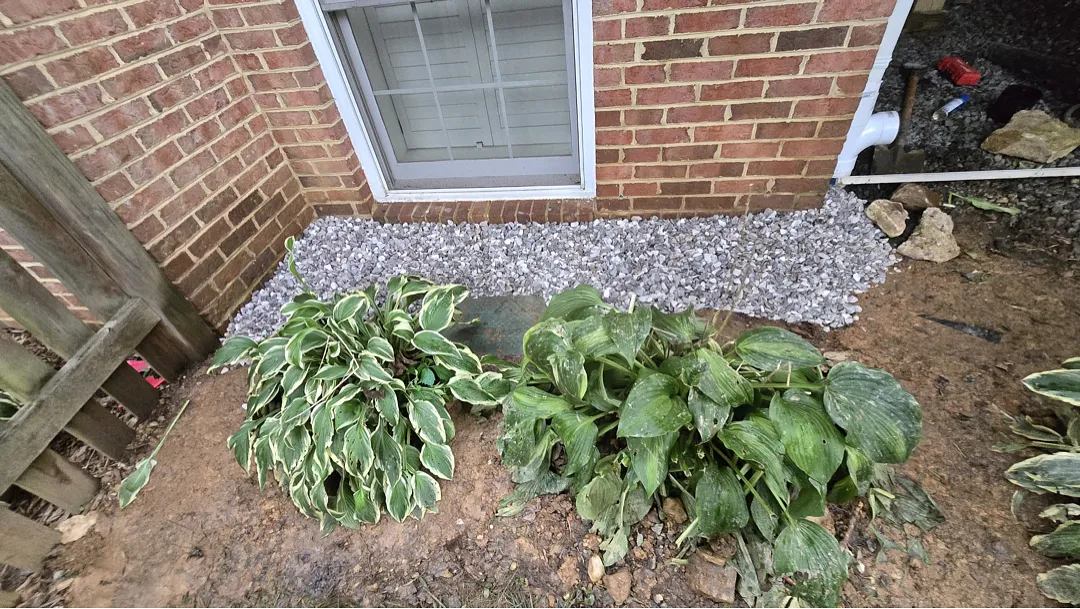
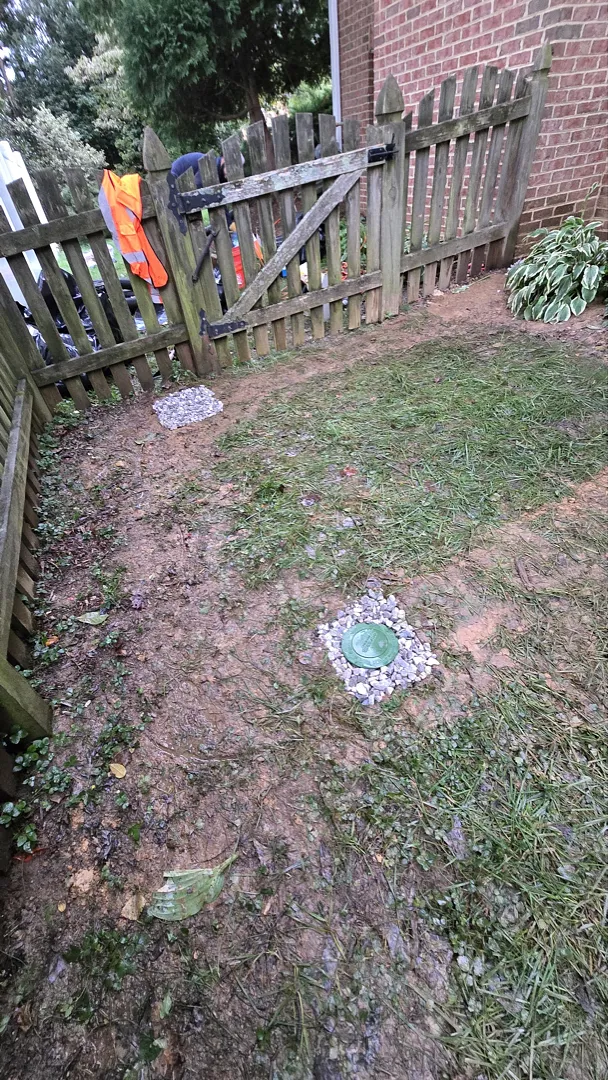
The scope included final regrading and eight feet of grading drain tile near finished grade. This exterior French drain was designed as an upper collection route: a pitched trench with a membrane, washed stone and geotextile-wrapped perforated pipe. Its purpose was to intercept water approaching the house at the surface. The corner photo shows the membrane and stone during installation; the finished photo shows the restored gravel strip below the window.
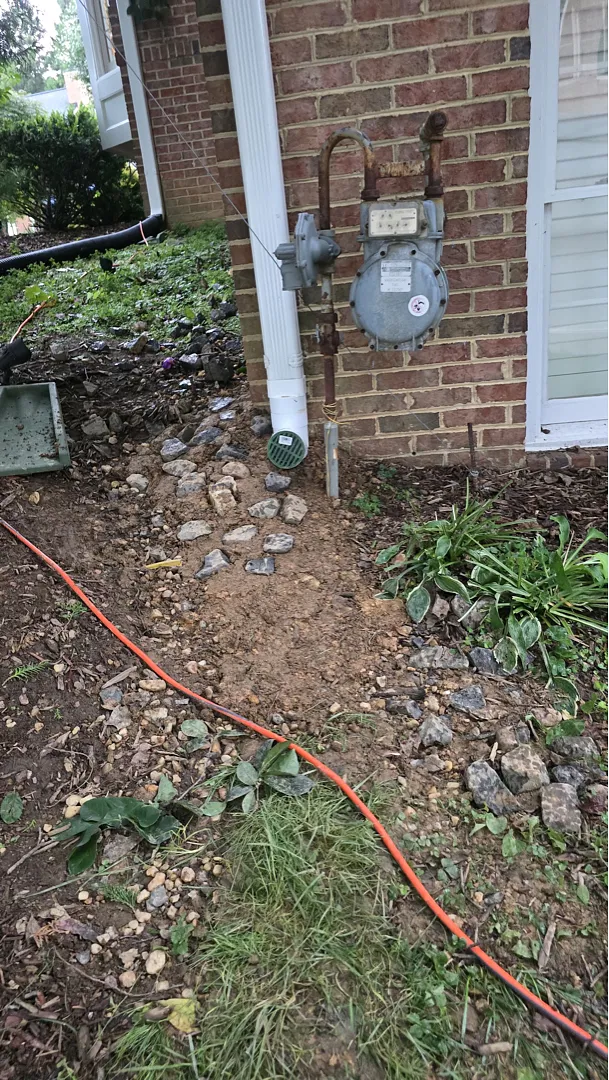
Roof runoff had a different route. The job included three buried downspouts, which carry concentrated gutter water in solid pipe instead of sending it into the perforated grading tile. Work photos show a downspout area and yard outlets. Those photos do not establish every hidden connection or its exact distance; the completed job scope establishes the three-downspout work.
What does the completed project show?
The closed job and work photos document the progression from exposed block wall to mortar repair, gray cementitious coating, sheet membrane, XPS protection, drainage work and restored surface. The record does not include a measured post-storm test or a later homeowner report, so this case documents the completed installation without claiming an observed rain-event outcome.
The distinguishing decision was to treat this accessible leak area from outside while addressing both surface runoff and roof water. An interior drain would collect water after it reached the basement side; this project instead repaired and protected the wall where exterior access was possible.
Dunn Loring basement leak questions
Can a basement leak be repaired from outside?
When the affected foundation area can be exposed, the wall and its base joint can be cleaned, repaired and waterproofed from the exterior. In this project, that treatment was paired with near-grade drainage and regrading.
Is a buried downspout the same as grading tile?
No. A buried downspout moves roof runoff through solid pipe. Grading tile collects approaching surface water through a perforated pipe in stone. Both were included here, but they serve separate functions.
Why compact the soil after exterior waterproofing?
Loose backfill can settle into a low area beside the wall. Compaction in lifts helps preserve the intended finished slope and drainage route.
Does a completed waterproofing job prove how it performed in later storms?
Completion records and photos document what was built. A rain-performance claim needs a later observation or customer report; one was not in the reviewed record for this case.
Seeing signs of a basement leak in Dunn Loring? Request an inspection to trace the water route before choosing a repair. Learn more about exterior waterproofing.