

This Bethesda MD exterior waterproofing project began with a homeowner’s heavy-rain complaint: water and sludge were entering the basement and damaging the flooring. The entry point was not yet certain. Water might have been coming through the outside wall, beneath the floor, or around the backyard door and windows. We designed the work to investigate those possibilities while controlling water at the exterior foundation.
Why this basement needed more than a surface patch
The affected brick-faced wall leads toward a backyard entrance beneath a raised deck. Our crew opened a trench along the foundation by hand and placed excavated soil on a tarp to protect the lawn. Exposing the wall let us reach the below-grade masonry and the wall-to-footing joint, rather than guessing from the damp basement alone.
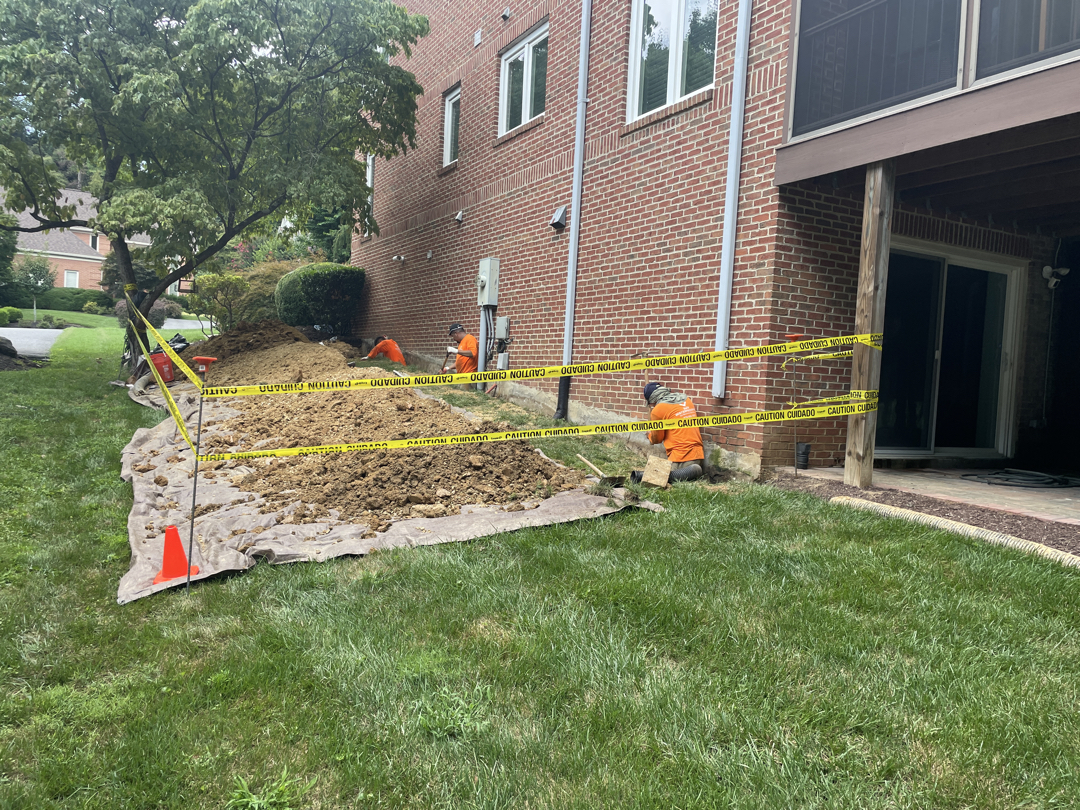
The plan also included limited removal of water-damaged basement flooring and observation openings near the backyard door and windows. These were investigative steps—not proof that one opening was the leak source. This project was not an automatic interior French drain and sump-pump installation.
First layer: repair and cementitious waterproofing
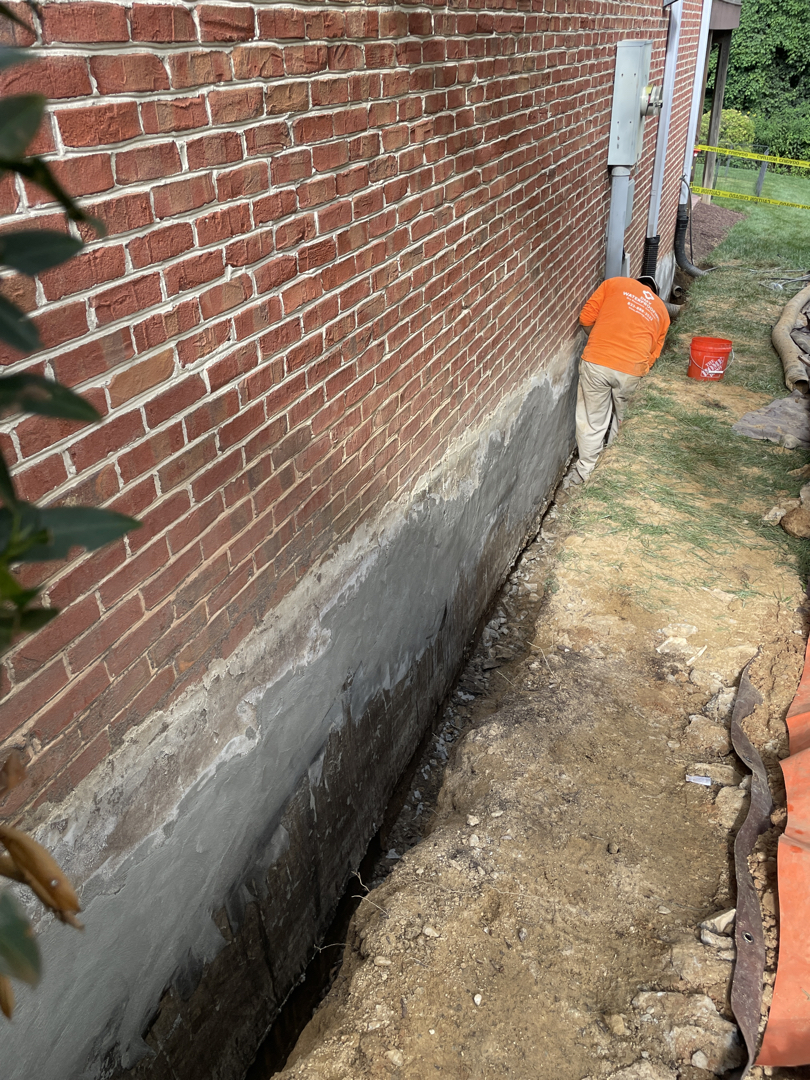
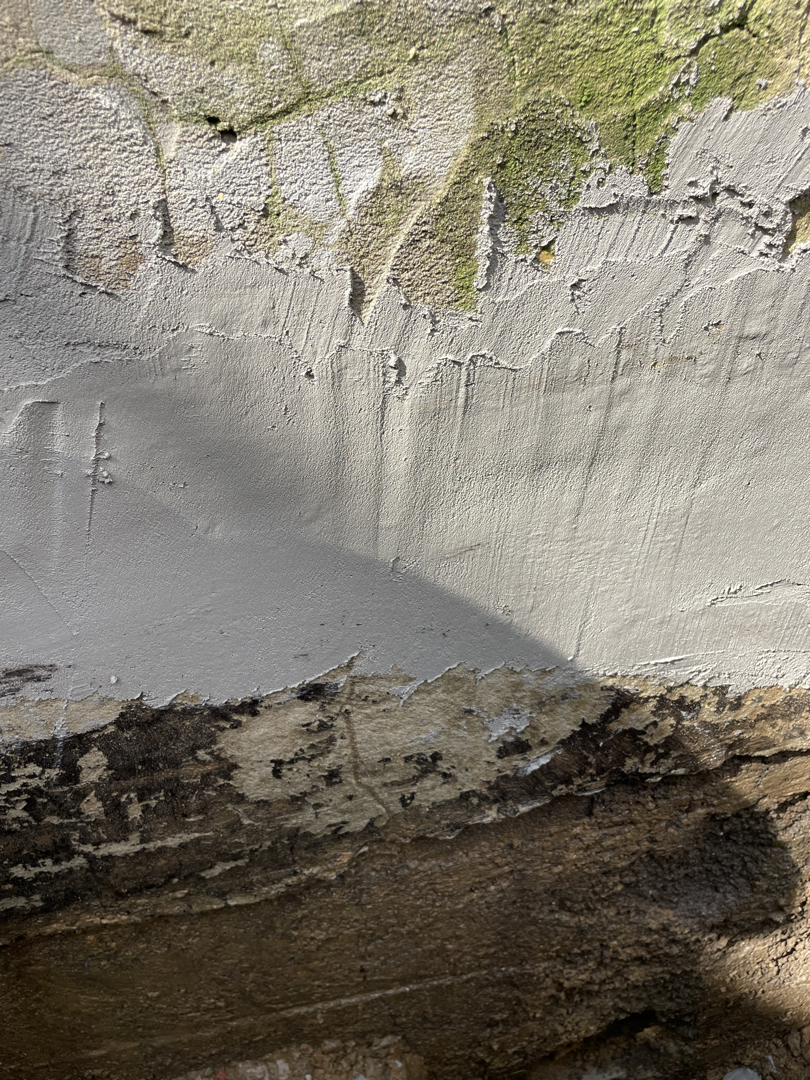
After excavation, the wall was mechanically cleaned with a grinder and steel wire brushes. That preparation matters: waterproofing must bond to sound masonry, not loose material. At the wall base, the crew built a cove over the cold joint with polymer-modified mortar and repaired visible cracks and defects. Polymer-modified cementitious waterproofing then covered the exposed wall as the first continuous layer.
Second layer and protection before backfill
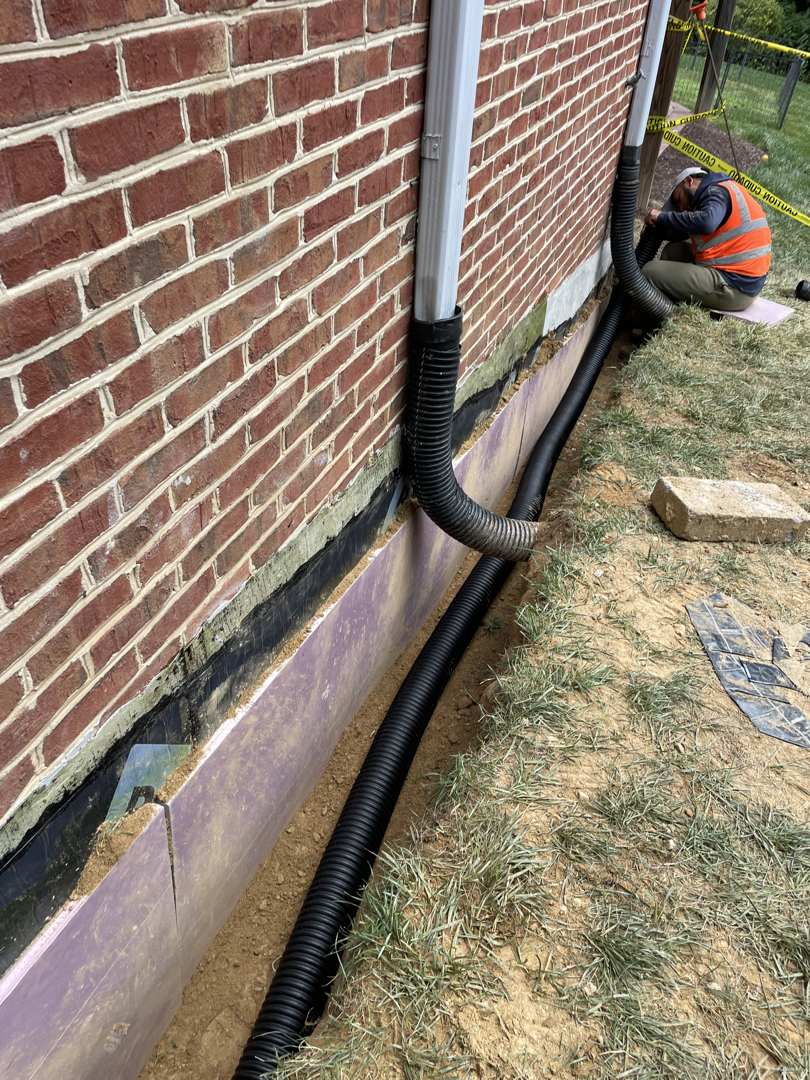
This job’s recorded second waterproofing layer was a fluid-applied elastomeric membrane over the cured cementitious coat. XPS board then protected the membrane from backfill. The board is a protective layer, not a substitute for waterproofing.
Grading drain tile and downspouts serve different water paths
After the wall treatment, soil was returned in compacted lifts to help the finished grade hold its shape. The project used grading drain tile near finished grade: a pitched, membrane-lined stone collection bed with geotextile-wrapped perforated pipe. The grade was built higher at the wall and tapered toward the collection area, directing approaching surface water away from the foundation.
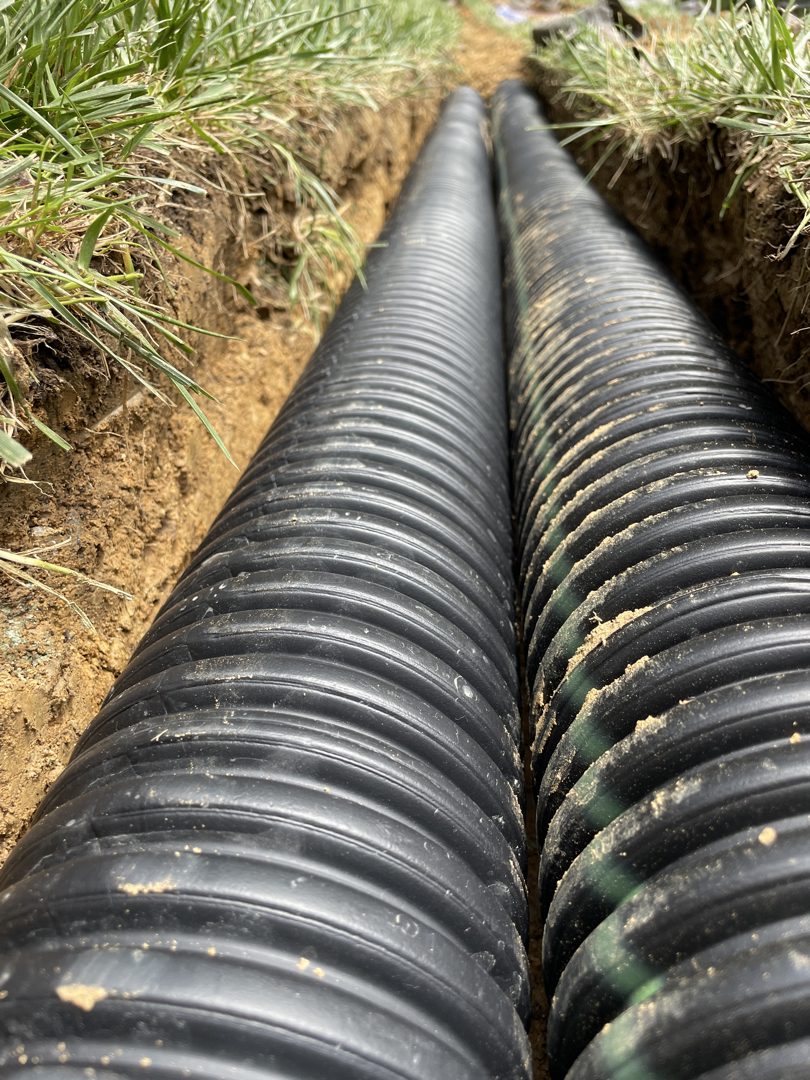
Roof runoff needed a separate route. Two downspouts were carried away through buried solid discharge pipe, rather than being fed into the perforated grading tile. The construction photo shows pipe runs in the trench; the job’s scope, not that photo alone, identifies their different functions.
The completed exterior
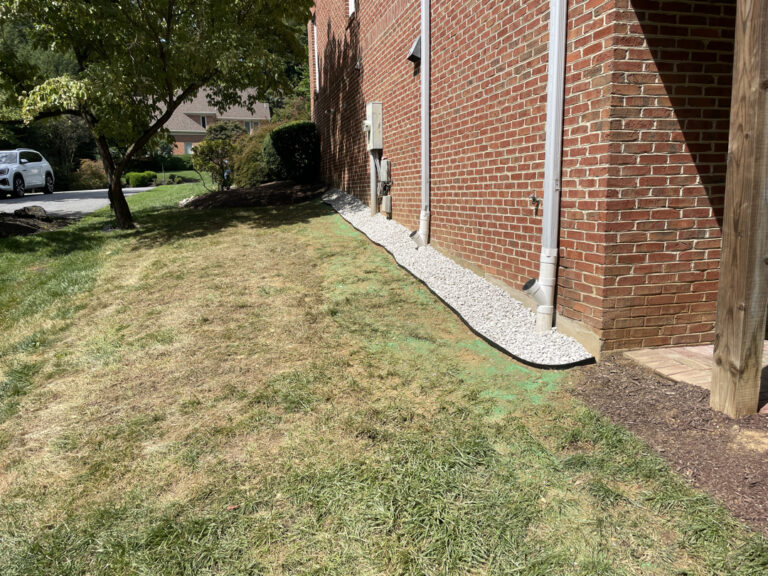
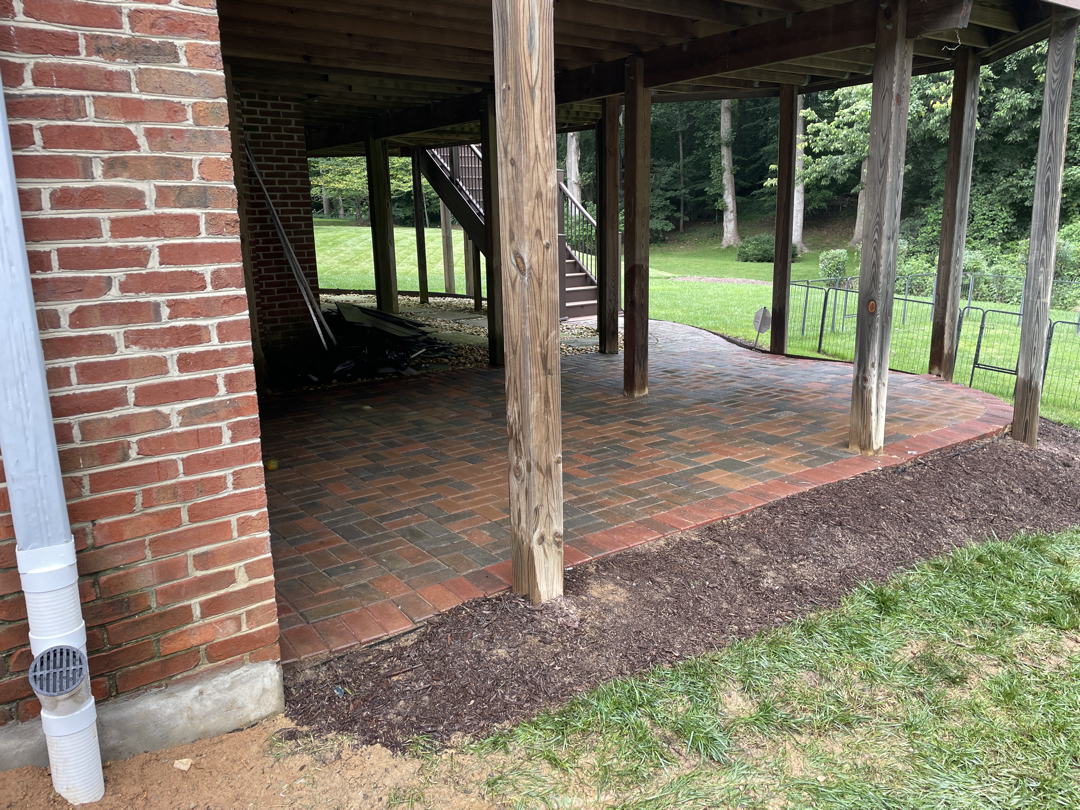
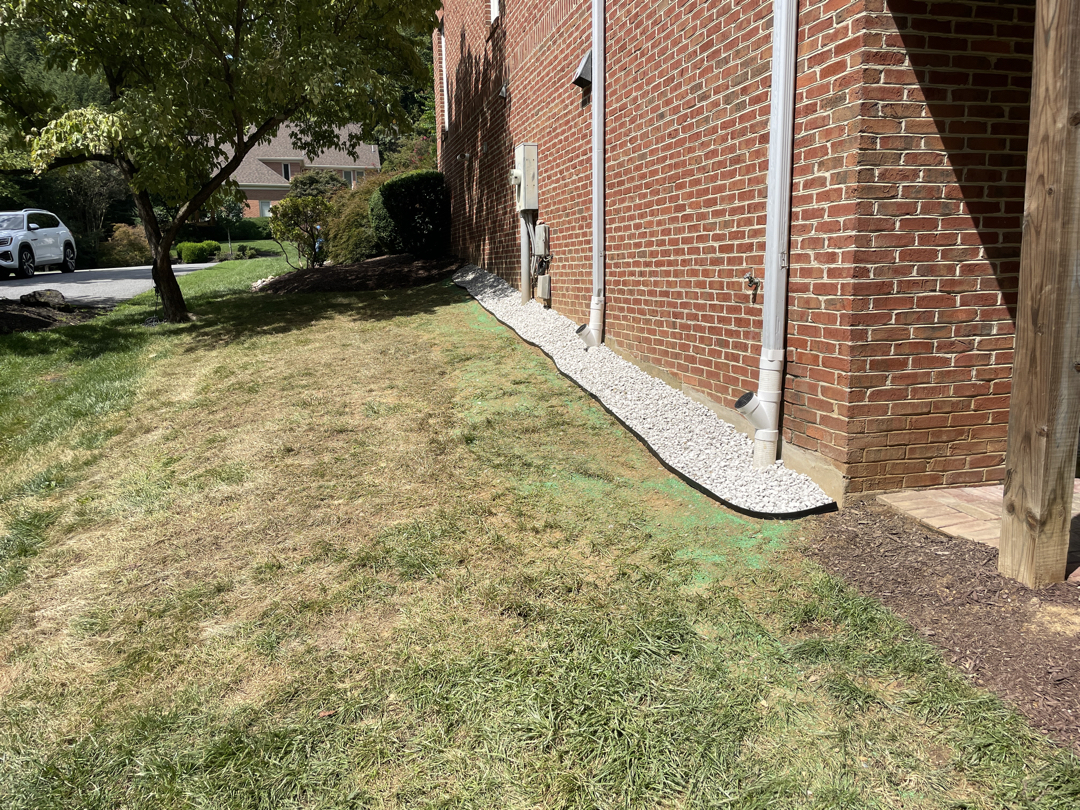
The project record shows three completed site visits and a closed job. Final photographs show a restored area beneath the raised deck and a gravel-edged strip along the brick wall, with the exterior graded rather than left as an open excavation. The reviewed record does not contain a post-storm observation proving every indoor symptom disappeared, so the result we can show is the completed repair and the water paths it was designed to manage.
Questions this Bethesda waterproofing project answers
Why does a basement leak during heavy rain?
Rain can reach a basement by more than one route. Here the homeowner reported water and sludge indoors but did not know the exact entry point. The work addressed the exterior wall, near-grade surface water and concentrated roof runoff while allowing targeted checks near the door and windows.
Can a basement leak be repaired from outside?
When the site allows access, the affected foundation can be excavated, cleaned and repaired before exterior waterproofing is applied. This case used polymer-modified cementitious waterproofing, a fluid-applied elastomeric second layer and XPS protection.
Is grading drain tile the same as a buried downspout?
No. Near-grade grading tile collects approaching surface water through stone and a perforated pipe. Buried downspout lines carry roof runoff away through solid pipe. This Bethesda job included both because they serve separate water routes.
Why compact backfill in layers?
Loose fill can settle beside a newly waterproofed wall, leaving a low strip that holds rainwater. Returning soil in compacted lifts helps support the final grade and its intended slope.
What the homeowner said
★★★★★ Michelle · Excerpt from Google review
“They were deliberate and explained each phase of our foundation restoration.”
Water entering your Bethesda basement when it rains? Request an inspection to identify the water path before choosing a system. Learn more about our exterior waterproofing service.