

Loudoun County field guide
Why is an Ashburn basement wet? A damp wall, musty smell, or wet carpet tells you where water appeared, not necessarily where it began. In Ashburn and nearby Loudoun County communities, start by tracing the first wet spot and when it appears. Rain at the surface, a downspout outlet, a wall opening, and water beneath the slab call for different repairs. A neighborhood name alone does not diagnose the soil or foundation.
1. Is runoff moving toward the foundation?
After rain, look for puddles near the house, soil washed against the wall, or a walkway or planting bed that directs water inward. Check the actual surface slope and where water can leave the property. A shallow, graded collection system may help intercept surface runoff where there is a suitable outlet; it is not automatically a footing-level drain. Raising soil against siding, brick weep holes, or a window opening can create a different problem.
2. Where do the gutters and downspouts empty?
Overflowing gutters and short or disconnected downspout extensions can concentrate roof water beside one foundation corner. Watch the discharge during rain, check for buried-line blockages, and identify the final outlet before specifying a new line. Moving roof water away may solve a surface-water source, but it will not by itself repair a leaking wall joint or groundwater seepage.
3. Is there a specific wall opening or crack?
A basement window, utility penetration, construction joint, or crack can be a local entry path. Photograph the first wet point before cleanup and compare it with the exterior at the same location. A crack may need separate structural evaluation if it is widening, displaced, or accompanied by wall movement. Sealing a visible opening without controlling water outside can leave the underlying pressure in place.
4. Does water appear at the wall-floor joint or through the slab?
Seepage at the base of several walls or through floor cracks can indicate water collecting around or below the basement. That pattern warrants an inspection of the foundation type, existing drainage, sump equipment, and a safe discharge route. An interior perimeter drain can collect water at the basement edge when the evidence supports it. Exterior waterproofing treats an accessible outside wall. Neither is the default answer for every wet basement.
Does Loudoun County soil explain every leak?
No. Soil, fill, grading, construction details, and groundwater can vary from lot to lot. The USDA Web Soil Survey is useful background for planning an investigation, but a map cannot establish the cause of water entry at a particular wall. We would not attribute a homeowner’s crack to expansive clay or settlement without site evidence.
What should an inspection answer?
- Where did water first show up, and did it follow rain or a plumbing event?
- Where do the gutters, downspouts, and yard drains discharge?
- Is the wet area at a window, penetration, wall crack, wall-floor joint, or floor?
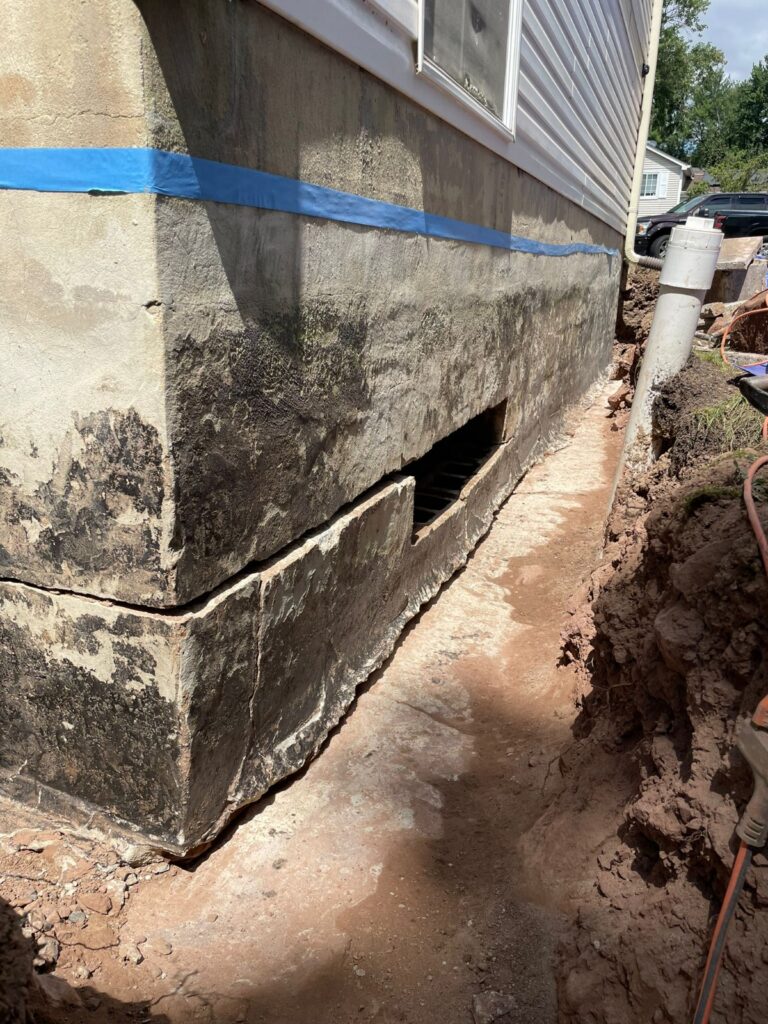
- Can the outside wall be reached safely, and what would excavation disturb?
- If a drain or pump is proposed, where will its water go?
These answers help distinguish a surface-water correction from wall repair or basement drainage. For a broader walkthrough, see how water gets into a DMV basement.
Common questions from Ashburn homeowners
Does a musty smell mean I need a sump pump?
Not necessarily. First locate and correct the moisture source, then assess drying and any affected materials. A pump is appropriate only when the water path and discharge plan justify it.
Can a downspout cause a wet basement wall?
Yes, roof runoff can saturate soil beside a wall or enter at an opening. Confirm the gutter and outlet behavior during rain before treating it as the only cause.
Is an exterior drain the same as a shallow yard drain?
No. A near-grade yard system handles surface water; a footing-level drain serves a different position and purpose. The proposed depth and outlet should be explicit in the scope.
Need to identify the water path at your Ashburn home? Request an inspection and share photos of the first wet spot and the exterior during or soon after rain.