

Case file — Connecticut Avenue, Northwest DC. New here? Start with our open letter.
At a glance
- Location: Connecticut Ave, Northwest DC
- Foundation: Brick (load-bearing)
- Original complaint: Not independently matched to a Jobber record
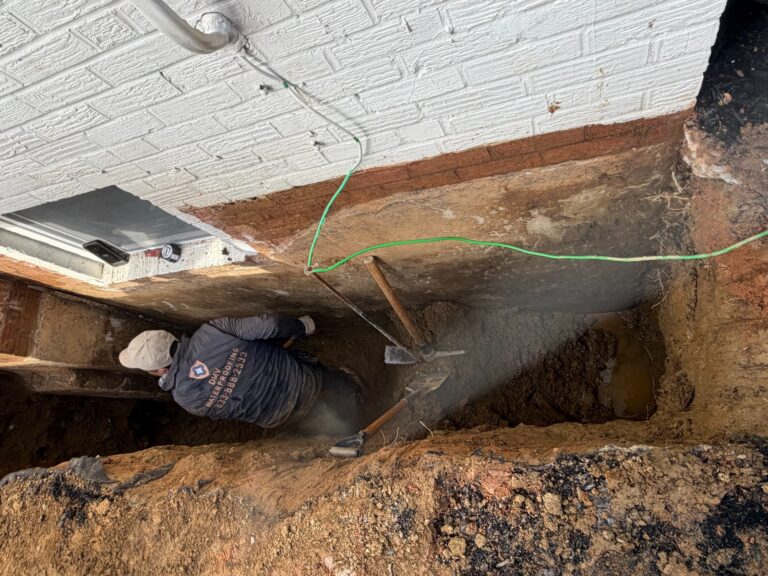
- Visible condition: An excavated masonry foundation wall and exposed mortar joints; interior water conditions are not shown in the available photos.
- The fix: Exterior wall treatment — excavation, wall preparation, waterproofing layers and sheet membrane
What the available record shows
The available project photographs show exterior excavation and successive wall-treatment stages. They do not show the basement floor or establish the original customer complaint, including any report of mold.
What we found
The exposed masonry wall shows mortar joints and an exterior work area. The available photos do not establish the home’s construction year, the condition of the basement floor, or whether a slab crack was present. Those details require the original inspection or job record.
The photographed work focused on the accessible exterior wall. The available photos do not establish the precise indoor water-entry path or show that water entered through particular mortar joints.
What we did
The available photographs document these stages of the exterior wall work:
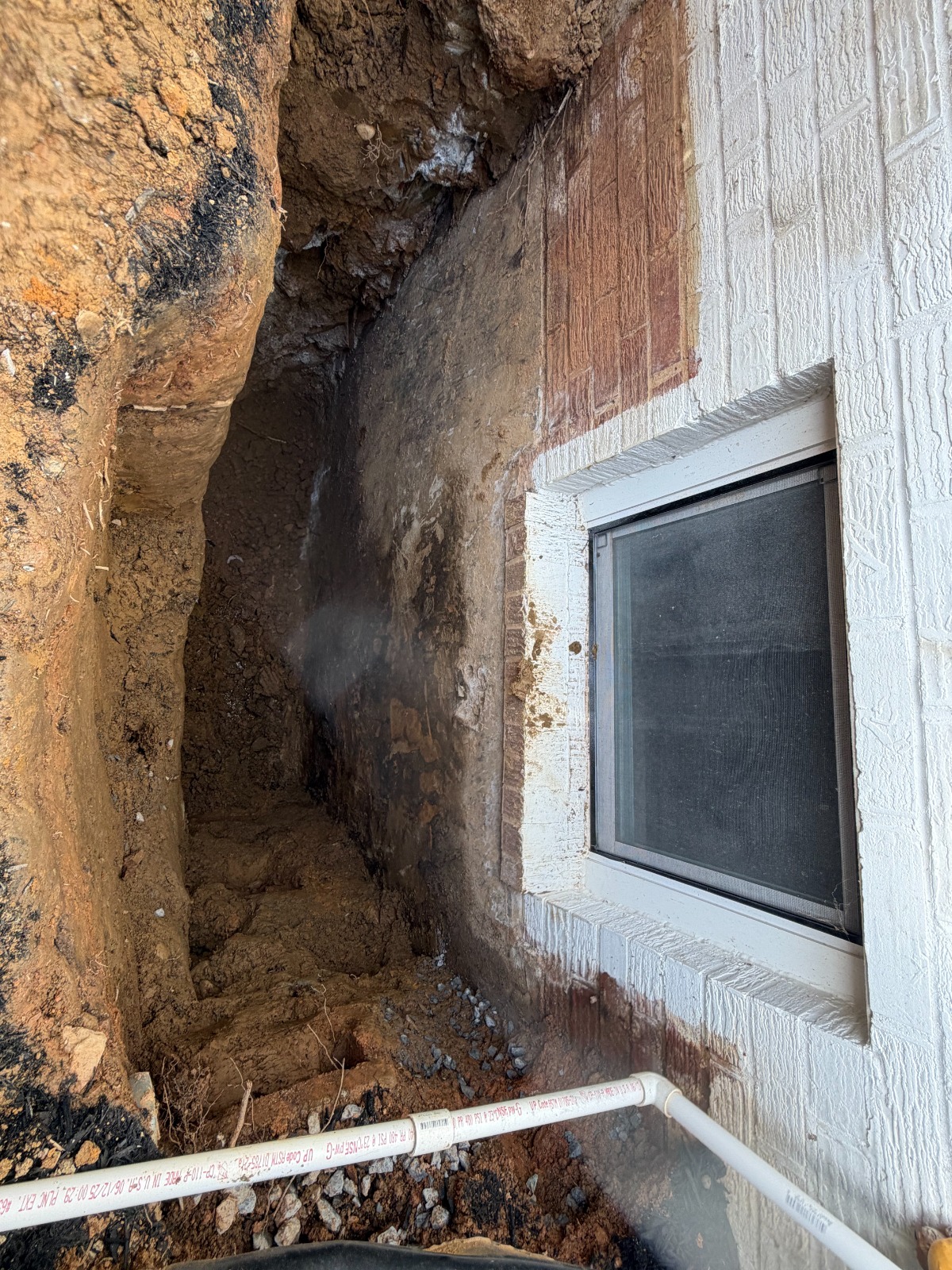
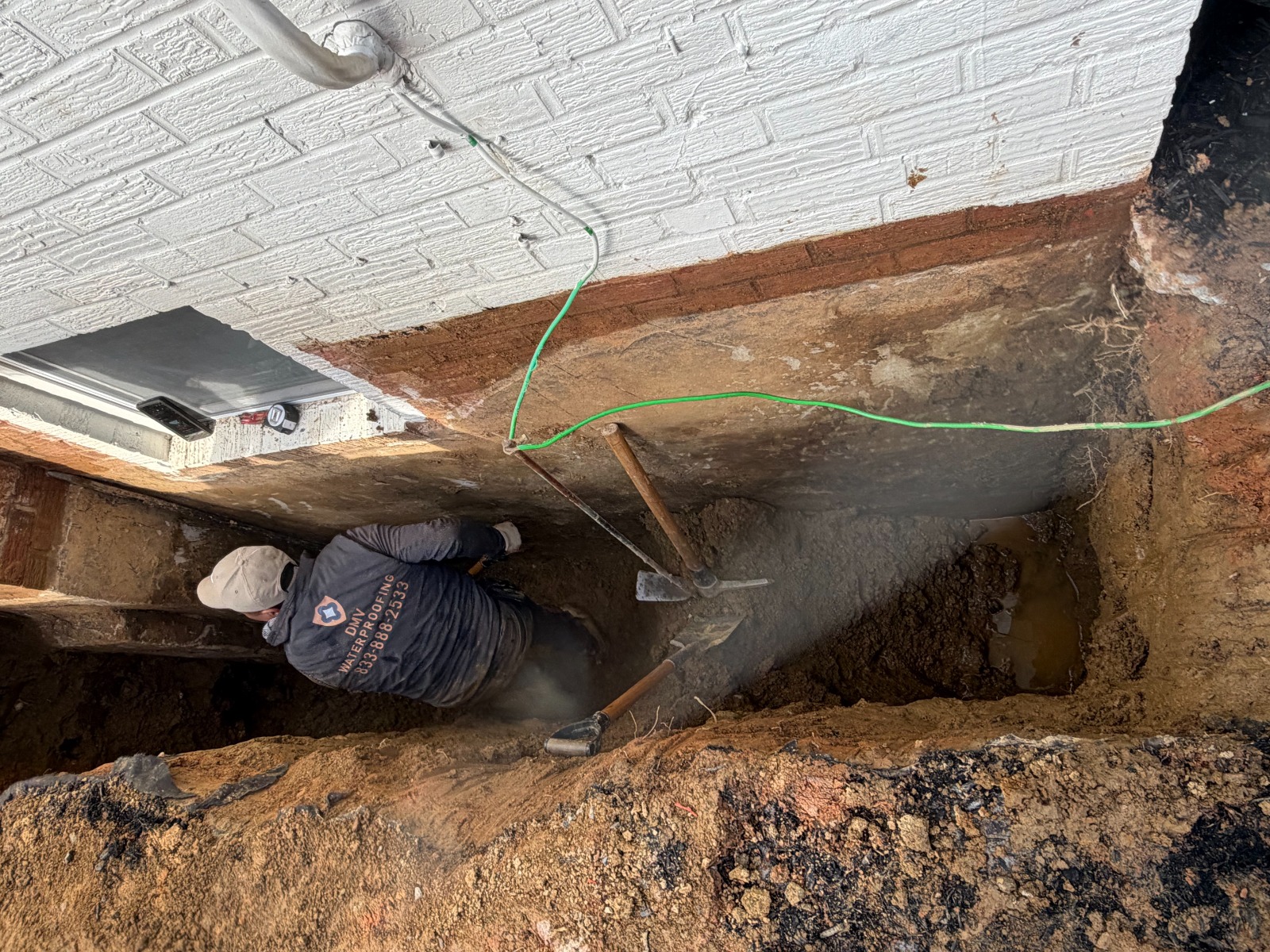
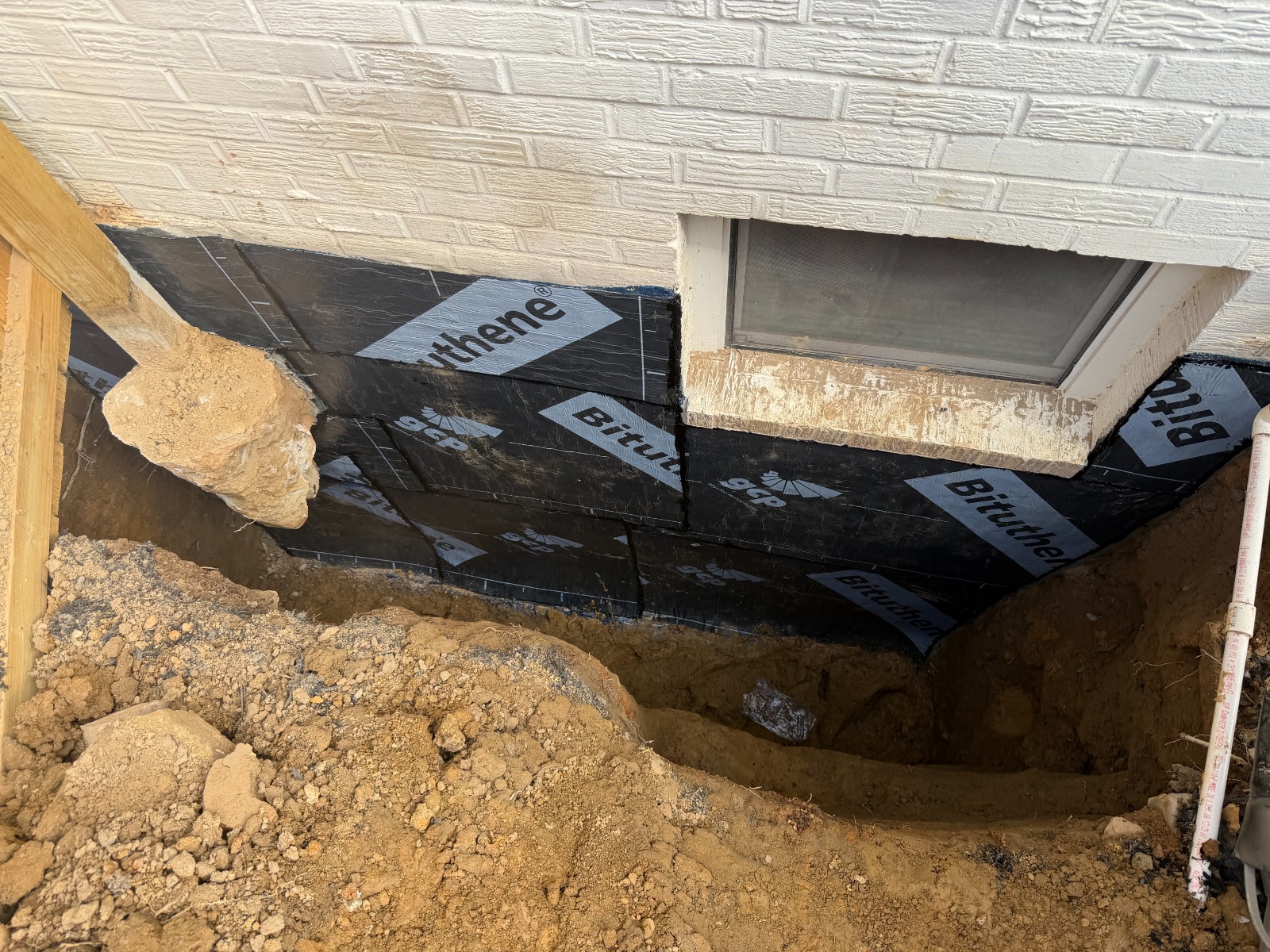
- Excavated beside the wall to expose the exterior foundation surface.
- Prepared the exposed masonry surface before the photographed wall-treatment layers were applied.
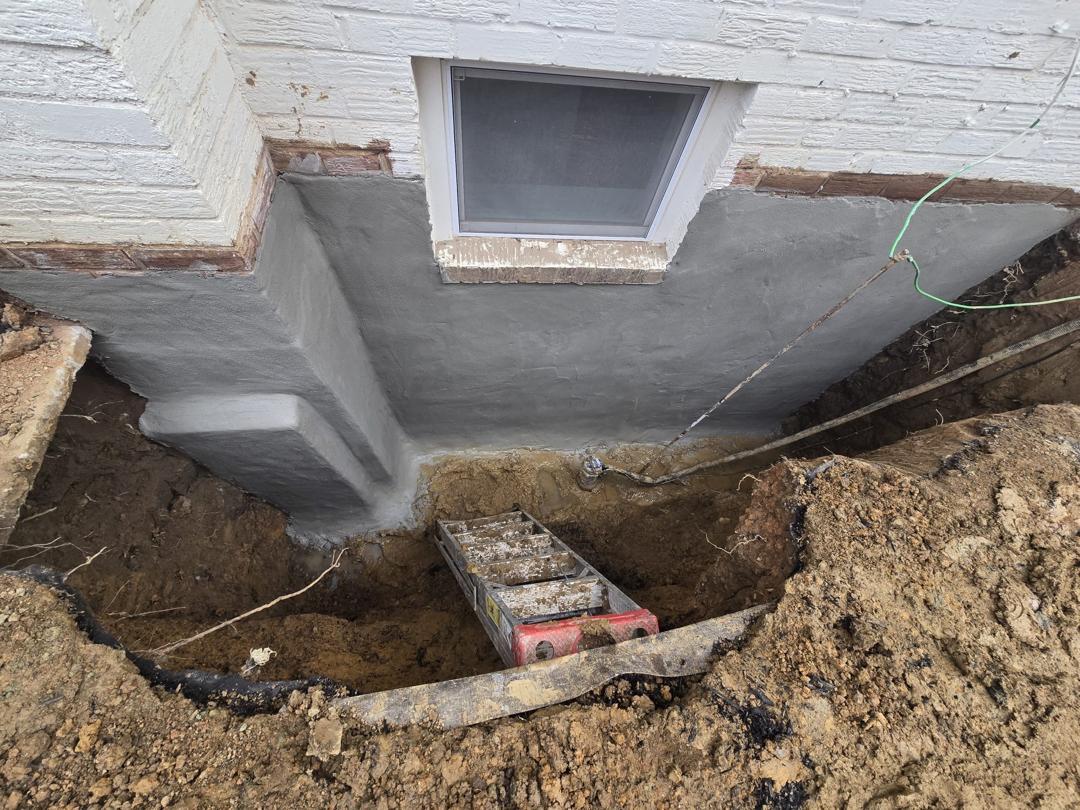
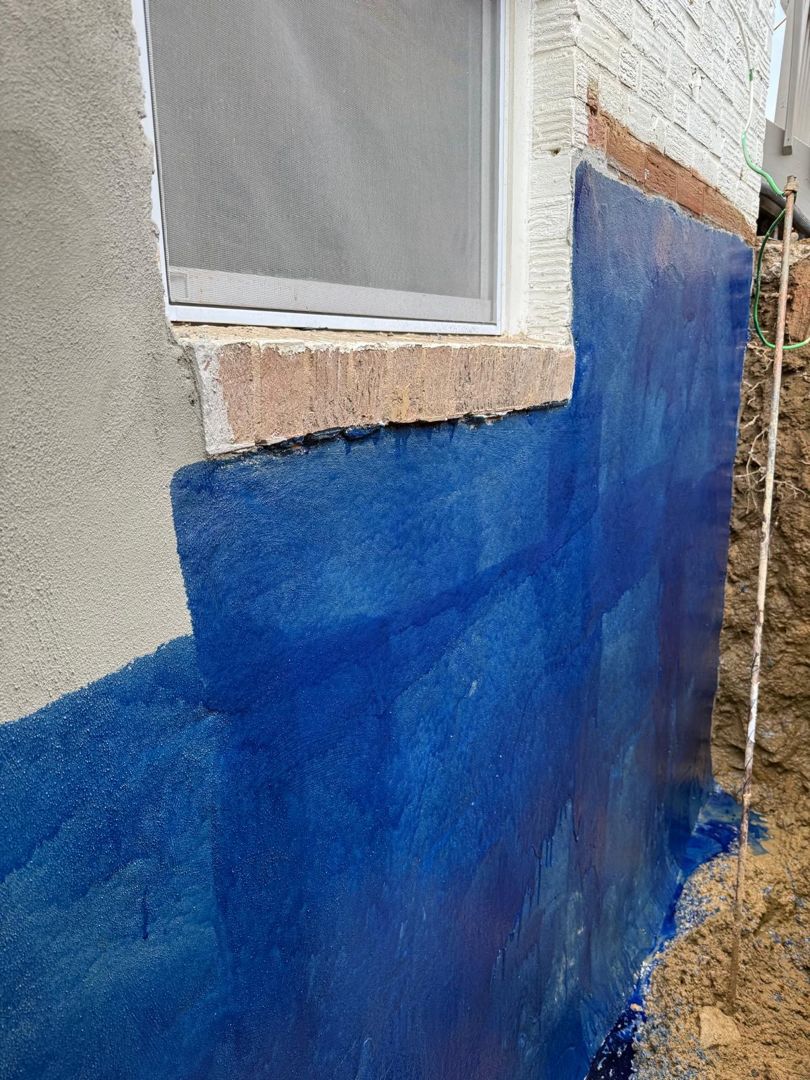
- Layer 1 — cementitious waterproofing across the wall.
- Additional waterproofing layers and a bituminous sheet membrane over the prepared wall.
The site photos show the excavation and successive wall-protection layers.
The result
The documented work shows an excavated wall, cementitious and liquid layers, and a sheet membrane. We do not have a dated post-storm follow-up for this case, so the long-term basement condition is not claimed here.
The takeaway
An older brick foundation has many mortar joints, and water can follow more than one path. The choice between exterior sealing, drainage and an interior system should follow the site conditions and an accessible discharge route—not the age of the house alone.
Have an older brick or stone foundation that’s wet in DC? Schedule a free inspection — we’ll find exactly how the water is getting in and tell you honestly what it takes to stop it. Learn more about our exterior waterproofing.
Questions homeowners ask
Can a brick basement wall leak without one visible crack?
Yes. Mortar joints, penetrations and the wall-floor connection can all be possible entry paths. A site inspection should identify the likely path before a repair is specified.
Does a slab without cracks rule out groundwater?
No. Water can reach the wall-floor joint or move through other openings. The absence of an obvious slab crack is one observation, not a groundwater test.
When is exterior waterproofing appropriate for an old brick foundation?
It can be appropriate when the affected wall is accessible and the exterior wall condition is part of the diagnosed problem. Drainage depth and discharge must be determined for that property; a surface-water line should not be mistaken for a footing drain.
Written by the DMV Waterproofing engineering team.