

What actually stops basement water damage? First identify where the water enters. A wet floor after rain, a leaking wall crack, a flooded window well, and damp air can look similar after the fact but require different work. Below are six repair categories and the conditions that make each one worth considering in a DC, Maryland, or Northern Virginia home.
1. Move roof water away from the foundation
Overflowing gutters, disconnected downspouts, and outlets beside the wall can concentrate rainwater where it should not be. Inspect during a storm if you can do so safely. A correction may be as simple as repairing the gutter or extending the downspout; a buried line needs a planned outlet, suitable slope, and maintenance access. Never assume that burying a downspout solves a basement leak without checking where it discharges.
2. Correct surface grading and yard drainage
Water that ponds beside the house or flows toward a basement door may call for regrading, a surface drain, or a near-grade trench system. The design should show where water is intercepted and where it goes. A yard drain near the surface is not the same component as a footing-level foundation drain. The right depth and route depend on the observed water path and site constraints.
3. Repair a specific wall opening or crack
A visible leak at a poured-concrete crack or pipe penetration may have a targeted repair. But cracks in CMU or brick, moving walls, and water along many feet of the wall need a broader diagnosis. Ask whether the repair is intended to seal one entry point, address a structural concern, or manage water that reaches the foundation from elsewhere. One injection should not be sold as a cure for every basement leak.
4. Address a window well or basement entry
A low window well, blocked outlet, poor cover, or water collecting at a walkout door can let surface water enter directly. Check the opening and surrounding grade first. A cover alone does not fix an undersized or blocked drain; a drain is only useful when its outlet is clear and appropriate. Photos taken during a storm can help distinguish water entering over the opening from seepage through the wall beside it.
5. Consider exterior wall waterproofing when access and diagnosis support it
Exterior work can expose an affected wall for repair and a waterproofing system, sometimes with a drain. It may be the right way to address water entering through a particular outside wall, but access, excavation safety, utilities, landscaping, and the discharge route all affect the scope. Ask what layer does the waterproofing, what protects it, whether the drain is near grade or at the footing, and what the photos will show before backfill.
6. Use an interior drain and sump where collected water needs a path out
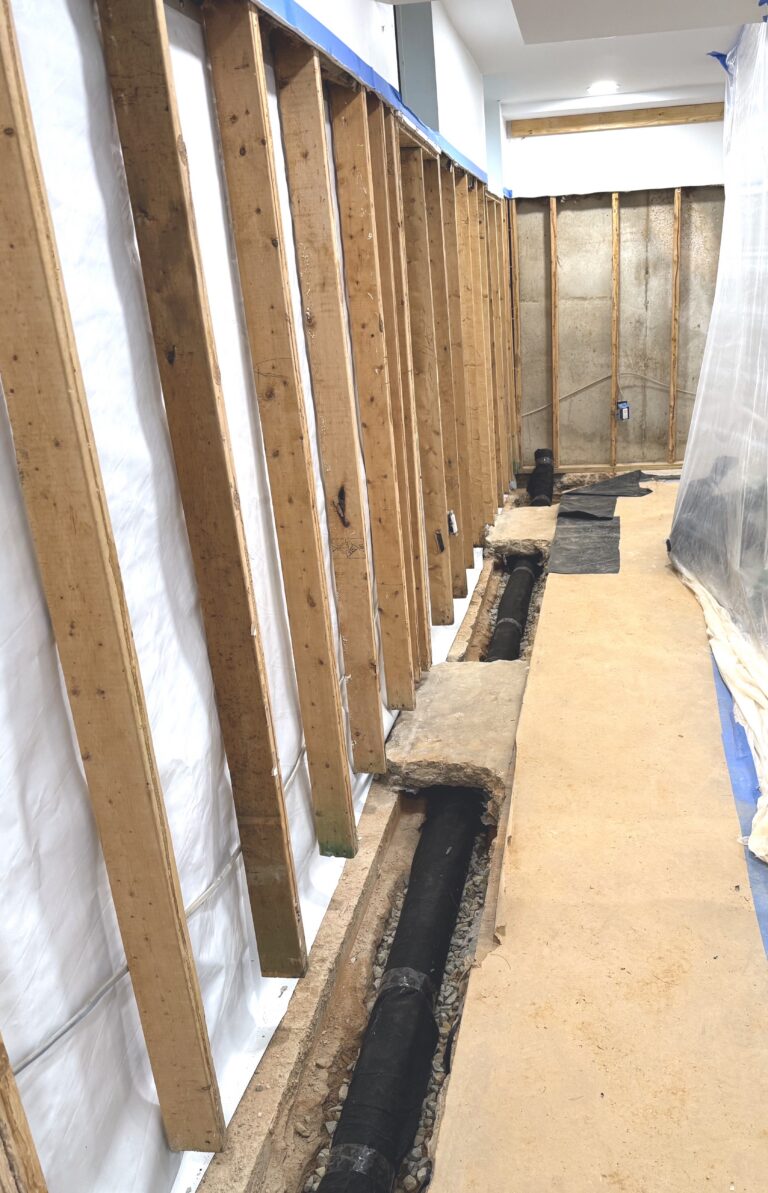
Recurring seepage at the wall-floor joint or groundwater below the slab may call for an interior collection system and pump. The proposal should explain the collection route, sump location, electrical needs, backup options, and where discharge ends outside. An interior drain manages water after it reaches the foundation; it does not make downspout or grading problems irrelevant. The exact combination depends on the house.
How should you choose among these solutions?
Write down when the water appears, where you first see it, and what happens outdoors during rain. Photograph the area before cleanup. Then ask the contractor to connect each line item in the proposed scope to an observed cause. If several causes are present, the work may be staged: correct obvious runoff first, then reassess whether a deeper drainage or wall system is still needed. If water is near electrical equipment or rising rapidly, avoid entering the area and seek prompt help.
A cost figure without measurements, access details, and a discharge plan is not a reliable comparison. Request a written, site-specific scope and ask what is excluded. Our interior versus exterior waterproofing guide explains the main tradeoffs; request an inspection if you need help tracing the actual water path.