

Case file — Ashburn, VA. One of 79 projects we completed across the DMV in 2025. New here? Start with our open letter.
| Location | Ashburn, VA |
| Foundation | CMU (concrete block) |
| The problem | A finished basement bedroom — with a new baby in the home — where the carpet kept turning up wet |
| Real cause | Cracks and a cold joint in the block wall, widened by winter freeze-thaw, letting water in through the walls (the water table was normal — not rising from below) |
| The fix | Exterior waterproofing (WallShield™) — excavate to the footer, seal the cold joint and cracks, full cementitious parge, primer + sheet membrane, XPS protection board, drain board + drain tile, sloped backfill |
| Warranty | Written 25-year exterior warranty |
What the homeowner saw
This Ashburn family had just bought their home and just welcomed a new baby — and they were using the finished basement as a bedroom. Right around that happy moment, they noticed the carpet in that room was wet. They called us.
What we found
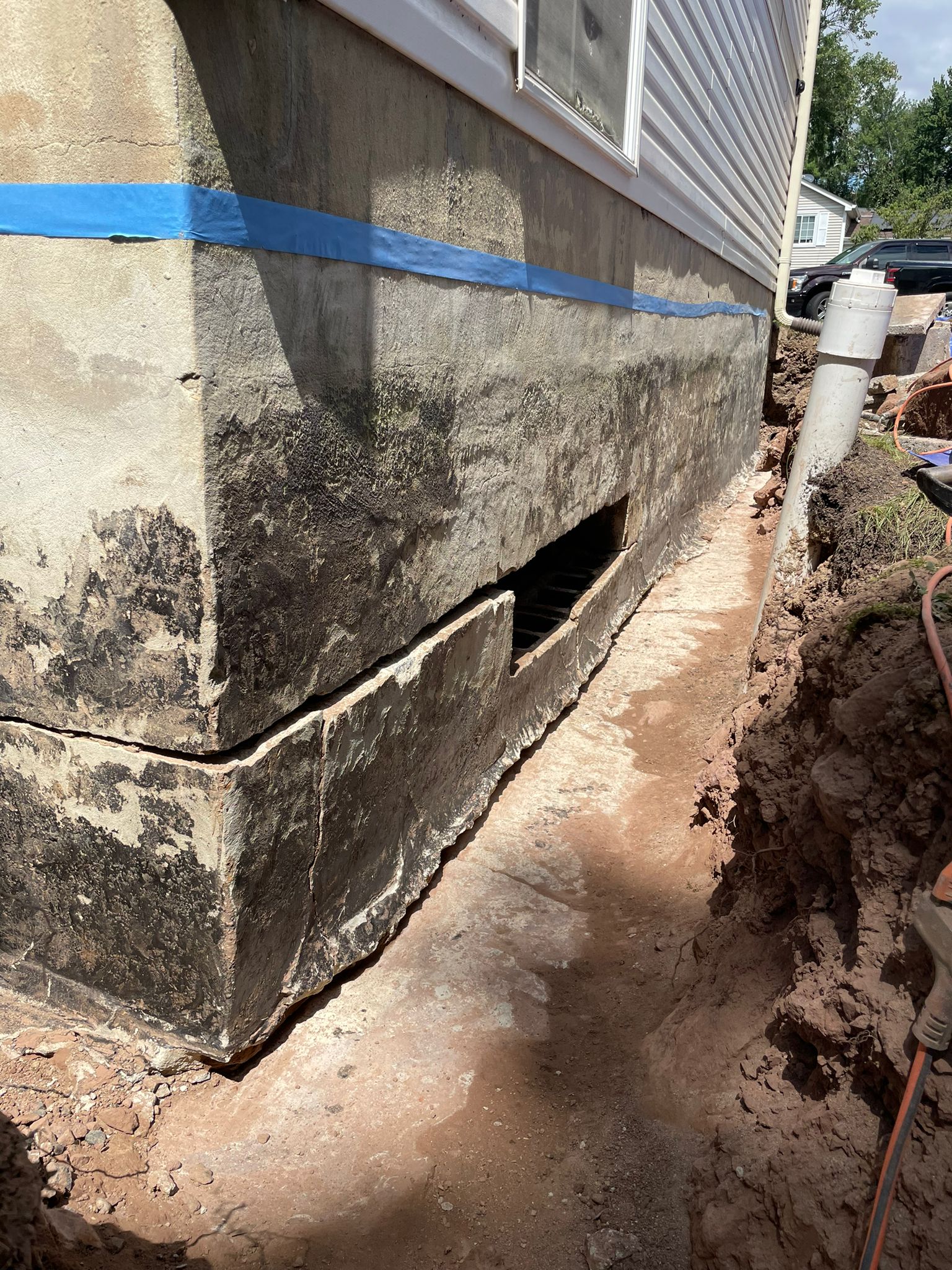
We checked the conditions first. The water table here was normal, and the water was coming in only through the walls — not rising up from below. That pointed to an exterior fix rather than an interior French drain. So we excavated down to the footer and cleaned the wall — and found numerous cracks, plus a cold joint. Winter freeze-thaw had widened those cracks over time, opening a path for water straight into the basement.
Why we fixed it from the outside
When the water table is normal and water is entering through the walls, the smartest fix is to stop it at the source — on the outside of the wall — rather than collecting it after it’s already inside. That protects the finished bedroom and keeps the water out of the living space entirely.
What we did
This was an exterior job — our WallShield™ system. Every step was done by our own crews, no subcontractors.
- Excavated to the footer and cleaned the full wall.
- Sealed the cold joint and the cracks.
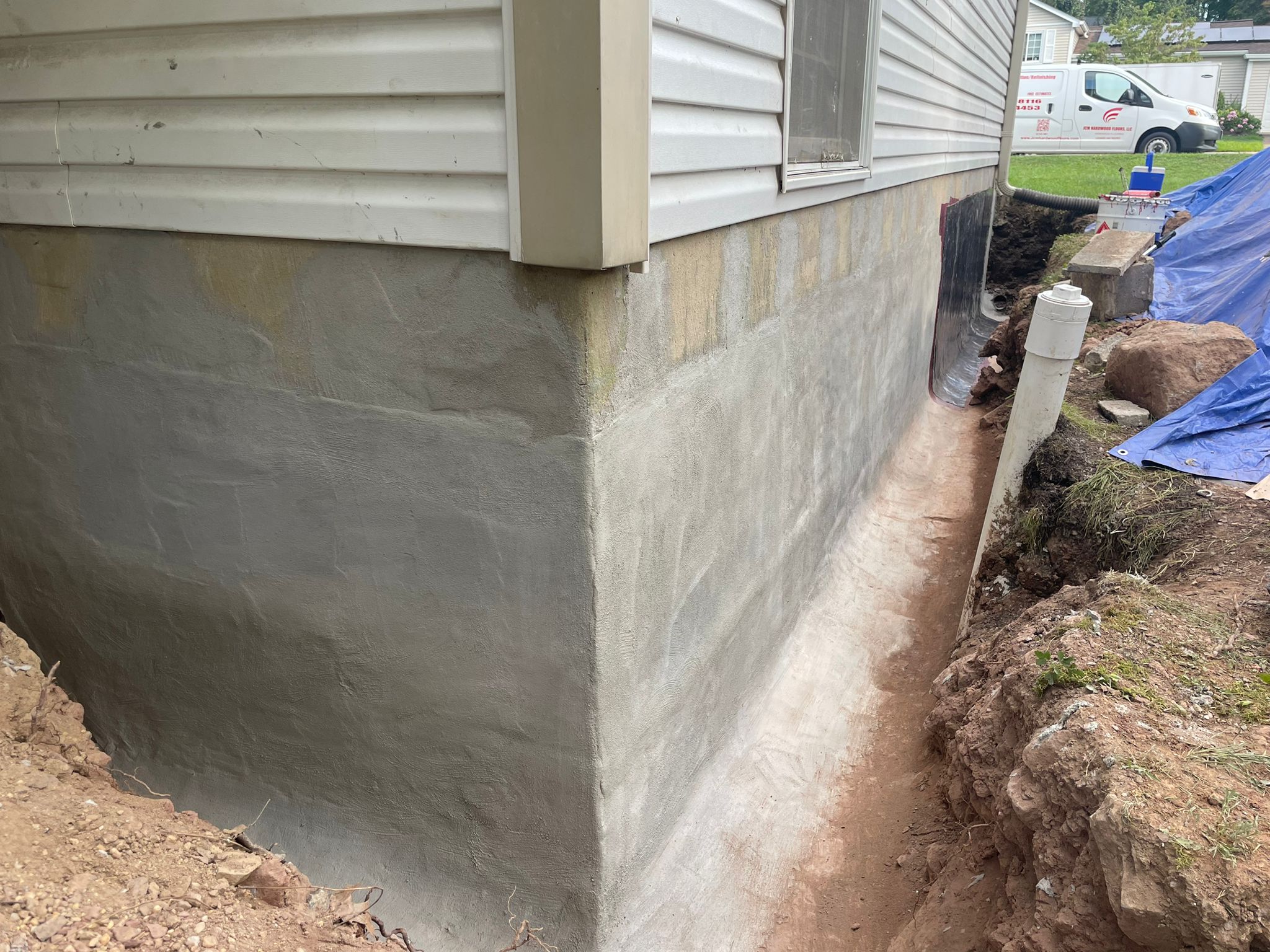
- Parged the entire wall with a cementitious waterproofing coat.
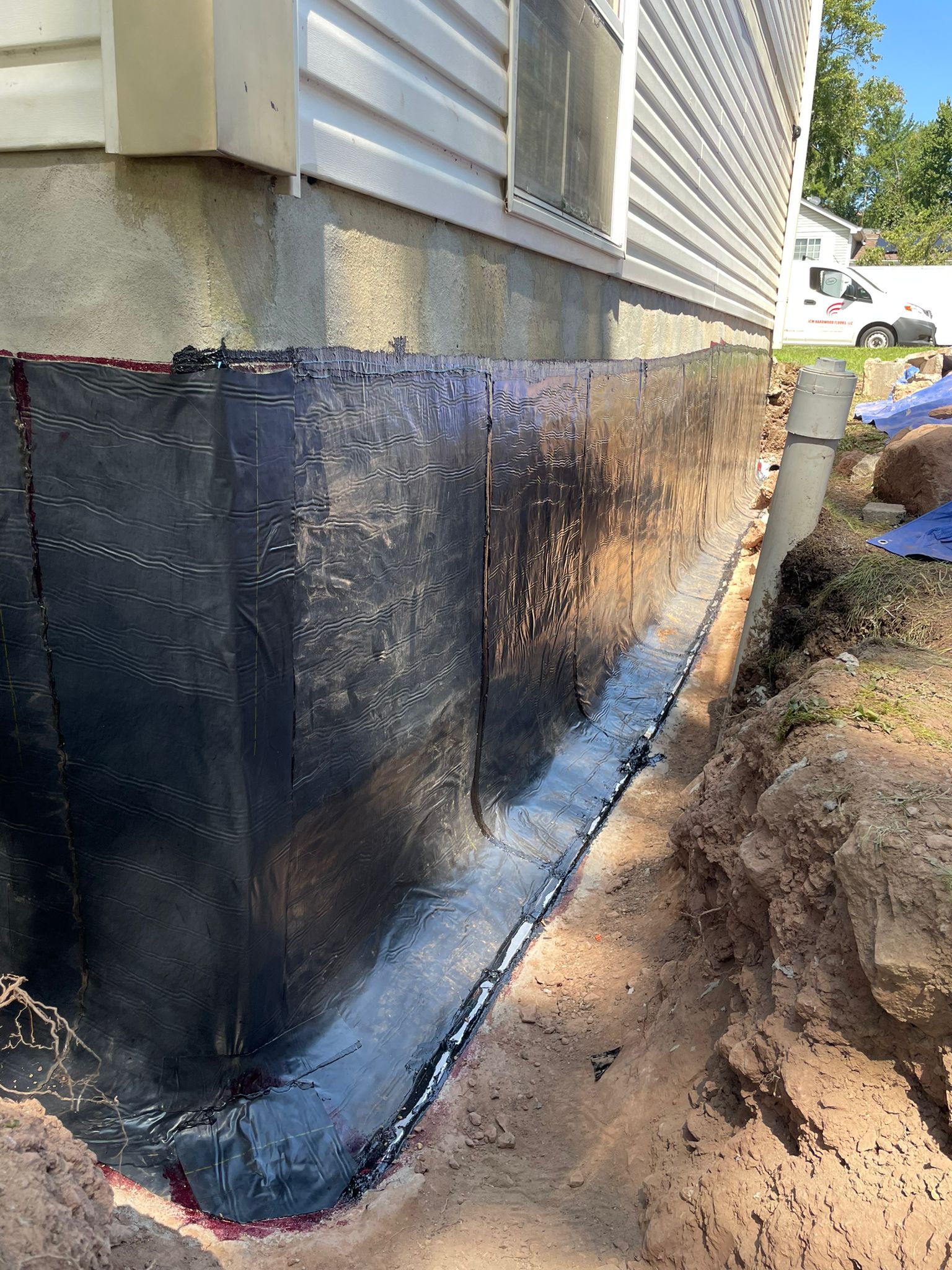
- Applied primer and a bituminous sheet membrane over the cementitious coat.
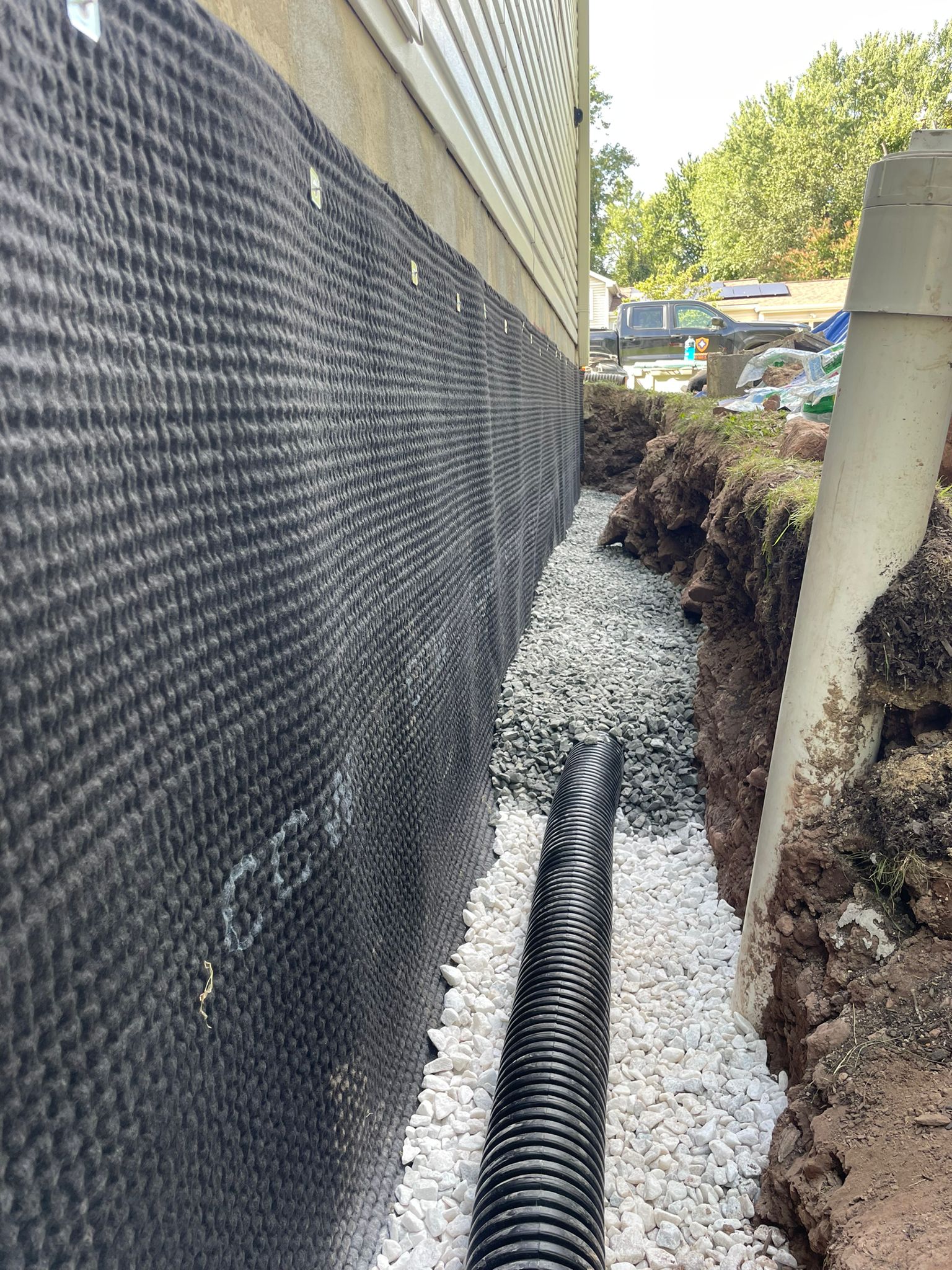
- Protected the system with an XPS protection board and a dimple drain board over the membrane.
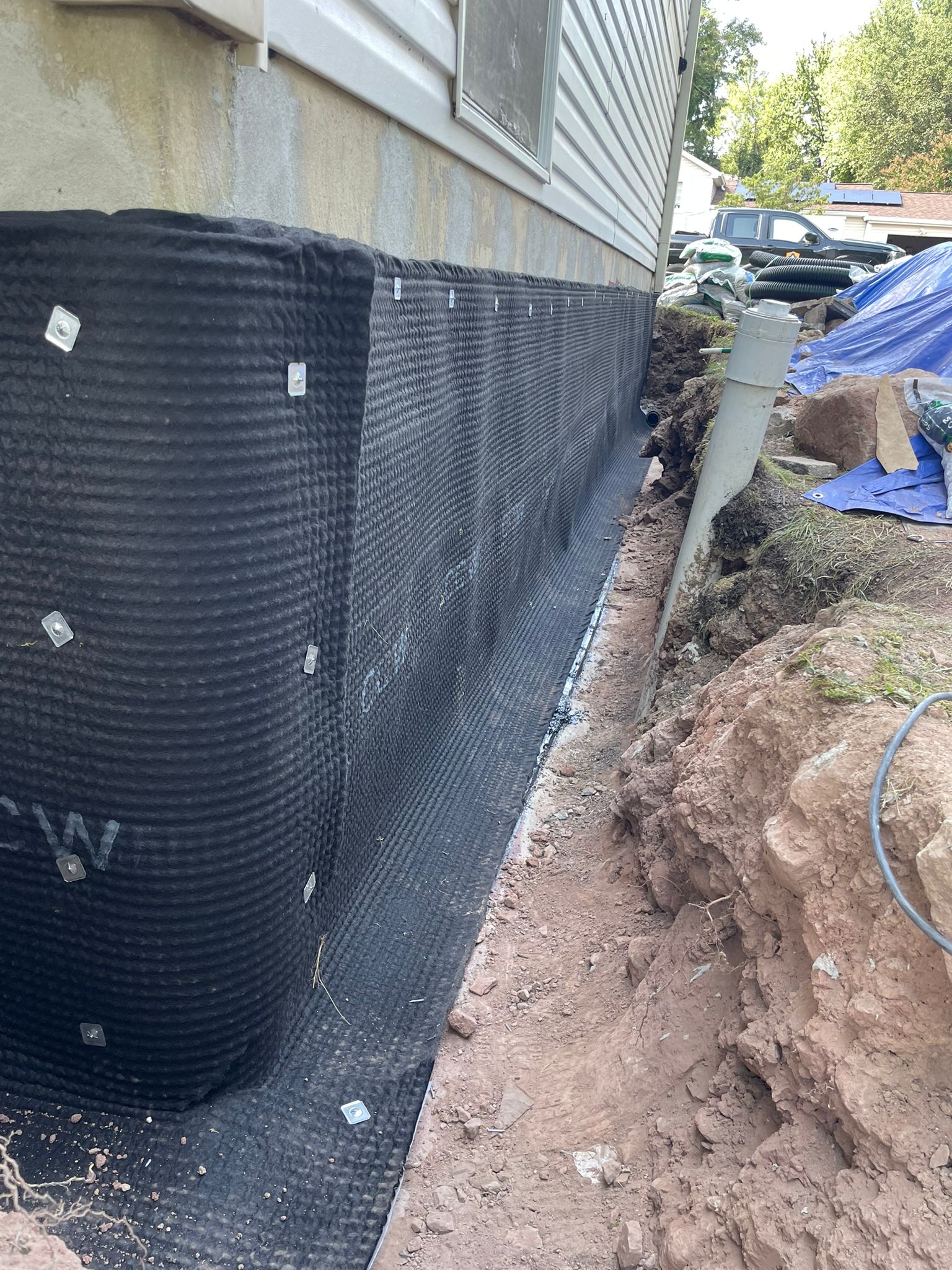
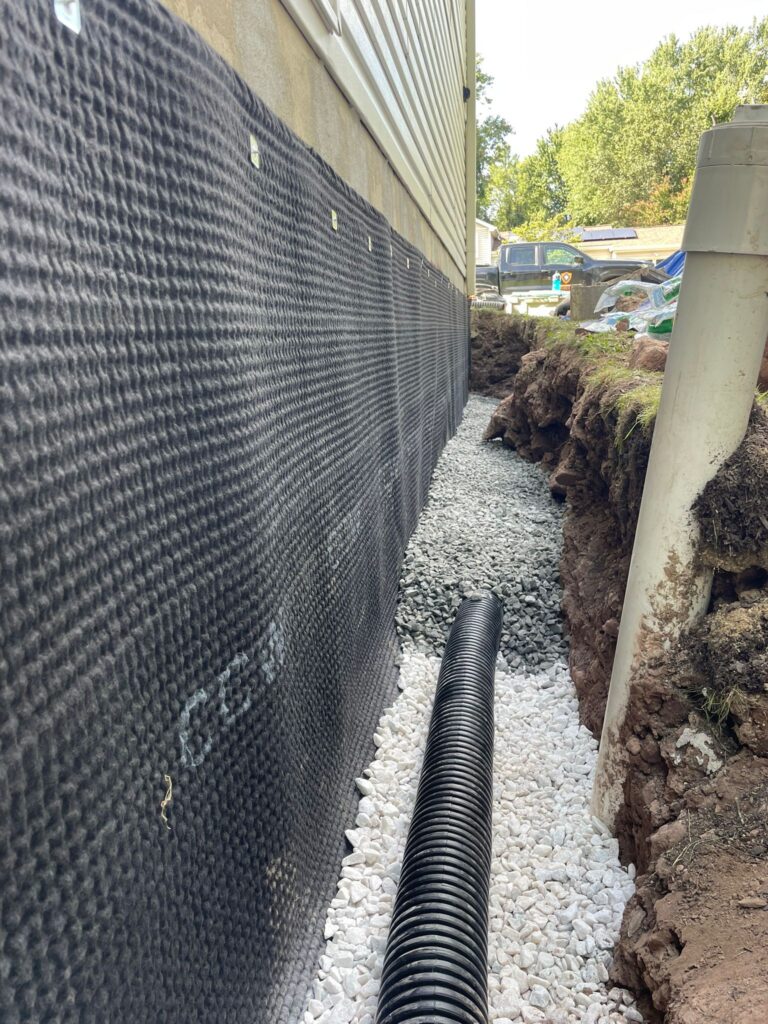
- Backfilled and compacted in lifts, stopping the soil about 10 inches short and grading a slope away from the house, and ran a drain board and drain tile to carry water well away from the foundation.
The result
No more water reaching the basement — and a true double layer of protection: the wall is sealed and membraned, and any water that reaches the soil is intercepted and drained away before it ever touches the foundation. The basement bedroom is dry, and the family can use it the way they intended.
The takeaway
Not every wet basement needs an interior system. When the water table is normal and water is coming through the walls — often through cracks widened by winter freeze-thaw — sealing and draining the wall from the outside stops the water at the source and protects a finished space the right way.
Wet carpet or water in your Ashburn or Loudoun basement? Schedule a free inspection — we’ll find exactly how the water is getting in and tell you honestly what it takes to stop it. Learn more about our exterior waterproofing and foundation crack repair.
FAQ
When is exterior waterproofing the right choice over an interior French drain?
When the water table is normal and water is entering through the foundation walls (often through cracks or a cold joint), sealing and draining the wall from the outside stops the water before it gets in. An interior French drain is the better tool when a high water table is pushing water up from below. The right answer depends on where the water is actually coming from.
Written by Selcuk Altan Atasoy — civil engineer (University of the District of Columbia) and licensed waterproofing inspector (DC, MD & VA), in the field since 2005.