

Case file — Silver Spring, MD. One of 79 projects we completed across the DMV in 2025. New here? Start with our open letter.
| Location | Silver Spring, MD (townhouse) |
| Foundation | Block (CMU) |
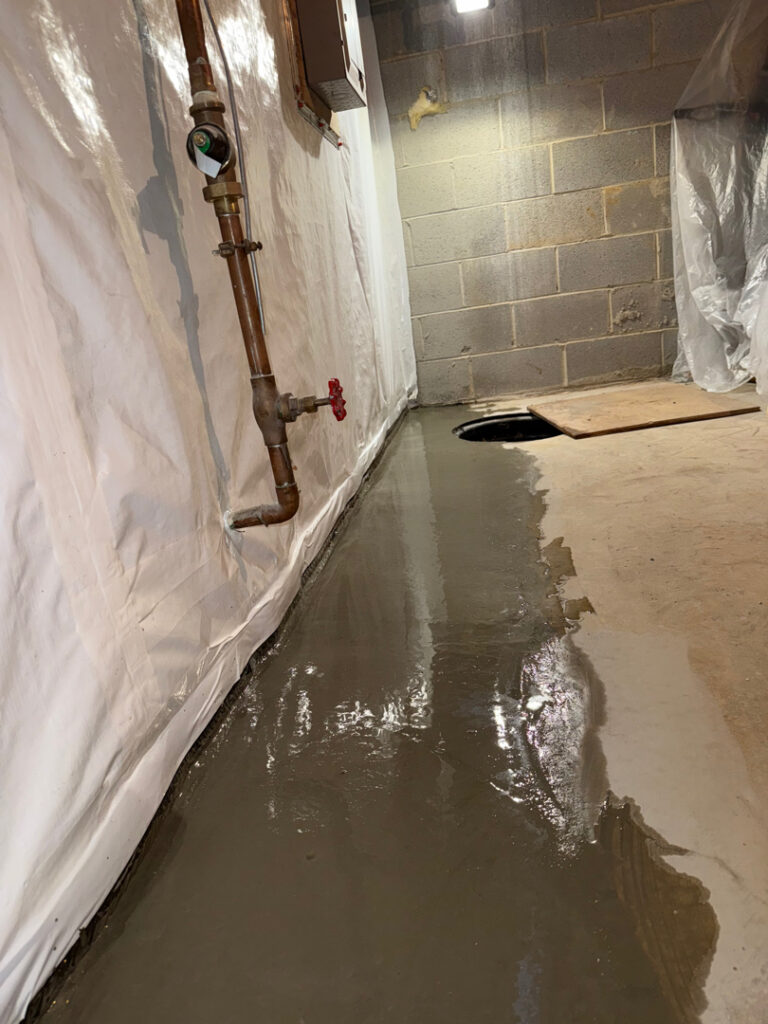
| The problem | A strong mold smell, cracks at the wall corner, and water on the basement floor |
| Real cause | A high water table forcing water through the walls and up against the slab — hydrostatic pressure |
| The fix | Interior French drain and sump pump (FootingShield™), plus mold treatment |
| Timeline | Mold treated in 4 days; whole project finished in 9 days |
What the homeowner saw
The first thing that hit us on the stairs down to this Silver Spring townhouse basement was the smell — a heavy, musty mold odor that had clearly been building for a long time. Belongings were stacked against the walls, the way they are in most basements, so nothing looked obviously wrong at first glance.
What we found
Once we pulled the stored items away from the wall, the real story showed up. Starting at the corner of the block (CMU) foundation wall, cracks ran out to the left and to the right, and water had been seeping in through them. That water had been running down the wall and pooling on the basement floor, sitting long enough to feed the mold we could smell upstairs.
This wasn’t a surface problem. The water table here was high, and groundwater was pushing against the foundation under pressure — against the walls and up against the floor slab. Exterior excavation wasn’t an option on this property, so chasing it from the outside was off the table. The right answer was to relieve that pressure and capture the water on the inside, before it could reach the living space.
What we did
We solved this with our interior system — FootingShield™ — which catches water deeper, down at the footing, and carries it away before it ever touches the floor slab. Every step was done by our own crews — no subcontractors.
- Treated the mold first. Before any waterproofing, we addressed the mold and got the air clean — four days of remediation.
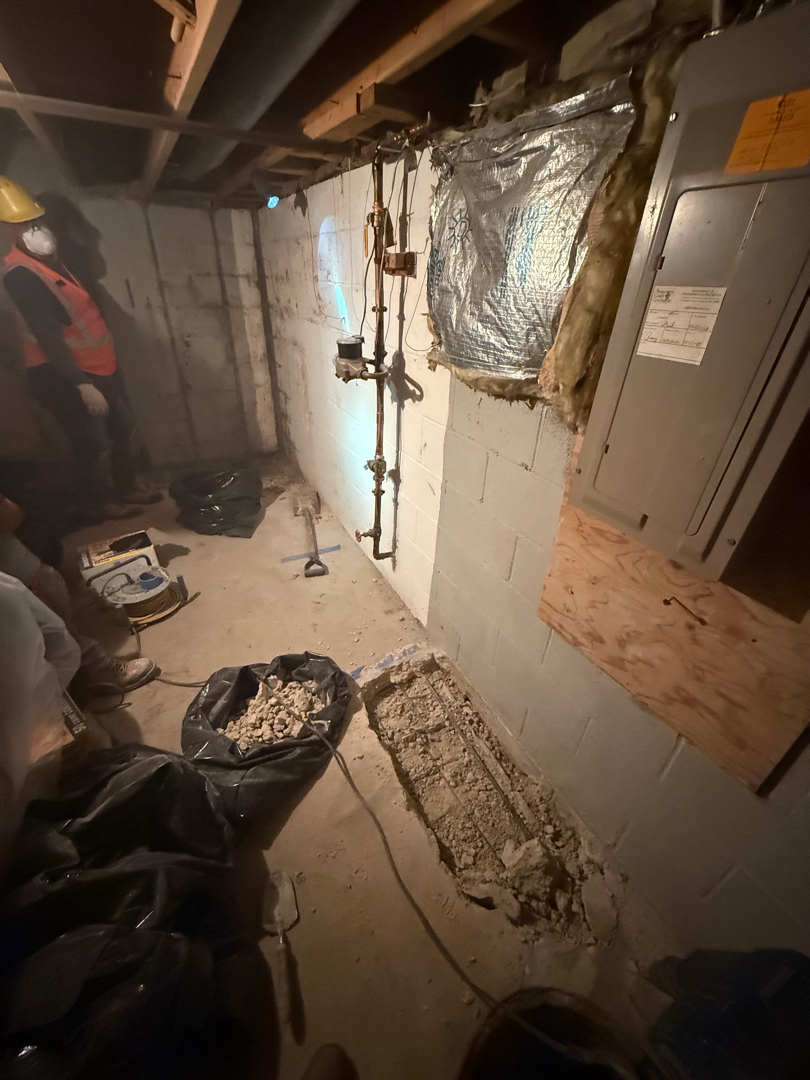
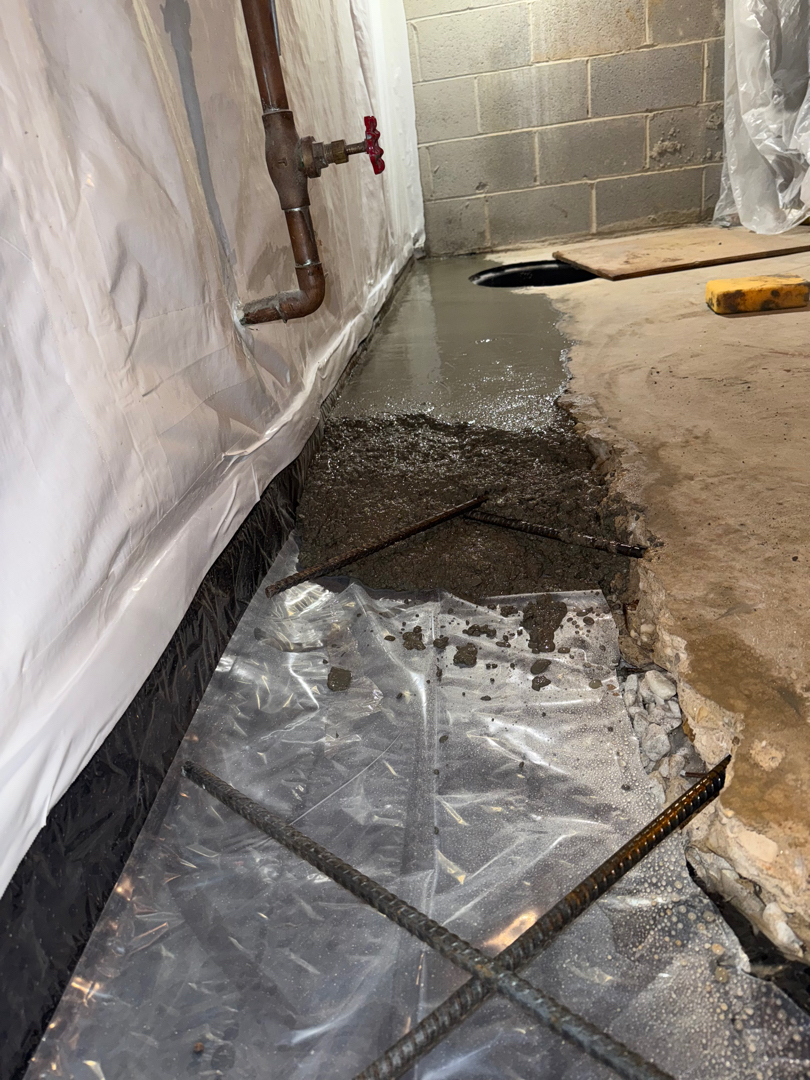
- Opened the slab at the footing around the affected corner, down to footing depth.
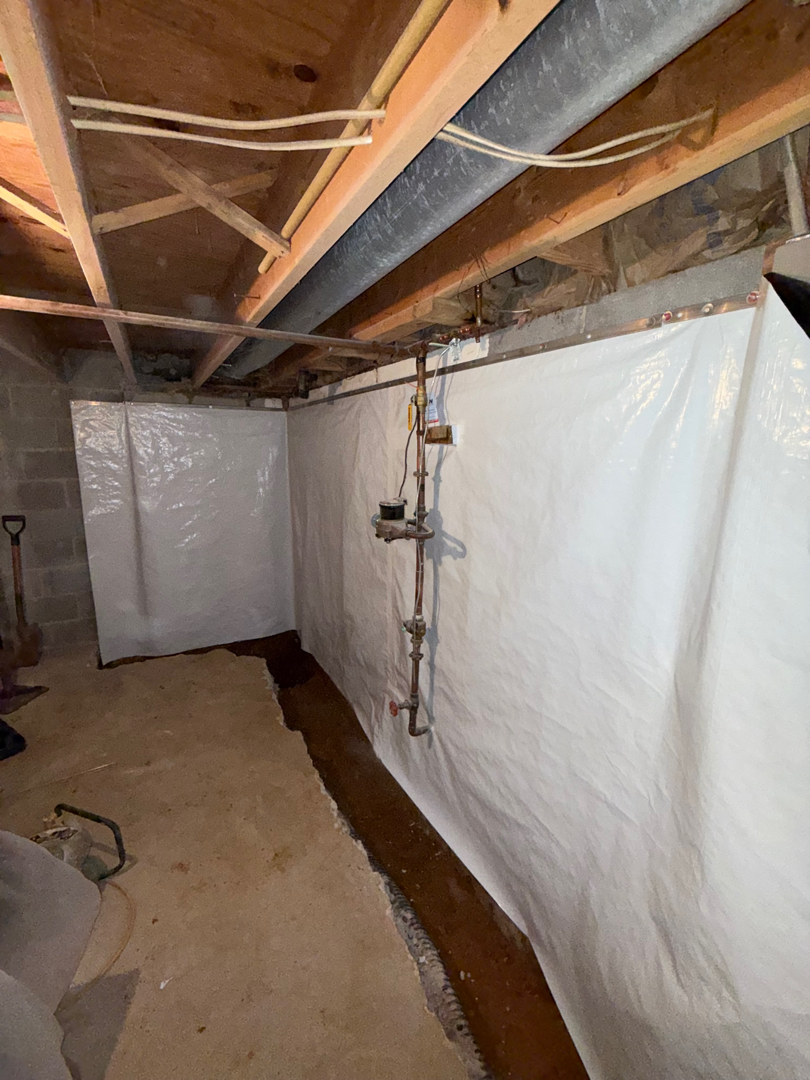
- Sealed the walls with a vapor barrier.
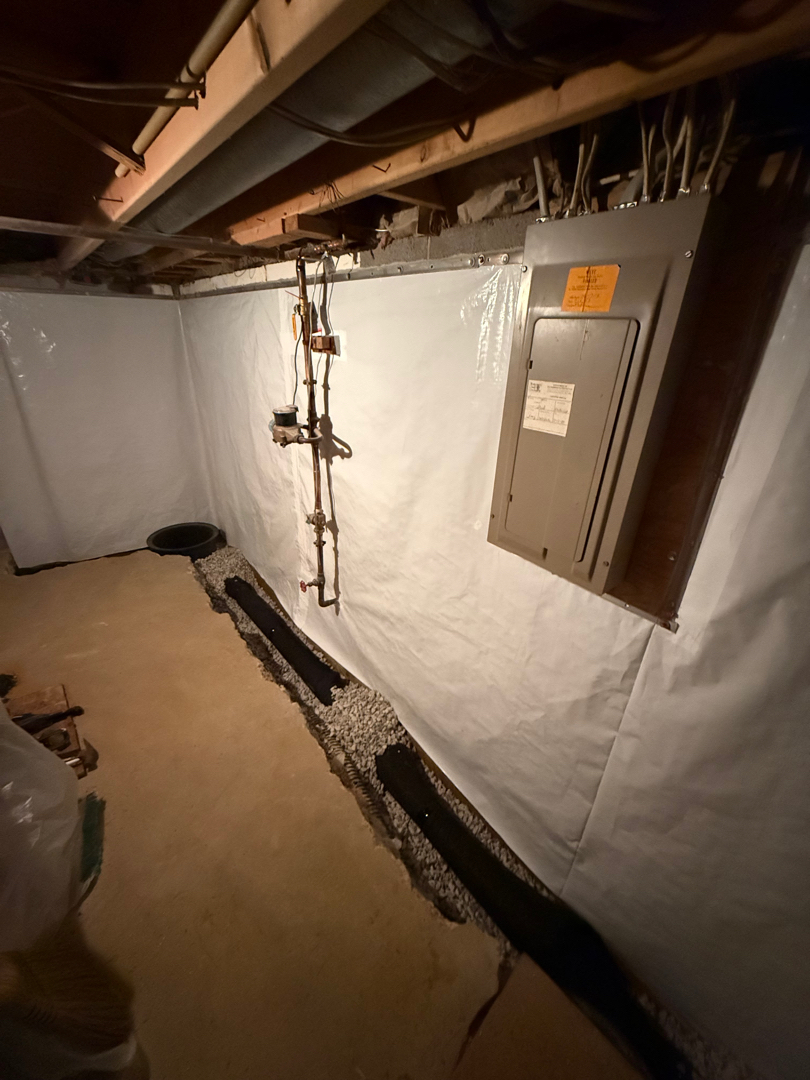
- Installed drain tile in clean stone at footing depth, intercepting the water below the slab — not at floor level, where shallow systems let it surface.
- Set a sump pump in the corner, where the water was entering, discharging it safely away from the home.
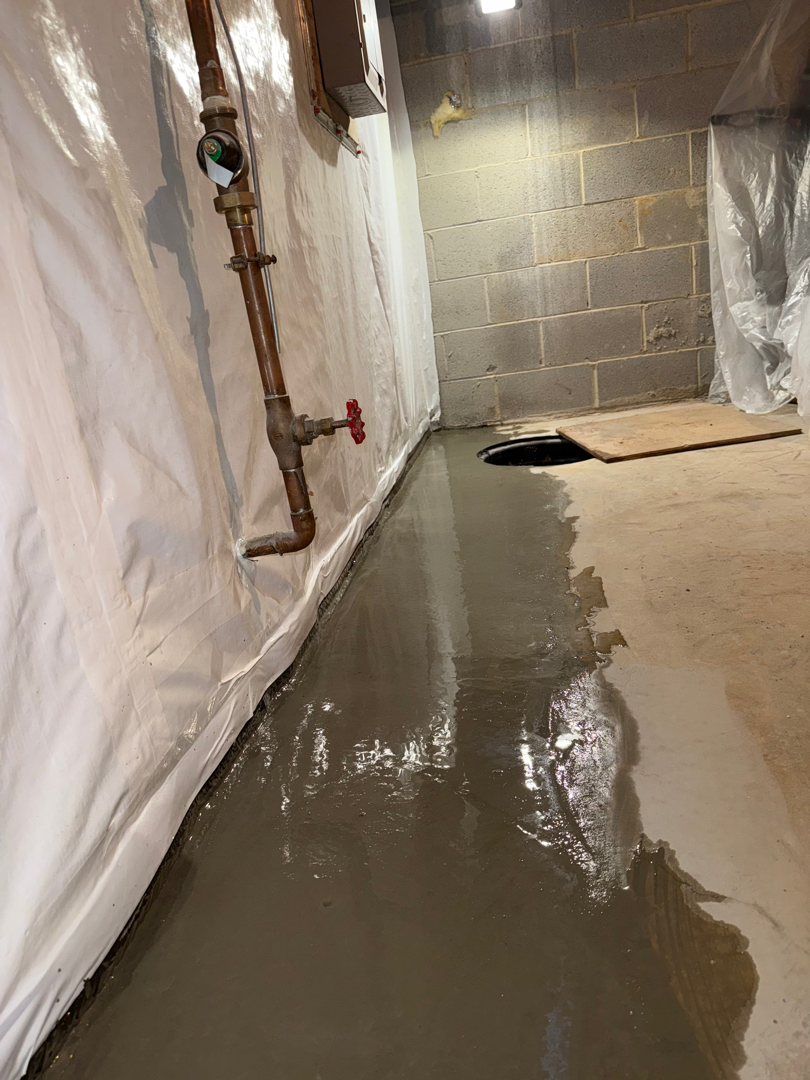
- Restored the slab over the new drain line, leaving a clean, dry corner.
The result
The mold was treated in four days, and the full waterproofing system was finished a few days after that — nine days in total. We walked out of a basement that had started with a heavy mold smell and a wet floor, and handed the homeowner back a space with dry, healthy air.
The takeaway
When the water table is high and water is pushing in under pressure, a shallow surface fix won’t hold — and sometimes the outside simply isn’t accessible. Catching the water deep, at the footing, and pumping it out is what actually keeps a basement like this dry. Treat the mold, relieve the pressure, and the air follows.
Smell mold or see water in your Silver Spring or DMV basement? Schedule a free inspection — we’ll find exactly how the water is getting in and tell you honestly what it takes to stop it. Learn more about our interior French drain & sump pump systems and mold removal.
FAQ
Why install an interior French drain instead of waterproofing from the outside?
When the water table is high and water is entering under hydrostatic pressure — or when exterior excavation isn’t possible — an interior drain at footing depth is the reliable fix. It captures the water below the slab and routes it to a sump pump, relieving the pressure that pushes water through walls and floor cracks.
Written by Selcuk Altan Atasoy — civil engineer (University of the District of Columbia) and licensed waterproofing inspector (DC, MD & VA), in the field since 2005.