

Crack Repair with CrackShield™
We seal cracks with polyurethane pressure injection. Then we restore the surface. Backed by a 25-year warranty.
A Crack Is a Symptom. We Fix the Cause Too.
Crack repair is rarely the whole job. A foundation crack is usually a symptom — of soil movement, hydrostatic pressure, poor drainage, or seasonal foundation stress. Repair the crack without addressing the cause, and a new crack often shows up within a year.
At DMV Waterproofing, every CrackShield™ inspection starts with the cause. We look at why the crack formed. If drainage is the root issue, we recommend FootingShield™ or exterior solutions. If foundation movement is active, we recommend stabilization. Only then do we repair the crack — using the right method for your wall type.
We tell you what's needed. We don't oversell, and we don't undersell.
CrackShield™ — How We Repair Cracks Right
The right crack repair method depends on what your foundation wall is made of. We use three different approaches — one for each wall type. The wall type tells us what to do.
Concrete Walls — Polyurethane Pressure Injection
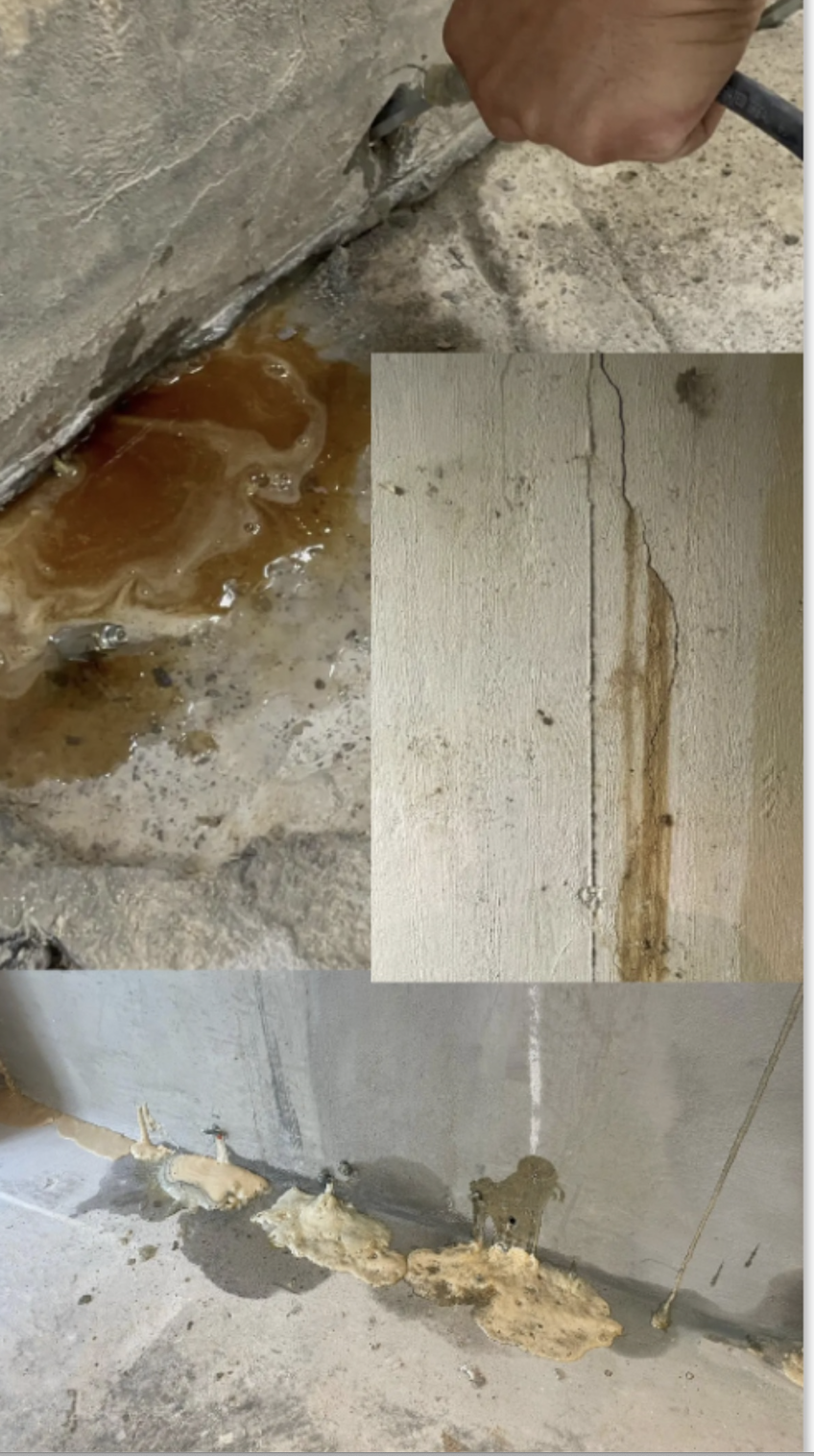
Poured concrete foundation walls are repaired using polyurethane pressure injection — the gold standard for sealing cracks against water. Polyurethane is flexible, expands when it contacts moisture, and penetrates the full thickness of the wall. Our six-step process:
CMU Walls — Block Replacement & Mortar Repointing
Concrete masonry unit (CMU) walls — the hollow concrete block walls common in older DMV homes — can't be pressure-injected because the grout spreads into the empty block cores instead of forming a seal. Instead, we replace damaged blocks and repoint failed mortar joints. Once the wall is structurally sound again, we address the cause of the cracking — typically water management or foundation drainage — so the new repair lasts.
Brick Walls — Brick Replacement & Mortar Repointing
Brick foundation walls are repaired by replacing damaged bricks and repointing the surrounding mortar joints. As with CMU, the mortar joints can't hold a pressure injection, so the right approach is restoration rather than injection. And as with every CrackShield™ repair, we identify and address the underlying cause — drainage, settlement, or moisture — so the crack doesn't return.
Why Polyurethane Pressure Injection for Crack Repair?
Polyurethane crack repair is recognized by the American Concrete Institute as a standard waterproofing method for sealing flexible cracks in poured concrete walls. Unlike rigid alternatives, polyurethane accommodates seasonal foundation movement and expands when it contacts moisture — sealing the full thickness of the wall.
For homeowners researching crack repair options, the U.S. Department of Energy's Building America Solution Center outlines why polyurethane is preferred for waterproofing concrete foundation cracks.
Backed by a 25-Year Warranty
Every CrackShield™ crack repair is covered by our 25-year warranty. That confidence comes from the materials, the method, and the diagnosis. We don't repair cracks without addressing the cause — which is why our repairs last.
Our warranty covers the repair work itself and water entry through the repaired crack location, subject to standard conditions. New cracks caused by foundation movement, soil settlement, or external forces are not covered — but in many cases, those issues call for a different solution we offer (foundation repair, FootingShield™ drainage, or wall stabilization), which we'll diagnose and recommend if found.
Frequently Asked Questions
Schedule a Free Inspection
We'll diagnose your foundation crack — and the cause behind it — and recommend the right repair for your wall type.
Get My Free Inspection