

Did you know that up to 40% of the air you breathe on the first floor of your home comes from the area beneath it? This surprising fact highlights just how vital a dry, well-maintained under-house area is to your family’s well-being.
We understand that your home is your sanctuary. Protecting every part of it is essential for your investment and your family’s health. This often-overlooked area plays a huge role in your house’s overall condition.
Many people don’t realize that moisture problems down below can lead to serious issues throughout the entire structure. These issues include poor indoor air quality and higher energy bills.
Our guide will walk you through everything you need to know. We cover identifying moisture issues and implementing effective repair solutions. Our goal is to give you the knowledge to create a healthier living environment.
Key Takeaways
- A significant portion of your home’s air originates from the crawl space.
- Moisture issues in this area can affect your entire home’s health and efficiency.
- Proper maintenance protects your investment and your family’s well-being.
- This guide provides actionable steps for identifying and solving problems.
- Understanding this part of your home empowers you to make informed decisions.
Understanding Your Crawl Space Environment
The area beneath your living spaces serves as more than just storage—it’s a vital component of your home’s structural integrity. This foundation type creates a protective buffer between the soil and your ground floor.
Defining the Crawl Space and Its Role
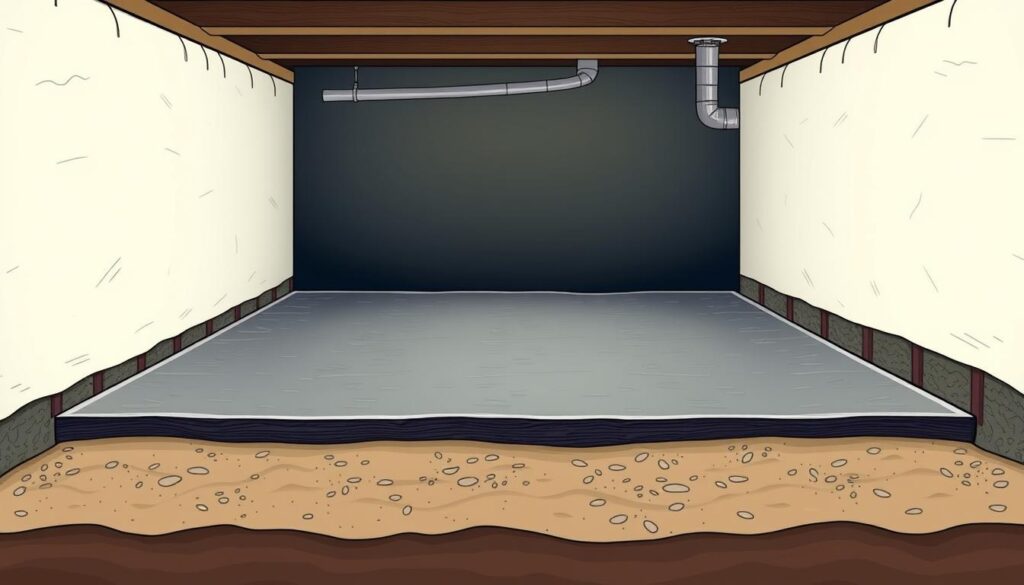
A crawl space foundation typically measures one to four feet high. This design lifts your home off the ground, providing crucial elevation in damp climates. The accessible area allows maintenance of plumbing, electrical, and HVAC systems.
If your home requires steps to enter, you likely have this foundation type. This elevation helps prevent flood damage that could compromise your structural health. Proper maintenance protects your investment and family well-being.
Common Issues Impacting Home Health
Many homeowners mistakenly believe these areas require minimal attention. This misconception can lead to serious problems affecting your entire living environment. Excessive moisture from groundwater and poor ventilation are primary concerns.
We’ve found that moisture enters through various pathways. These include rainwater runoff, saturated soil, and plumbing leaks. Mold growth on wooden elements and pest infestations often follow.
Understanding these common issues is the first step toward effective protection. A dry, well-maintained area beneath your home ensures better indoor air quality throughout your living spaces.
Crawl Space Waterproofing: Why It Matters
What happens below your floors has a direct impact on everything above. Proper moisture control is essential for home preservation. Neglecting this area can lead to serious consequences throughout your living environment.

We’ve seen how moisture problems create ideal conditions for mold growth. This affects your family’s health through poor air quality. Respiratory issues and allergies often result from these hidden problems.
Structural integrity is another major concern. Wood rot weakens support beams and floor joists over time. Metal components can rust, compromising your home’s stability.
Your energy bills also feel the impact. Damp air costs more to heat and cool. A sealed environment helps your HVAC system work efficiently.
| Aspect | With Proper Waterproofing | Without Protection |
|---|---|---|
| Health & Air Quality | Clean, dry air throughout home | Mold spores and respiratory issues |
| Structural Integrity | Strong, durable support systems | Wood rot and potential damage |
| Energy Efficiency | Lower utility bills | Higher heating/cooling costs |
| Pest Control | No attractive environment for pests | Termites and rodent infestations |
| Property Value | Maintained or increased value | Decreased market appeal |
Investing in crawl space waterproofing protects your most valuable asset. It prevents costly repairs down the road. Your family’s health and comfort deserve this protection.
Identifying Moisture Issues and Warning Signs
Your home gives you clear signals when there’s trouble brewing beneath your floors. Learning to recognize these warning signs early can prevent expensive structural damage and health concerns. We want to help you spot the indicators before they escalate into major problems.
Visible Signs of Dampness and Mold
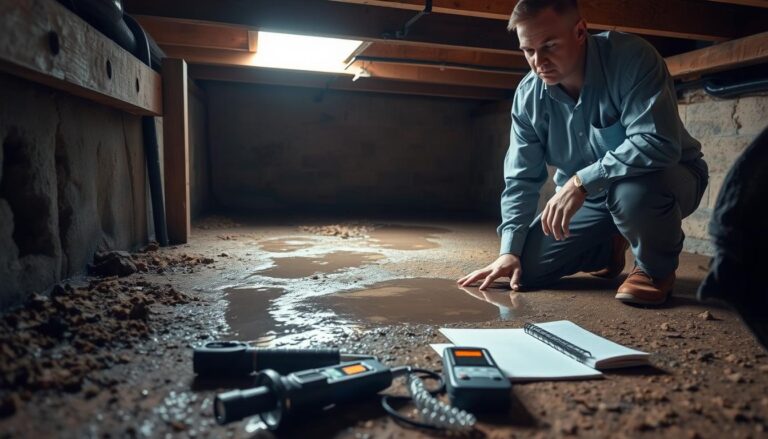
One of the most obvious red flags is standing water or visible puddles in your under-house area. This signals serious drainage issues that require immediate attention. Musty, earthy odors throughout your home often point to excess moisture and potential mold growth.
When you inspect the area, look carefully for visible mold on wooden beams and surfaces. Moisture condensation appearing as droplets on metal ductwork and soil is another clear indicator. Efflorescence—a white, chalky substance on concrete walls—shows moisture is penetrating your foundation.
Structural and Air Quality Concerns
Watch for rust formation on pipes and metal surfaces, which only occurs with persistent dampness. Wood rot in floor joists appears as soft, crumbling timber that may need replacement. Warped hardwood floors above almost always indicate moisture problems below.
Evidence of pest infestations like termite tubes or rodent droppings often points to the damp conditions these creatures seek. We recommend inspecting this critical area at least twice yearly to catch issues early.
Inspection and Assessment Techniques
You wouldn’t treat an illness without a diagnosis first. The same logic applies to fixing problems under your living space. A thorough check-up is your most powerful tool.
We always begin projects with a detailed look at the entire area. This helps us find the real source of any moisture issue. It saves you time and money on repairs later.

Conducting a Thorough Crawl Space Inspection
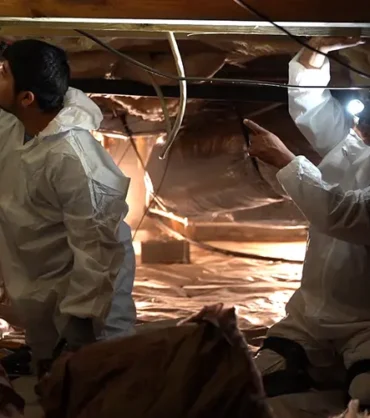
Look at every part of your crawl space. Check the floors, walls, and support beams. Look for water stains, mold, or rust on pipes.
Pay close attention to the air quality. A musty smell is a big warning sign. It often means there’s a hidden moisture problem.
Don’t forget to check the insulation and vents. Damage here can let dampness in. This affects your whole home’s health.
Utilizing Moisture Meters and Other Tools
A moisture meter gives you exact numbers. We make sure humidity stays below 50%. Higher levels invite mold and mildew.
Also, check outside your home. The soil should slope away from your foundation. If it doesn’t, water pools and seeps in.
This issue may need regrading or a new drain. Proper gutters are also key. They should send water far from the house.
| Inspection Finding | What It Means | Potential Action |
|---|---|---|
| Humidity above 50% | High risk for mold growth | Install a dehumidifier |
| Soil sloping toward house | Poor exterior drainage | Regrade landscape |
| Musty odors | Hidden moisture problem | Professional assessment |
| Rust on metal surfaces | Persistent dampness | Improve ventilation & sealing |
For many homeowners, handling different crawl spaces can be challenging. If you find issues you can’t fix, call a pro. They offer expert advice for your specific situation.
Sealing and Repairing Your Crawl Space
The journey to a dry, healthy home environment begins with properly sealing your foundation walls. This critical step creates a protective barrier against moisture intrusion from the surrounding ground.
Patching Foundation Cracks
We start by carefully inspecting all foundation surfaces for cracks and gaps. Even small openings can allow water from the soil to enter your home’s under-structure.
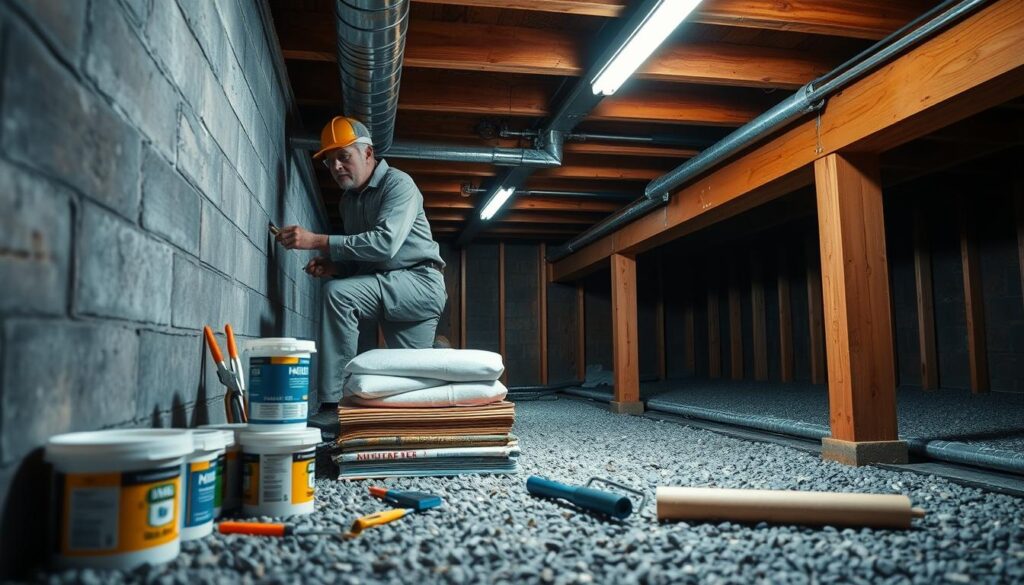
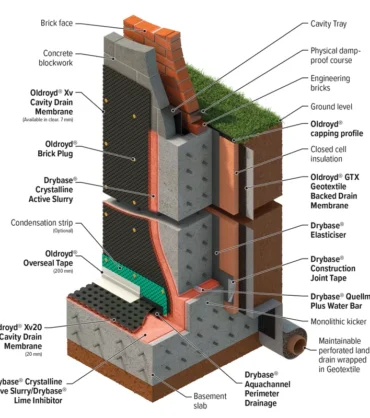
For cracks less than ¼ inch wide, use a quality masonry sealer like DRYLOK Masonry Crack Filler. Larger openings require hydraulic cement that expands as it dries. This creates a tight, water-resistant seal that withstands pressure.
Applying Waterproof Sealants Effectively
After patching cracks, apply a comprehensive waterproof sealer to your concrete walls. Products like DRYLOK Floor & Wall Masonry Waterproofer penetrate deeply into the concrete.
This clear solution reacts chemically with the concrete to seal pores and capillaries. It provides lasting protection against moisture ingress from the surrounding soil.
| Sealant Type | Best For | Key Benefits |
|---|---|---|
| Masonry Crack Filler | Small cracks ( | Easy application, quick drying |
| Hydraulic Cement | Larger cracks and gaps | Expands while drying, pressure-resistant |
| Penetrating Sealer | Entire wall surfaces | Deep protection, maintains breathability |
Proper sealing protects your home’s structural integrity and prevents future moisture problems. This investment saves you from costly repairs down the road.
Improving Drainage and Ventilation
Managing water flow around your property is essential for long-term foundation protection. Even the best sealing materials can fail if you don’t address the source of moisture problems.
We focus on creating systems that redirect water away from your home foundation. This prevents saturation of the soil that leads to structural issues.
Installing Sump Pumps and French Drains
Proper grading is your first defense against water damage. The ground should slope away from your foundation at about 6 inches over 10 feet.
This simple grading directs rainwater and snowmelt away from your home. It prevents pooling around foundation areas where water can seep into vulnerable spaces.
For properties with persistent groundwater issues, we recommend sump pump installation. These systems collect excess water in basins and pump it safely away from your home.
When water pooling continues after grading, French drains offer excellent solutions. These gravel-filled trenches with perforated pipes intercept surface water effectively.
Good drainage reduces the energy your HVAC system uses to control humidity. It also eliminates conditions that attract pests and promote mold growth throughout your home.
DIY Crawl Space Encapsulation Steps
Before you begin installing your vapor barrier, thorough preparation ensures long-lasting results. We want to guide you through each step of this important home improvement project.
Preparing and Clearing the Crawl Space
Safety comes first in any DIY crawl space encapsulation project. Check for standing water before entering to avoid electrical hazards. If water is present, consult a professional immediately.
Once safe, thoroughly clean the area of old materials and debris. Remove any sharp objects that could puncture your new barrier. This creates a smooth surface for installation.
Conduct a complete wellness check during this time. Look for loose wiring, leaking pipes, or wood damage. Address these issues before proceeding with your space encapsulation.
Step-by-Step Encapsulation Process
Start with vertical surfaces like your foundation walls. Apply double-sided construction tape along the masonry. Use a rubber roller to ensure proper adhesion.
Install lightweight vapor barrier material on the taped walls. Make sure it extends above the tape line. Secure it firmly with mechanical fasteners.
For the ground cover, roll out your barrier to completely cover the surface. Overlap seams by at least six inches. Tape all seams thoroughly to prevent vapor from the soil below.
Your completed encapsulation creates a continuous protective barrier. This system will safeguard your home from moisture issues for years to come.
Contact and Support Information
Your home protection journey doesn’t have to be a solo mission—we’re here to help. Whether you’re tackling a DIY project or need professional assistance, our team provides expert guidance for your foundation needs.
We understand that moisture control projects can feel overwhelming. That’s why we offer multiple ways to connect with our experienced team.
Call Support 24/7 at 1-833 888 2533
Our support center operates around the clock. Call us anytime—day or night—for immediate assistance with your foundation concerns.
Whether you have questions about materials or need emergency advice, our experts are ready to help. We provide clear guidance for your specific situation.
Visit Our Locations in Washington, DC; Rockville and North Bethesda, MD; Manassas and Ashburn, VA
We serve homeowners throughout the metropolitan area with convenient local offices. Our Washington, DC location is at 2315 Wisconsin Ave NW.
Maryland residents can visit our Rockville office at 330 N Stonestreet Ave or North Bethesda location at 5014 Nicholson Ln. Virginia homeowners have access to our Manassas and Ashburn locations.
Email Us at info@dmvwp.com
For detailed questions or written estimates, email us anytime. We respond promptly with comprehensive information about our services.
This option works well for non-urgent inquiries or when you need documentation for your records.
| Contact Method | Availability | Best For | Response Time |
|---|---|---|---|
| Phone Support | 24/7 | Urgent questions & emergency advice | Immediate |
| Office Visits | Business Hours | In-person consultations & assessments | Scheduled appointments |
| Anytime | Detailed inquiries & written estimates | Within 24 hours |
Don’t let foundation moisture issues continue to affect your living environment. Reach out today for professional support tailored to your needs.
Conclusion
Protecting your home from the ground up ensures lasting comfort and peace of mind for years to come. We hope this guide has empowered you with the knowledge to tackle foundation moisture issues confidently.
By addressing your crawl space needs, you’re investing in better air quality, improved energy efficiency, and a healthier living environment. These benefits extend throughout your entire home, protecting both your family’s wellbeing and your property’s value.
Remember that proper waterproofing creates a comprehensive system against moisture problems. Whether you choose DIY methods or professional help, taking action now prevents costly repairs later.
Your journey toward a drier, healthier foundation starts today. We’re here to support you every step of the way in creating the protected environment your family deserves.
FAQ
What are the most common signs that I may need to address a problem under my house?
You should look for visible signs like pooling water, a musty odor, or mold on foundation walls and beams. Other warnings include high humidity in your home, warped floors, and increased energy bills, which can all point to underlying issues.
Can I handle the encapsulation process myself, or should I hire a professional?
While a determined DIYer can tackle some steps, like clearing the area and installing a vapor barrier, we often recommend a professional assessment. Experts have the right tools, like moisture meters, to ensure the job is done correctly, preventing future problems and safeguarding your investment.
How does improving the environment under my home affect my energy efficiency?
A properly sealed and insulated area acts as a thermal buffer. This reduces the strain on your HVAC system by preventing outside air from entering, which helps maintain a consistent temperature and can lead to significant savings on your energy costs.
What is the role of drainage solutions like a sump pump or French drain?
These systems are vital for managing water around your foundation. A French drain collects water in the soil and directs it away, while a sump pump actively removes any water that accumulates, keeping the ground dry and preventing structural damage.
What steps are involved in a full encapsulation project?
The process typically starts with a thorough inspection and clearing of debris. Next, we address any cracks with sealant, improve drainage if needed, and then install a high-quality vapor barrier across the ground and foundation walls to create a complete moisture barrier.
![[GetPaidStock.com]-680786795b816](https://dmvwp.com/wp-content/uploads/2025/04/GetPaidStock.com-680786795b816-370x418.jpg "[GetPaidStock.com]-680786795b816")
![[GetPaidStock.com]-682c400c87c15](https://dmvwp.com/wp-content/uploads/2025/04/GetPaidStock.com-682c400c87c15-370x418.jpg "[GetPaidStock.com]-682c400c87c15")
![[GetPaidStock.com]-682c413fa898e](https://dmvwp.com/wp-content/uploads/2025/03/GetPaidStock.com-682c413fa898e-370x418.jpg "[GetPaidStock.com]-682c413fa898e")