


Did you know that over 60% of homes in the United States will experience some form of moisture intrusion below ground level? This startling statistic highlights a widespread challenge for homeowners. Discovering unwanted moisture in your lower level can feel overwhelming, but it’s a situation you can effectively manage.
We understand the stress this can cause. That’s why we’ve created this comprehensive guide. Our goal is to walk you through the latest, most effective solutions available today. These modern techniques are designed to be more efficient and long-lasting than older methods.
This issue is more than a simple inconvenience. Left unchecked, it can lead to mold growth, damage to your property’s structure, and affect your family’s well-being. It’s crucial to address the root cause, not just the symptoms.
Our guide is organized to take you from initial diagnosis to long-term prevention. We combine practical DIY approaches with professional-grade strategies. This gives you options that fit your specific situation and budget. By the end, you’ll have a clear action plan.
Key Takeaways
- Moisture in the lower level of a home is a common issue that requires a modern solution.
- New technologies in 2025 make remediation more effective and efficient.
- Addressing the root cause is essential for protecting your home’s structure and health.
- This guide provides a step-by-step process from diagnosis to prevention.
- You will learn a combination of DIY and professional techniques.
- Understanding how moisture enters is the first step to a permanent fix.
- The goal is to achieve a dry, healthy space for years to come.
Introduction: Why We Care About Basement Water Problems
The discovery of moisture in your home’s foundation area can trigger immediate concern. Understanding the right approach transforms anxiety into actionable solutions.
Our Commitment to a Dry, Safe Home
We’re passionate about protecting your most valuable investment. Our focus extends beyond quick fixes to long-term solutions that ensure lasting protection.
Unwanted dampness affects more than just flooring. It compromises insulation and HVAC systems, creating potential health risks. Early detection prevents escalation.
Overview of the How-To Guide Approach
This guide combines immediate actions with comprehensive strategies. Whether facing your first incident or recurring issues, we provide accessible solutions.
Our methodology blends industry knowledge with practical applications. Thousands of homeowners have successfully implemented these techniques.
| Traditional Approach | Modern Solution | Key Benefit |
|---|---|---|
| Surface-level repairs | Root cause addressing | Prevents recurrence |
| Temporary fixes | Long-term protection | Saves money over time |
| Single-method focus | Comprehensive strategy | Complete home safety |
| Reactive response | Proactive prevention | Maintains property value |
We believe every homeowner deserves clear, honest information. This guide helps you assess situations and choose right solutions for lasting results.
Understanding the Causes of Basement Water Problems
Identifying the true source of moisture infiltration is the critical first step toward implementing an effective remediation strategy. We help homeowners distinguish between different types of moisture challenges.
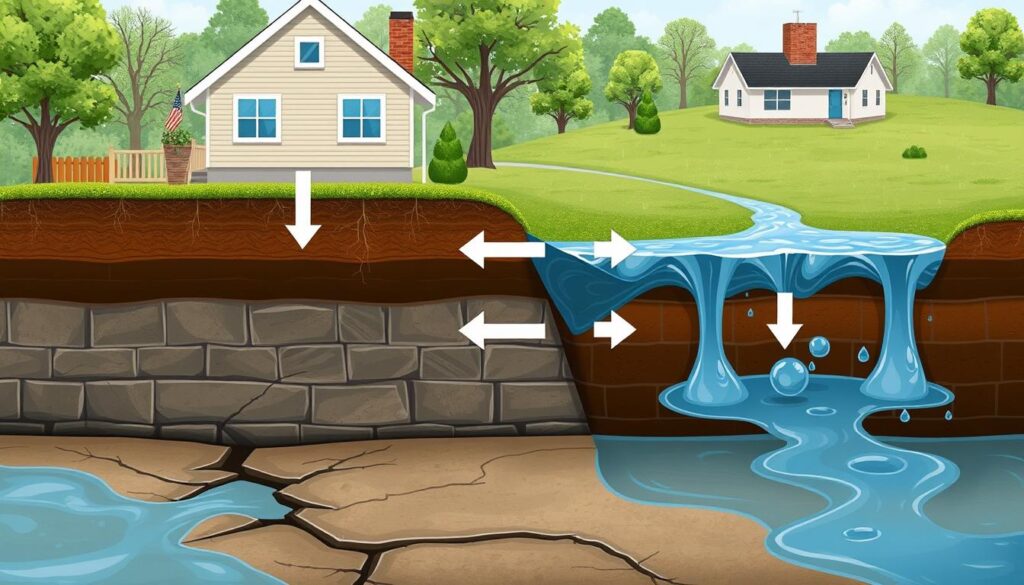
Each situation requires a unique approach. Misdiagnosis often leads to recurring issues and wasted resources.
Surface Water vs. Groundwater Intrusion
Surface issues typically involve precipitation that collects near your home. This includes rain or melting snow that pools around the foundation.
Groundwater concerns stem from rising water tables during wet seasons. This creates pressure that forces moisture upward through concrete.
“The soil composition around your property significantly influences how moisture behaves. Clay-heavy earth retains more liquid, increasing pressure on foundation walls.”
Hydrostatic Pressure and Drainage Issues
Hydrostatic pressure represents one of the most powerful forces affecting structural integrity. It can push moisture through microscopic cracks.
Proper drainage systems manage both surface runoff and subsurface flow. When these systems fail, moisture finds alternative pathways inside.
| Infiltration Type | Primary Cause | Typical Appearance | Recommended Solution |
|---|---|---|---|
| Surface Water | Improper runoff direction | After rainfall events | Exterior drainage improvements |
| Groundwater | Rising water table | During wet seasons | Interior waterproofing systems |
| Hydrostatic Pressure | Saturated soil conditions | Persistent moisture | Combination approach |
Understanding these distinctions helps you choose the right remediation strategy. We provide guidance based on accurate diagnosis.
Identifying Signs and Diagnosing Water Damage
Learning to spot the initial clues of moisture intrusion empowers you to address issues before they escalate. We believe early detection is your best defense against serious structural concerns.
Early Warning Signs: Dampness, Musty Odors, and Cracks
Dampness on foundation surfaces often appears before visible pooling. This subtle moisture indicates penetration through concrete or masonry.
Musty odors signal hidden humidity and potential mold development. These smells frequently originate behind finished walls or under flooring materials.
Cracks in concrete aren’t just cosmetic. They create pathways for liquid infiltration and may indicate pressure-related stress.
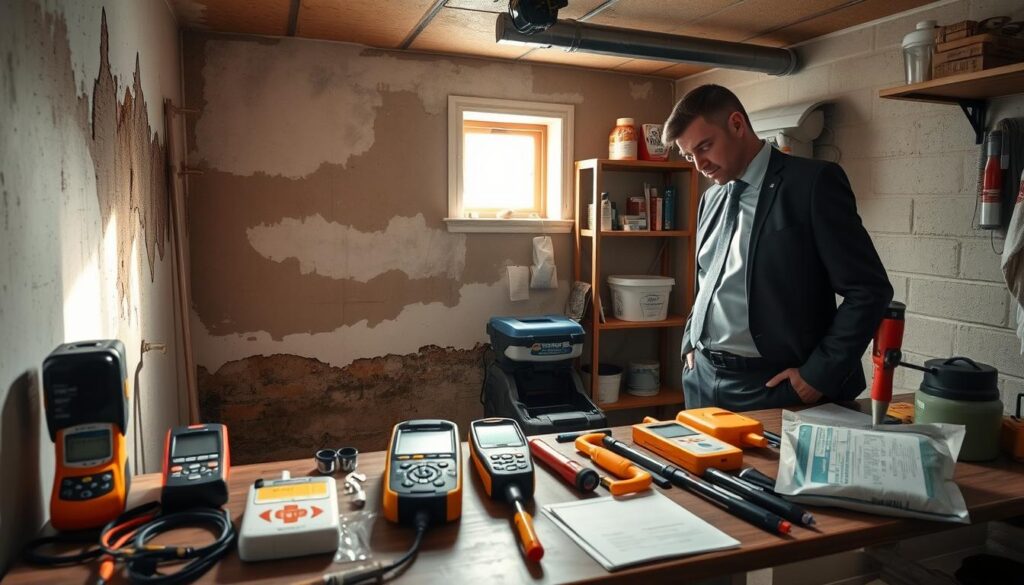
Tools and Techniques for Moisture Assessment
Simple tests like the foil method help distinguish condensation from seepage. Tape aluminum foil to a damp area and check for moisture behind it after 24 hours.
Professional assessment tools detect hidden concerns. Moisture meters measure saturation levels within materials. Infrared cameras reveal temperature variations indicating wet areas.
Regular inspections focus on critical zones. Check corners, wall-floor joints, and utility penetrations during seasonal changes.
Efflorescence—white mineral deposits—confirms moisture movement through foundation materials. This evidence helps determine appropriate remediation strategies.
How to Fix Basement Water Problems: Step-by-Step Solutions
Taking immediate, effective steps can transform a stressful situation into a manageable process. We guide homeowners through both emergency response and permanent repair methods.

Immediate Actions for Water Removal
Safety remains our top priority when addressing moisture issues. Always shut off electricity before entering affected areas. Wear protective rubber boots for protection.
For small accumulations, a wet-dry vacuum efficiently handles standing water. Larger flooding situations may require a submersible pump rental. Document the situation with photographs for insurance purposes.
Complete drying within 24-48 hours prevents mold development. Use fans, dehumidifiers, and ventilation to achieve thorough results.
Long-Term Repair Methods and Waterproofing
Our comprehensive approach addresses root causes rather than symptoms. An interior drainage system installed along the perimeter captures moisture before entry.
We recommend waterproof coatings like UGL’s DryLok for additional barrier protection. Crack sealing with hydraulic cement provides durable solutions.
Choosing between interior and exterior approaches depends on your specific situation. We help evaluate foundation condition and budget considerations.
Essential Remediation Tools and Equipment
Proper tools transform moisture management from a constant worry into a controlled system. We help homeowners select equipment that provides reliable protection for years.
Our recommendations focus on durability and performance. When issues arise, you need tools that work effectively without fail.
Choosing the Right Sump Pump and Dehumidifier
A quality sump pump system serves as your first line of defense. Cast-iron models like Basement Systems’ TripleSafe offer superior longevity compared to plastic alternatives.
We always recommend installing a battery backup pump. This ensures continuous protection during power outages when you need your equipment most.
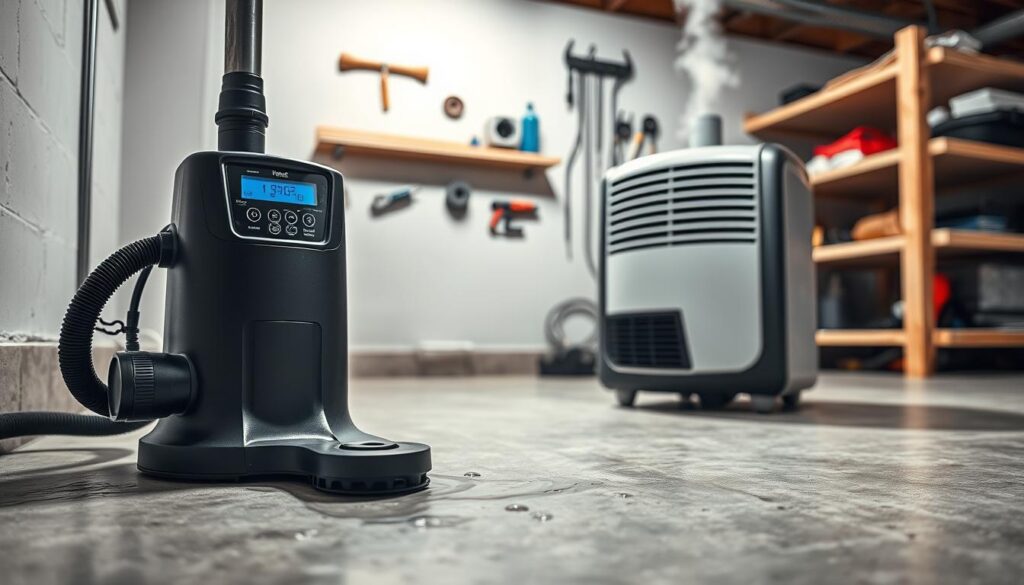
Proper sizing matters for your sump pump. We help determine horsepower based on your space size and typical moisture volume.
For humidity control, a heavy-duty dehumidifier is essential equipment. Look for models processing at least 50 pints daily.
“The EPA recommends keeping humidity below 50% to prevent mold growth and protect your home’s air quality.”
Choose dehumidifiers with automatic shut-off and continuous drainage. These features maintain optimal conditions with minimal effort.
Beyond these core tools, we recommend moisture meters for ongoing monitoring. Wet-dry vacuums handle emergency situations, while hydraulic cement addresses crack repairs.
Preventive Measures: Waterproofing and Effective Drainage
The most effective approach to foundation protection begins outside your home’s perimeter. We focus on stopping moisture before it reaches your structure.
Exterior Drainage Systems and Landscape Grading
Proper grading ensures soil slopes away from your foundation. Aim for at least 1 inch drop per horizontal foot. This simple step prevents pooling around foundation walls.
French drains and gutter extensions create comprehensive exterior drainage systems. They channel moisture safely away from your home. Regular maintenance keeps these systems functioning optimally.
| Prevention Method | Key Function | Effectiveness Level |
|---|---|---|
| Landscape Grading | Directs surface flow away foundation | High |
| Downspout Extensions | Moves roof runoff from around foundation | Very High |
| French Drains | Intercepts groundwater drainage | Excellent |
| Waterproof Membranes | Creates barrier on foundation walls | Maximum |
Sealing Cracks and Protecting Foundation Walls
Addressing cracks in foundation walls is crucial for complete waterproofing. Use hydraulic cement for openings larger than ¼ inch. Polyurethane caulk works well for smaller gaps.
“An ounce of prevention is worth a pound of cure when it comes to foundation protection. Proper drainage and sealing today prevent costly repairs tomorrow.”
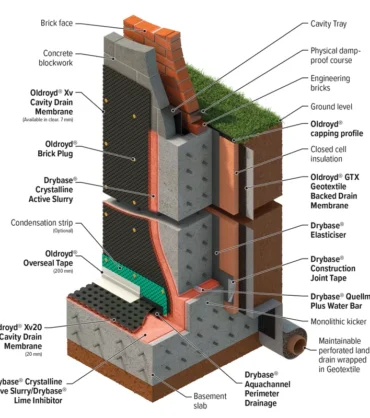
Exterior waterproofing involves applying specialized membranes directly to foundation walls. This comprehensive approach provides robust, long-term protection against moisture intrusion.
Maintenance Strategies and When to Call Professionals
Smart homeowners understand that prevention is more effective than emergency repairs. We help you establish routines that protect your investment over time.
Consistent upkeep ensures your protective systems function optimally. This approach saves money and prevents stress down the road.
Regular Inspections and Seasonal Maintenance Tips
We recommend monthly visual checks of your lower level. Look for new cracks, damp spots, or unusual odors.
Seasonal tasks keep your defenses strong. Clean gutters each spring and inspect drainage before winter.
Test your sump pump quarterly by pouring water into the pit. Verify proper activation and water discharge.
DIY Solutions vs. Professional Assistance
Many homeowners can handle basic maintenance themselves. Tasks like gutter cleaning or small crack sealing are manageable DIY projects.
However, some situations require expert intervention. Recurring moisture issues or structural concerns need professional assessment.
We advise calling waterproofing specialists when DIY approaches fail. Look for licensed contractors with proven track records.
Quality professionals provide detailed estimates and strong warranties. They explain their process clearly and address your specific situation.
Contact Us for 24/7 Support and Local Assistance
Our team stands ready to provide expert guidance whenever you need assistance with your home’s protection. We understand that moisture concerns can arise at any time, which is why we’ve built a comprehensive support system.
Call Our Support Center at 1-833 888 2533
Emergency situations don’t follow business hours. That’s why our support line operates 24/7. When you call, you’ll connect directly with experienced professionals who can provide immediate guidance.
We can schedule inspections or dispatch emergency services when you need them most. Our team understands the urgency of foundation moisture issues.
Our Office Locations Throughout the DMV Area
We maintain five convenient offices to provide fast, local assistance. Our locations include Washington, DC (2315 Wisconsin Ave NW); Rockville, MD (330 N Stonestreet Ave); North Bethesda, MD (5014 Nicholson Ln); Manassas, VA (10748 Sudley Manor Dr); and Ashburn, VA (44121 Leesburg Pike).
Our local presence means we understand regional soil conditions and weather patterns. This knowledge helps us provide targeted solutions for your specific situation.
Write to Us: info@dmvwp.com
For non-emergency inquiries or service questions, email us at info@dmvwp.com. We respond promptly to all messages and welcome questions about our waterproofing approaches.
We offer free, no-obligation evaluations of your foundation concerns. Contact us today to schedule an inspection and receive customized recommendations for your home.
Conclusion
As we reach the end of our comprehensive guide, you now possess the knowledge to confidently address foundation moisture challenges. We’ve walked you through understanding root causes, implementing modern basement waterproofing solutions, and establishing preventive maintenance routines.
Taking prompt action when you notice early signs of moisture is crucial for preventing costly damage. The time invested in proper protection now will save you significant stress and expense in the future.
Whether you choose DIY approaches or professional assistance, the right drainage system combined with quality waterproofing creates lasting protection for your home’s foundation. Your commitment to these strategies ensures a dry, healthy space for years to come.
We’re here to support your journey toward complete home safety and peace of mind.
FAQ
How can I tell if my foundation walls have serious damage?
Look for persistent damp spots, white mineral deposits (efflorescence), or new cracks in the concrete. A musty smell often indicates hidden mold growth. We recommend a professional moisture assessment to diagnose the full extent of the issue accurately.
What is the most effective long-term repair method for a wet space?
For a permanent fix, we often recommend an interior drainage system paired with a reliable sump pump. This combination manages hydrostatic pressure and actively removes water, protecting your home's structure and preventing future flooding.
How do I choose the right sump pump and dehumidifier?
Select a sump pump with sufficient horsepower for your home's size and a battery backup for power outages. For a dehumidifier, we suggest one with a high pint-per-day capacity and an automatic shutoff to maintain healthy humidity levels and prevent mold.
What are the key elements of an exterior drainage system?
A proper exterior system includes gutters and downspouts that direct water away from the foundation, coupled with strategic landscape grading. This prevents surface water from pooling near your walls, which is a primary cause of interior moisture problems.
When should I call a professional instead of attempting a DIY solution?
We advise calling us for any issue involving structural cracks, significant standing water, or suspected mold. While minor sealing can be a DIY project, complex problems with your foundation walls or drainage require expert diagnosis and equipment to ensure a lasting solution.
![[GetPaidStock.com]-680786795b816](https://dmvwp.com/wp-content/uploads/2025/04/GetPaidStock.com-680786795b816-370x418.jpg "[GetPaidStock.com]-680786795b816")
![[GetPaidStock.com]-682c400c87c15](https://dmvwp.com/wp-content/uploads/2025/04/GetPaidStock.com-682c400c87c15-370x418.jpg "[GetPaidStock.com]-682c400c87c15")
![[GetPaidStock.com]-682c413fa898e](https://dmvwp.com/wp-content/uploads/2025/03/GetPaidStock.com-682c413fa898e-370x418.jpg "[GetPaidStock.com]-682c413fa898e")